Selected Curatorial Projects
An overview of exhibitions I have curated, alongside the accompanying curatorial texts and documentation.
Traces of Memory
Kunstfabrik HB55, Berlin
Group exhibition, Lange Nacht der Bilder 2026
4 September 2026
Memory connects us to people, places, objects, landscapes and experiences. It shapes how we understand ourselves and the world around us, yet it is never a fixed or neutral record of the past. Memories shift over time, details disappear, fragments return unexpectedly, and what we remember is continuously influenced by what has been forgotten, imagined or reconstructed. Sometimes a scent, a sound, an image or an object is enough to bring back a place or a moment with an intensity that seems to collapse the distance between past and present.
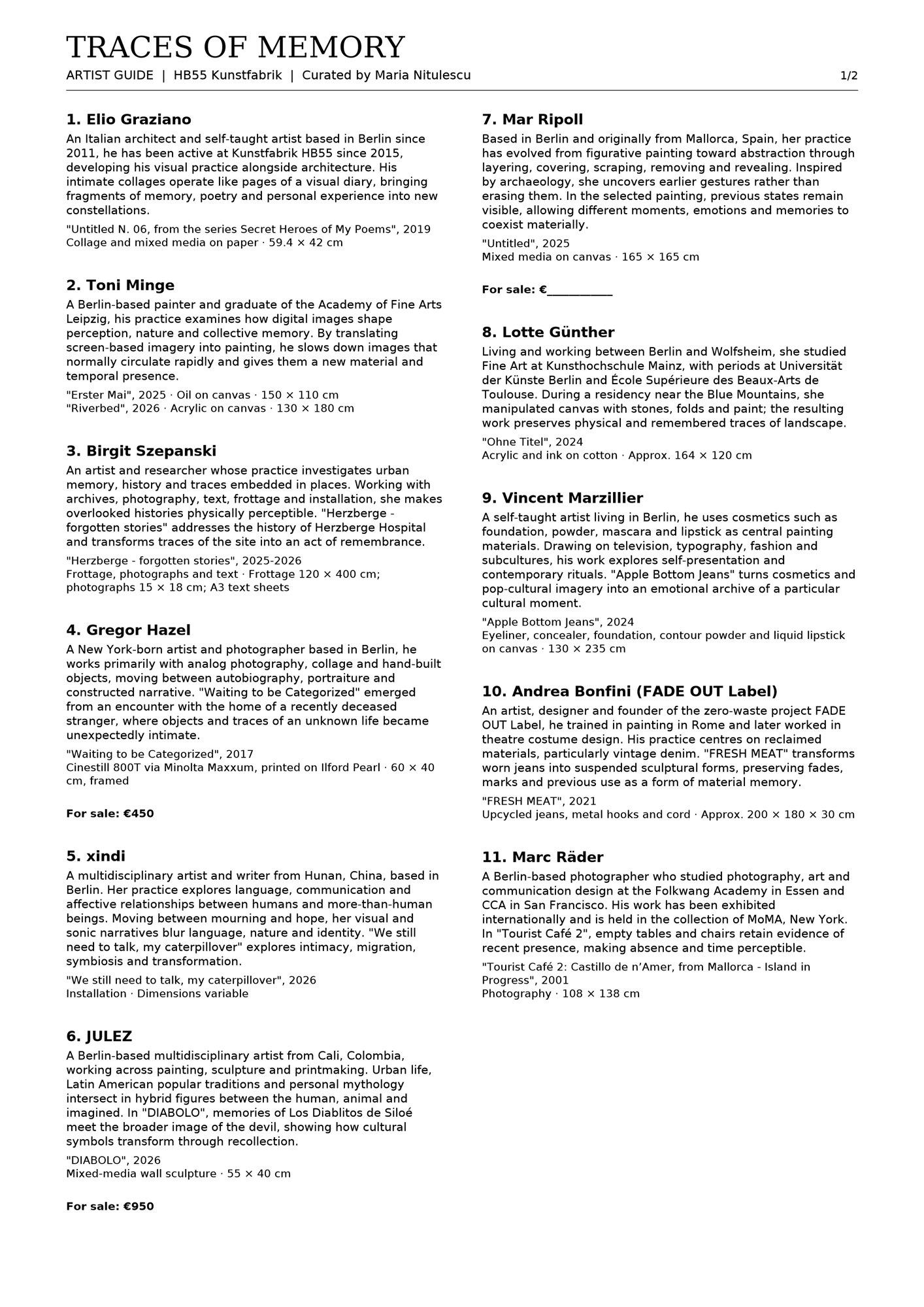
“Traces of Memory” developed from an open call addressed to the artists of Kunstfabrik HB55, inviting them to respond to the theme of memory from within their own artistic practices. Housed in the former Margarinewerk Berolina, an industrial complex dating from 1909, this 7,000-square-metre creative hub is home to a diverse community of artists and creative practitioners. The resulting exhibition brings together 21 artists working across painting, drawing, photography, sculpture, textile, installation, sound, moving image and olfactory art. The open format was conceived not only as an exploration of personal and collective memory, but also as a way of reflecting the diversity of the community itself, allowing different artistic languages, backgrounds and approaches to meet through a shared point of departure.
At the centre of the exhibition is an understanding of memory as something fluid and constantly reconstructed. We do not simply retrieve memories unchanged from an internal archive. Each act of remembering is shaped by time, emotion and our present perspective. Certain details become sharper while others disappear, different moments begin to overlap, and experiences that once seemed insignificant can acquire an entirely different meaning years later. Forgetting is therefore not separate from memory, but part of the same process, creating gaps and absences that can themselves become spaces for imagination.
While memory begins with individual experience, it is never exclusively personal. Our memories are intertwined with family histories, cultural narratives, places, political realities and experiences inherited or shared with others. Childhood, family, migration and belonging intersect with collective histories, while objects, images and landscapes become carriers of experiences extending beyond the individual. Across the exhibition, these ideas unfold through autobiographical narratives, archives, local histories, cultural references and material processes, as well as through works in which fragments are preserved, rearranged or transformed over time.
Memory also extends beyond the purely visual. We remember through the body and through the senses, often involuntarily. A smell can return us to a place we have not thought about for years, a sound can revive an atmosphere before we understand why it feels familiar, and a texture or physical sensation can carry associations that language cannot fully describe. Painting, photography and drawing therefore coexist with textile, botanical matter, installation, sound, moving image and scent, allowing memory to emerge not only as something represented, but also as something physically and sensorially activated.
Rather than attempting to reconstruct the past as something complete or reliable, “Traces of Memory” embraces its instability. Memories can be intimate or inherited, carefully preserved or almost erased, and what survives is often fragmentary. Bringing together the diverse artistic positions of the HB55 community, the exhibition creates a constellation of these traces and considers how personal and collective histories continue to shape identity, belonging and our understanding of the present.
Text by Maria Nitulescu
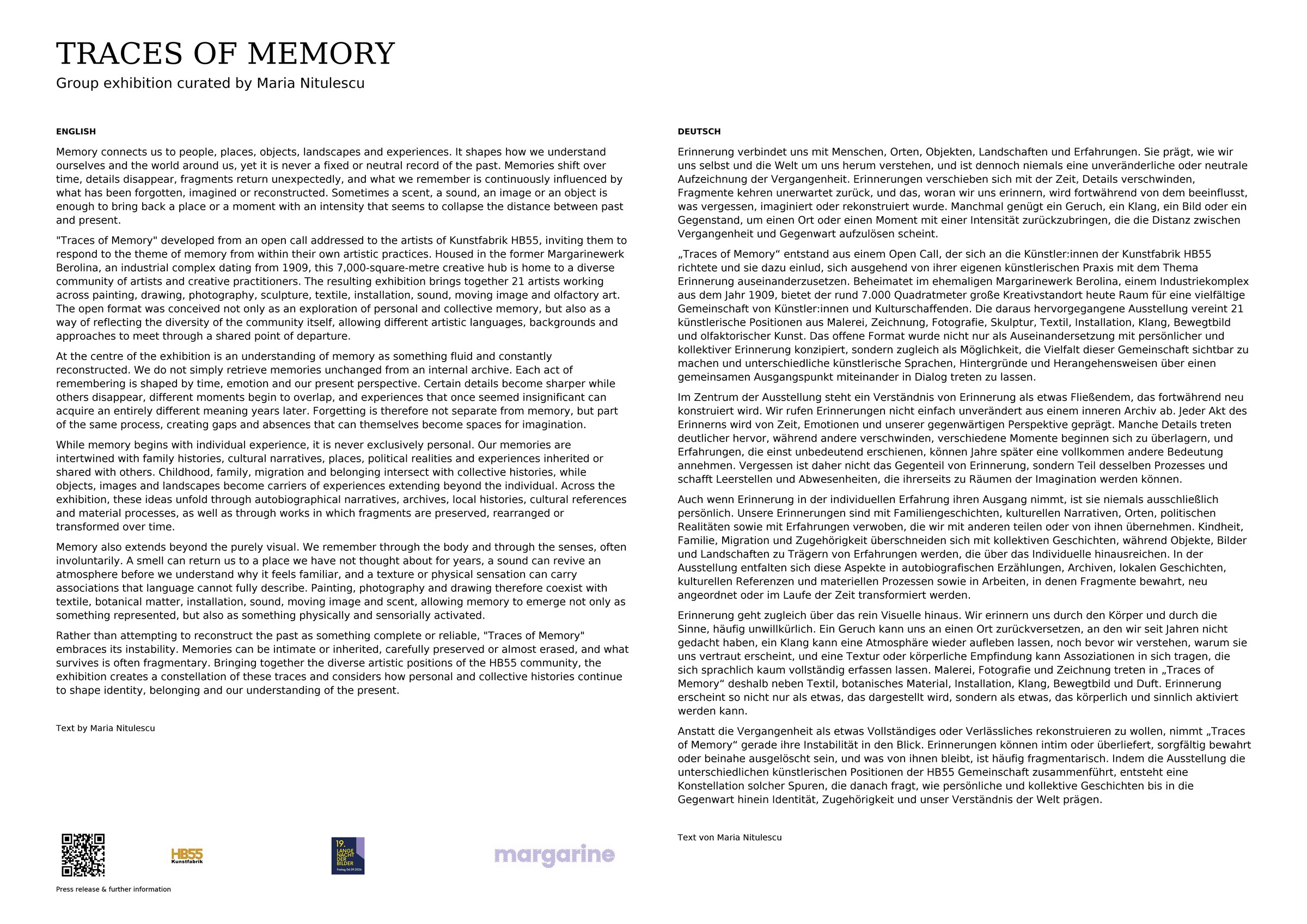
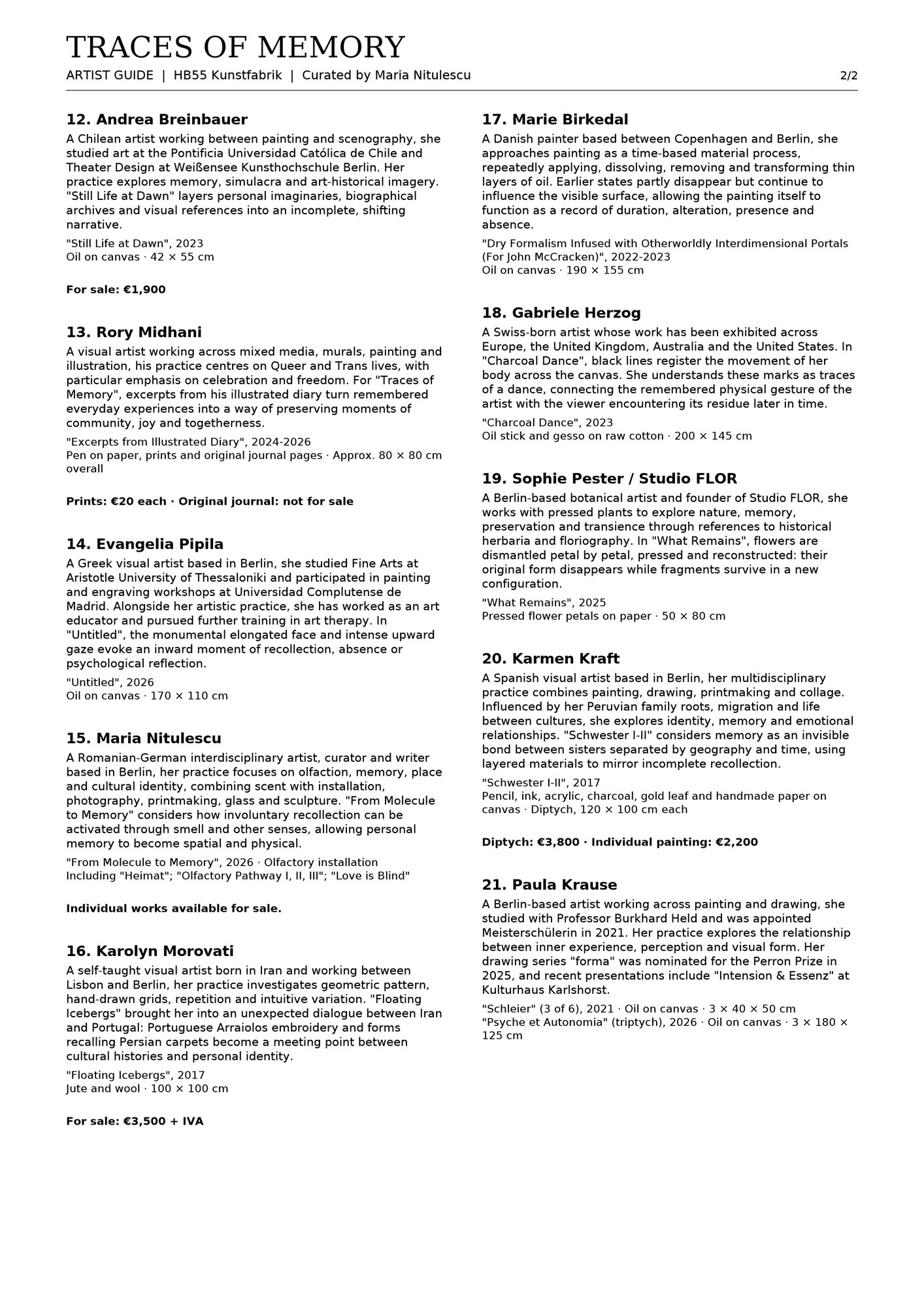
21 participating artists
Gabriele Herzog, Marie Birkedal, Karolyn Morovati, Evangelia Pipila, Marc Räder, Vincent Marzillier, Andrea Breinbauer, Andrea Bonfini (FADE OUT Label), Lotte Günther, Mar Ripoll, xindi, Gregor Hazel, Birgit Szepanski, Toni Minge, Elio Graziano, Sophie Pester / Studio FLOR, JULEZ, Rory Midhani, Karmen Kraft, Paula Krause, Maria Nitulescu.
I took part in the exhibition with the olfactory installation From Molecule to Memory. See the full documentation on the Exhibitions page.
View artist guide, as printed ↓
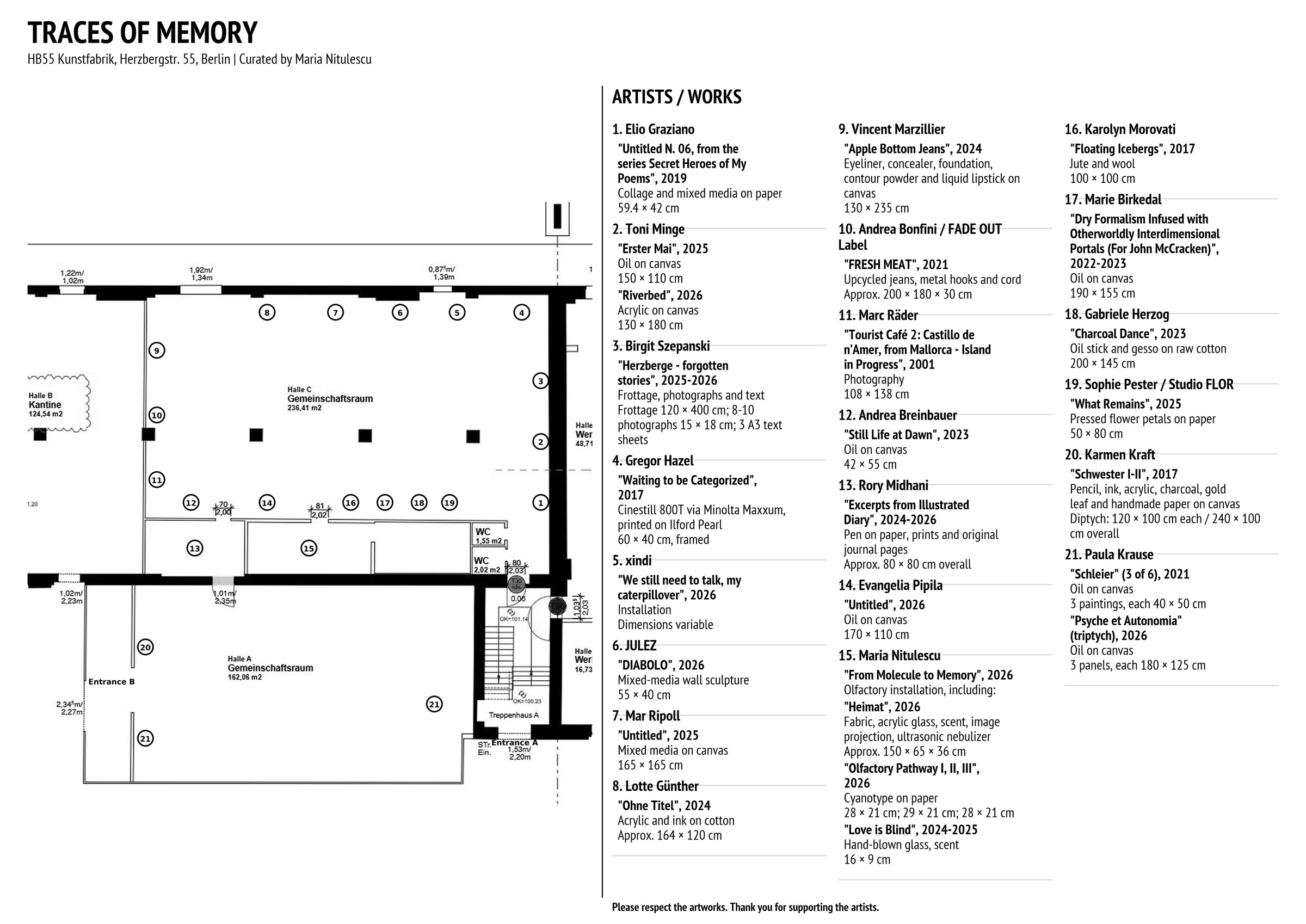
Installation views
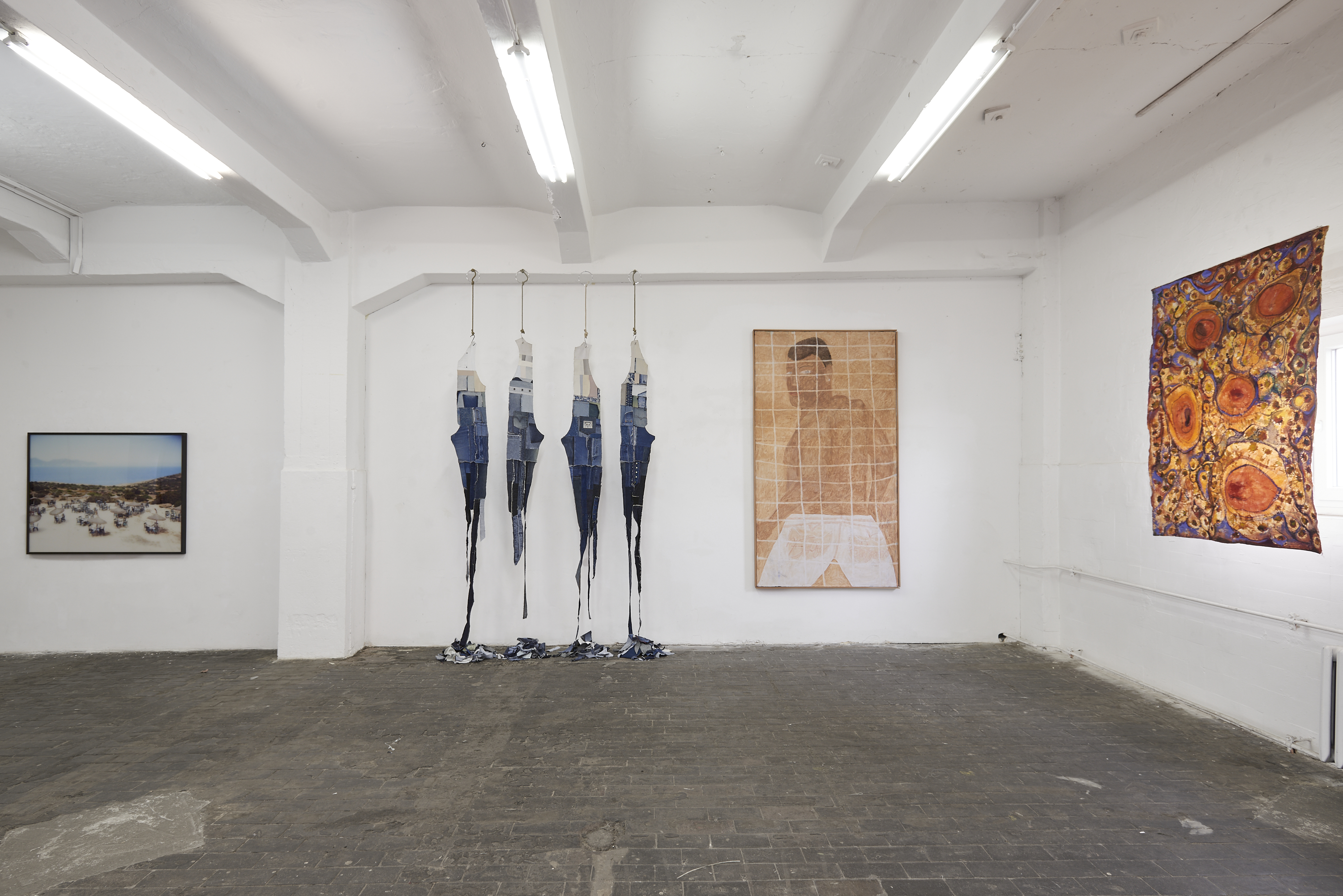
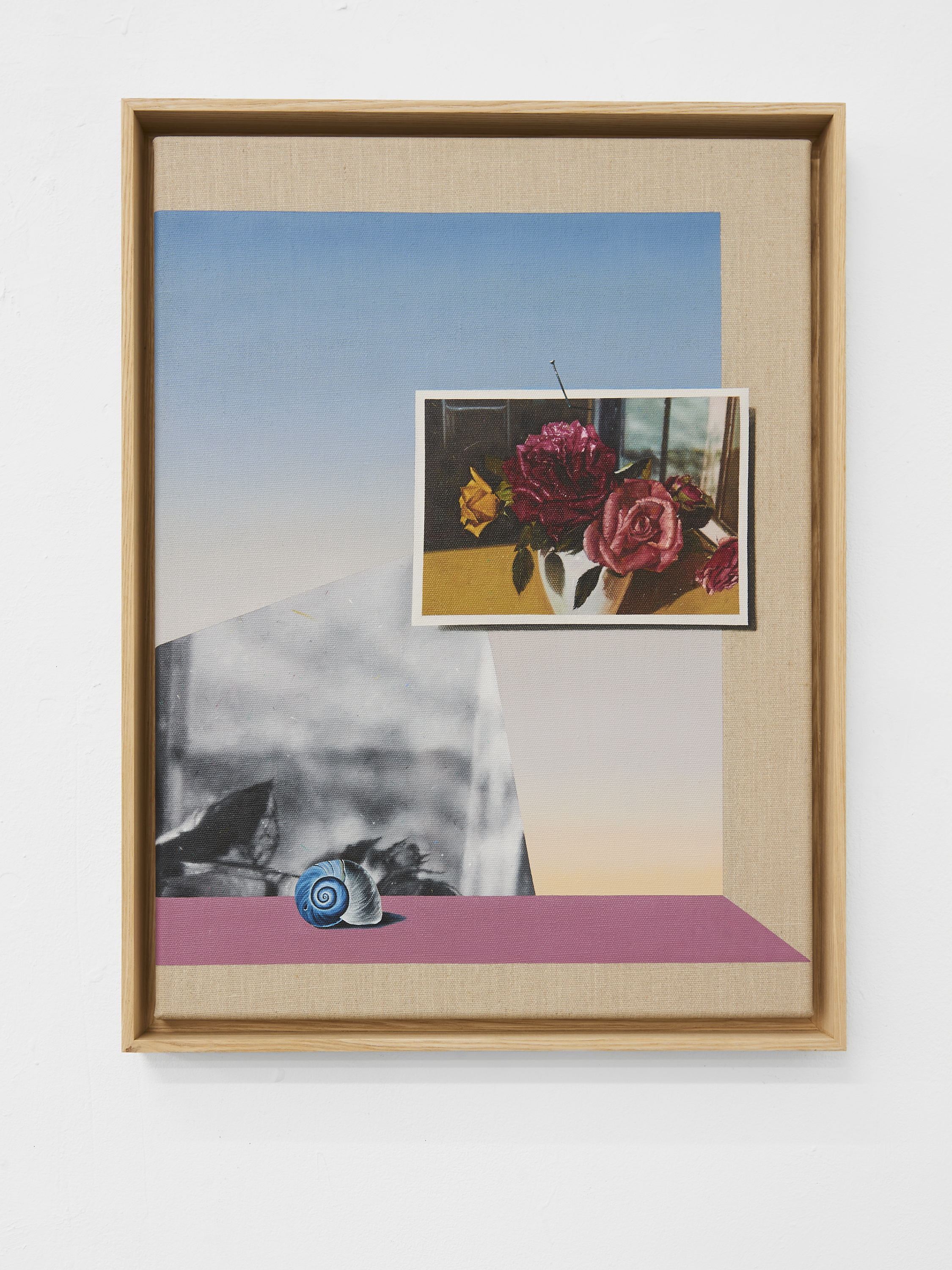
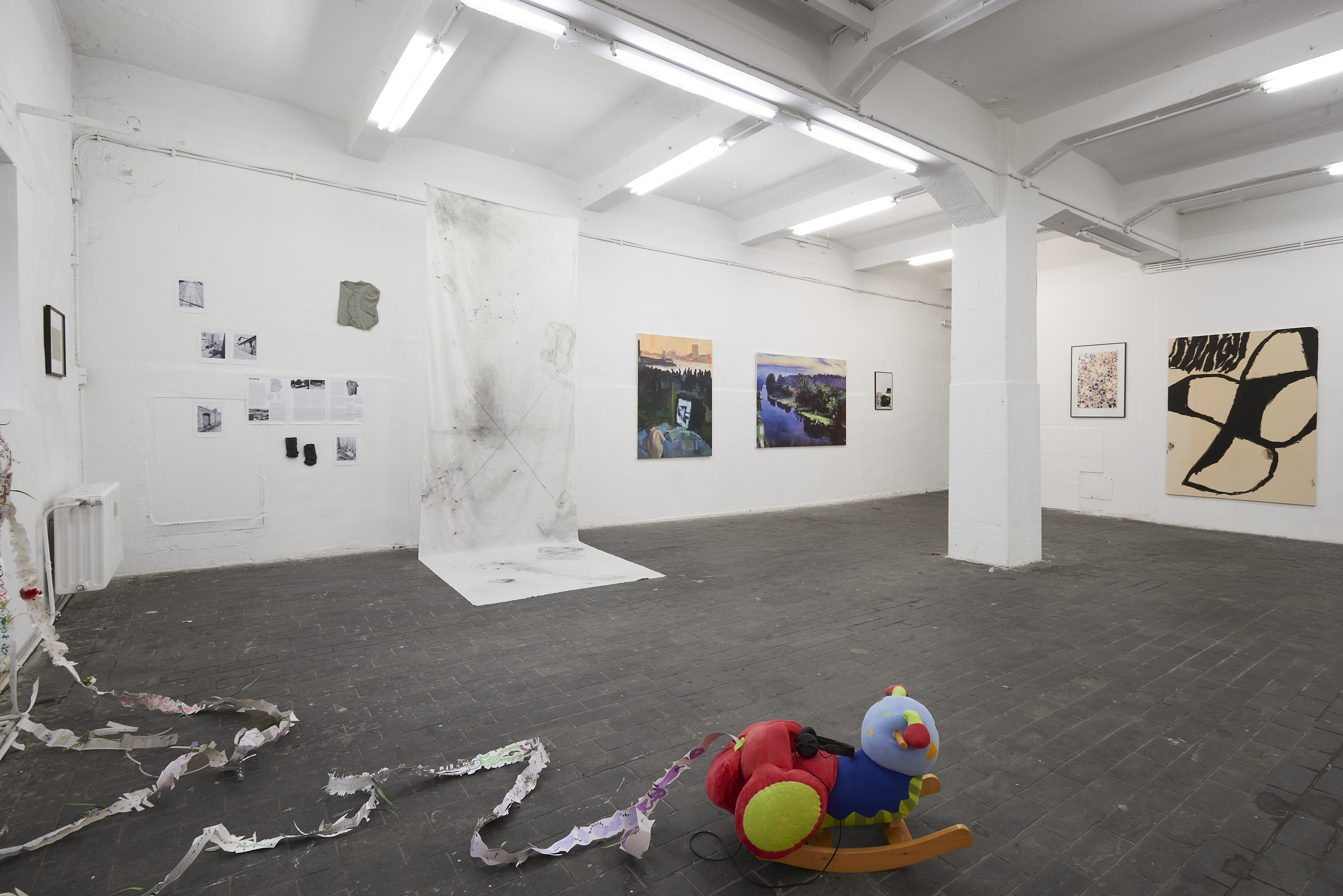
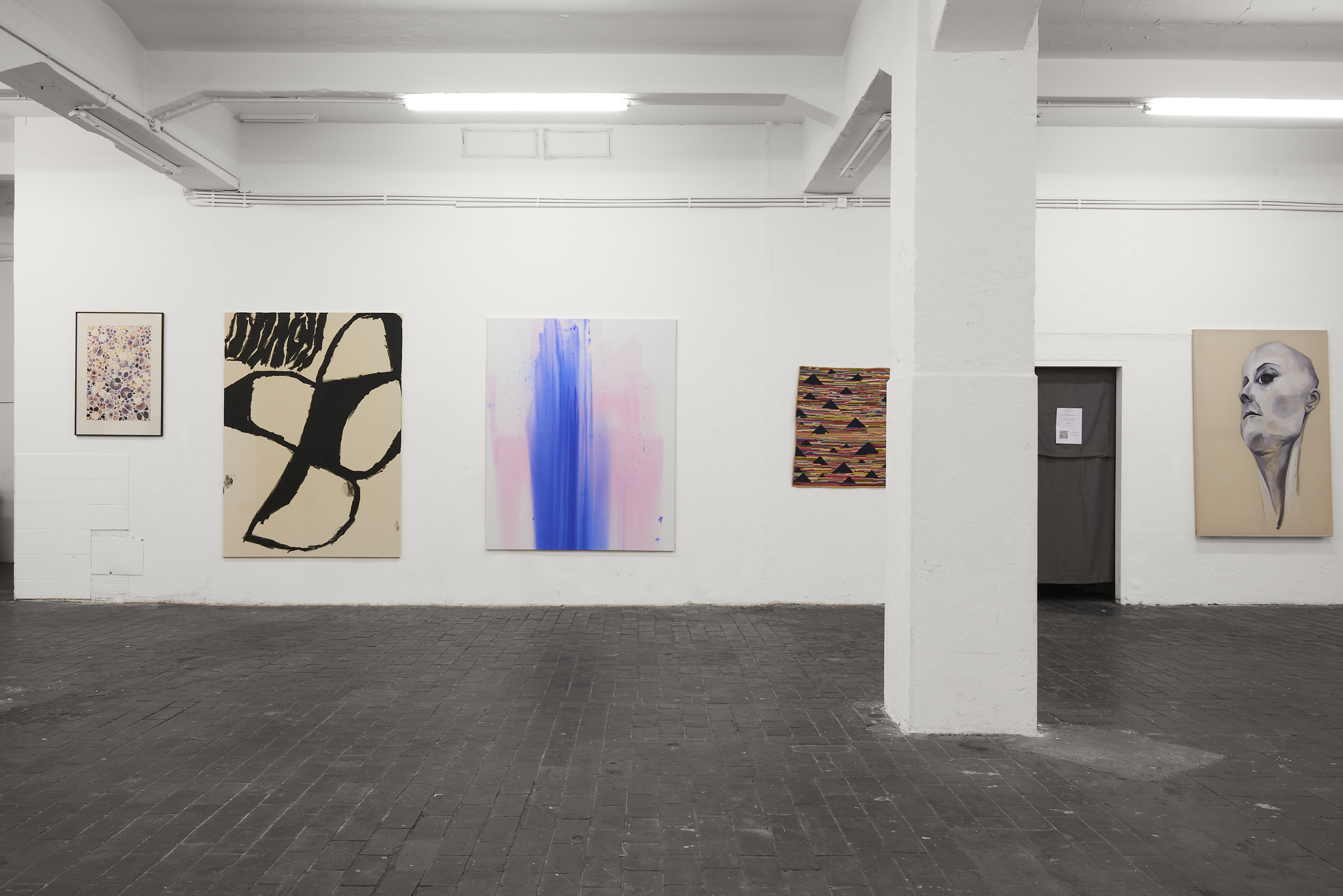
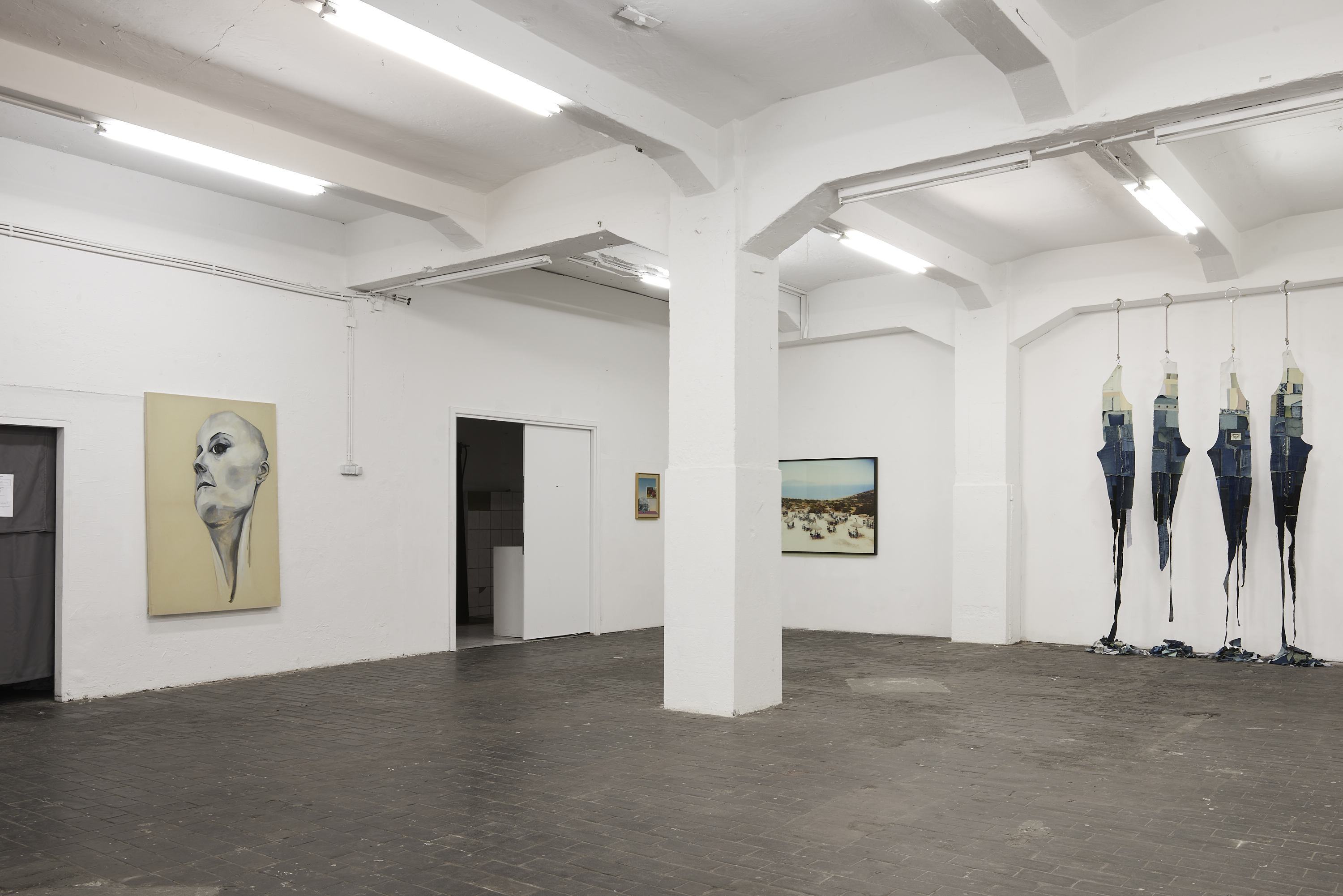
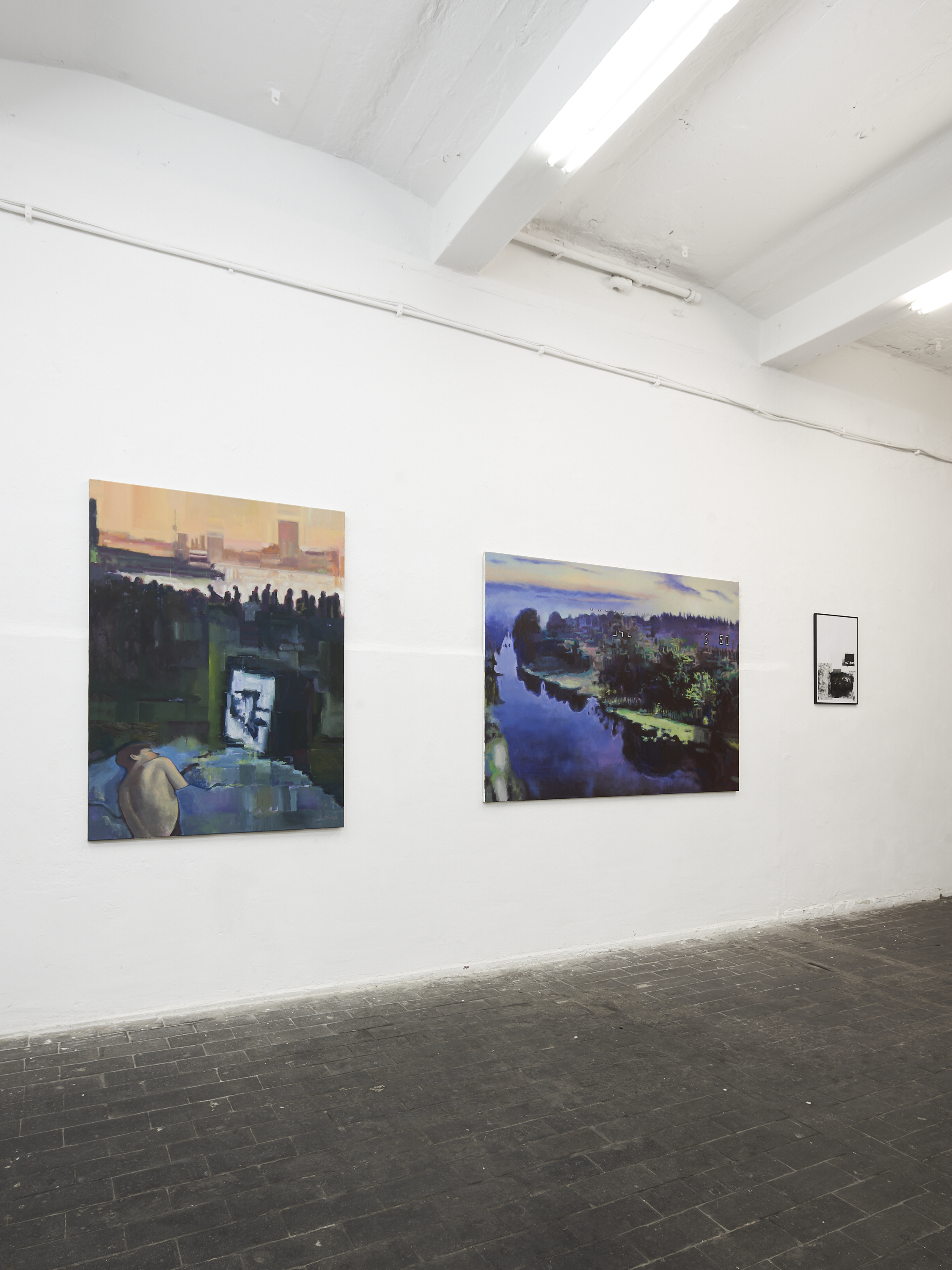
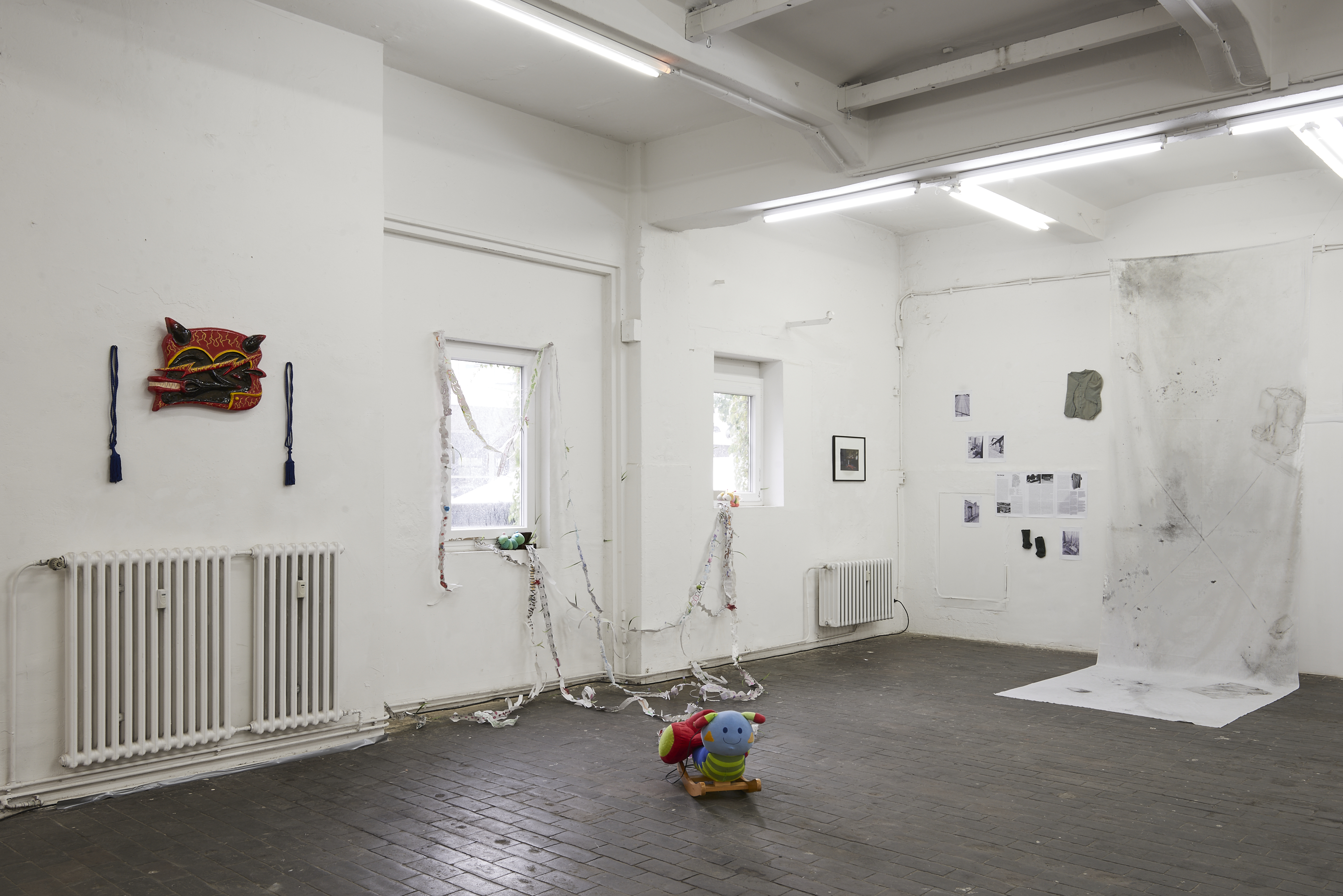
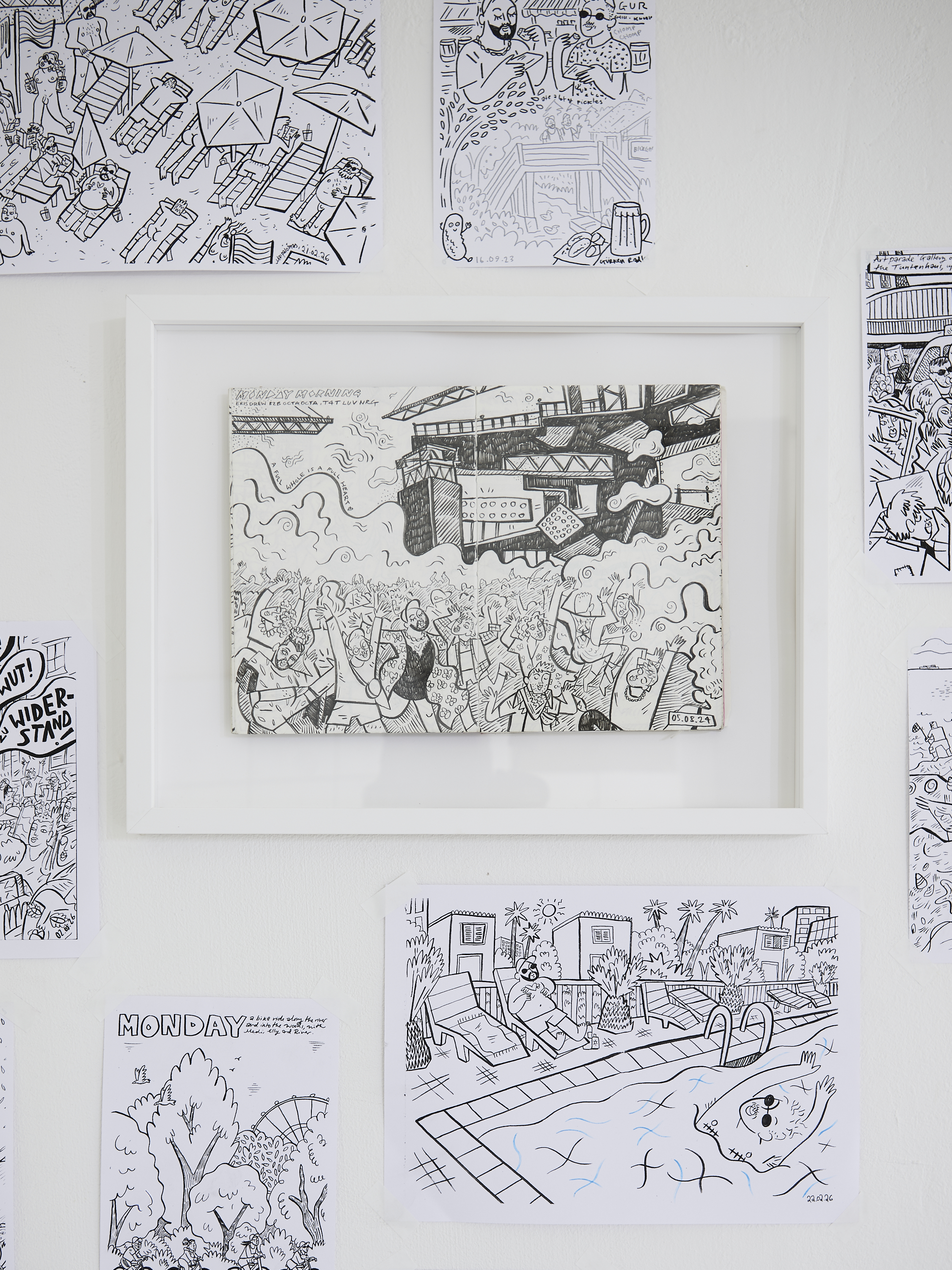
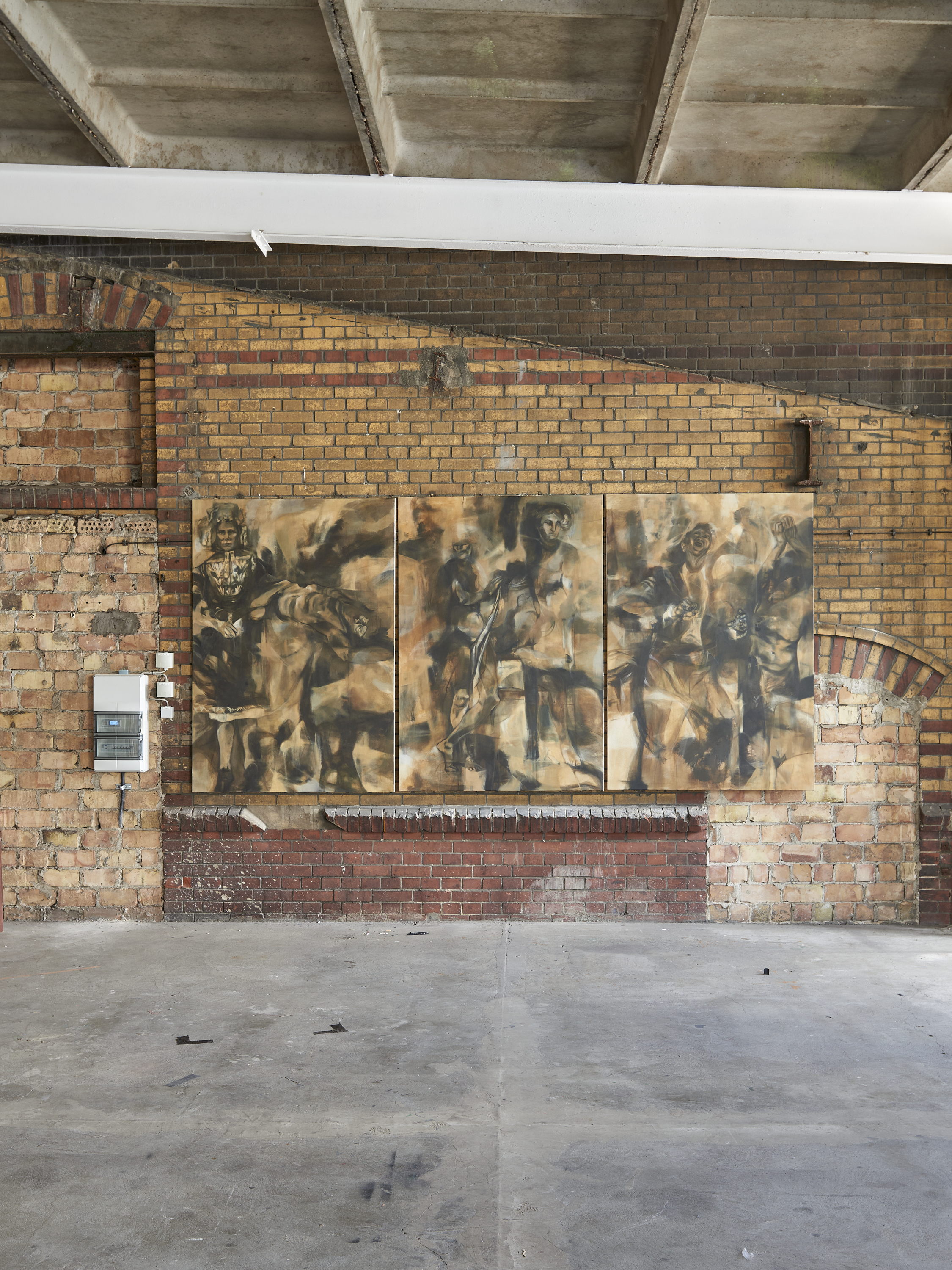
Presented as part of margarine.
Installation views, “Traces of Memory”, Kunstfabrik HB55, Berlin, 4 September 2026, during Lange Nacht der Bilder. Photo: groupshow.eu
Contemporary Infinite
Gregor Hildebrandt · Milen Till
Berlin & Paris, 2018
“Contemporary Infinite” was conceived by Maria Nitulescu in Berlin in 2018 as a curatorial dialogue between the contemporary practices of Gregor Hildebrandt and Milen Till and the artistic legacies of Constantin Brâncuși and Andrei Cădere. Following its first presentation at the Romanian Cultural Institute in Berlin, the dialogue continued later that year in Paris, where the project expanded from the gallery into public space in the context of FIAC Projects (the public-art sector of the Paris art fair FIAC).
At the centre of the project is the question of how artistic ideas persist and transform across generations. Taking Brâncuși and Cădere as points of departure, “Contemporary Infinite” considers the notion of infinity through repetition, seriality, space and the relationship between an artwork and its surroundings.
Rather than approaching art-historical influence as homage or quotation, the project focuses on the moment when an artist moves beyond an influence, absorbs an existing artistic concept and transforms it through an individual contemporary language. Hildebrandt and Till translate these histories through sculpture and collage, establishing connections between different periods while introducing their own materials, methods and cultural contexts.
Across Berlin and Paris, “Contemporary Infinite” therefore traces a dialogue spanning three generations, considering infinity not only as a formal or conceptual theme, but also as a process of artistic transmission: ideas passing from one generation to another, continually altered through new works, materials and contexts.
Berlin — The Beginning of the Dialogue
Romanian Cultural Institute Berlin
3 February – 21 March 2018
Gregor Hildebrandt · Milen Till
Curated by Maria Nitulescu
“Contemporary Infinite” was conceived in Berlin as an encounter between Gregor Hildebrandt and Milen Till, at the time his student at the Akademie der Bildenden Künste München, whose practices already revealed distinct connections to Constantin Brâncuși and Andrei Cădere. In Hildebrandt’s practice, this connection was present through his sculptural columns, repetition and serial structures; in Till’s existing collage “Constantin, Cădere”, from his series “Wie aus dem Gesicht geschnitten”, it appeared directly through portraits of Brâncuși and Cădere combined with references to Brâncuși’s “Endless Column” and Cădere’s “Round Wooden Bar”.
The exhibition brought these existing affinities into dialogue, using them as a point of departure to explore the notion of infinity and how art-historical influences are absorbed, transformed and rearticulated within contemporary practice. The curatorial gesture was the recognition of a connection already present in both artists’ work, opening a dialogue across three generations of artists.
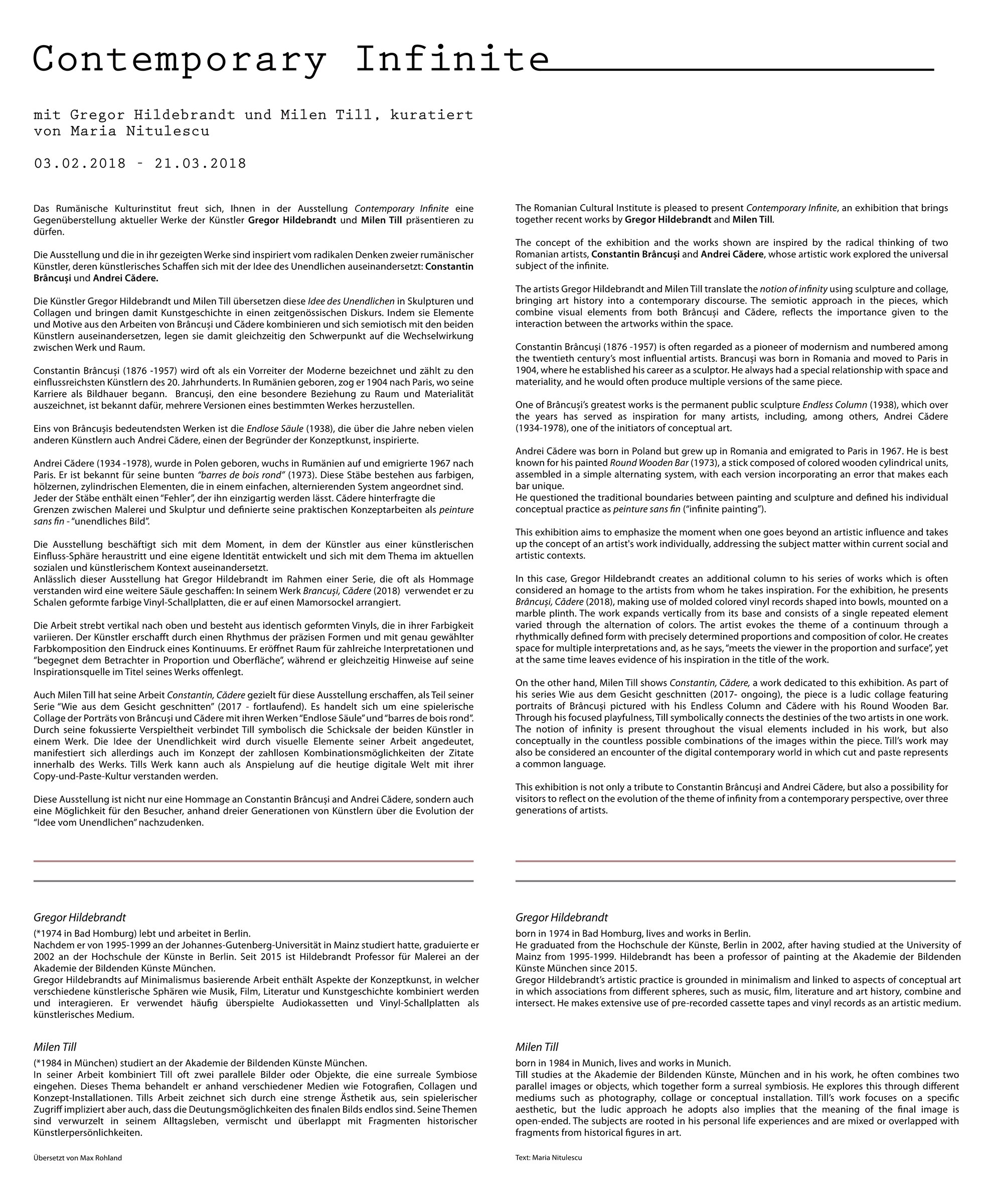
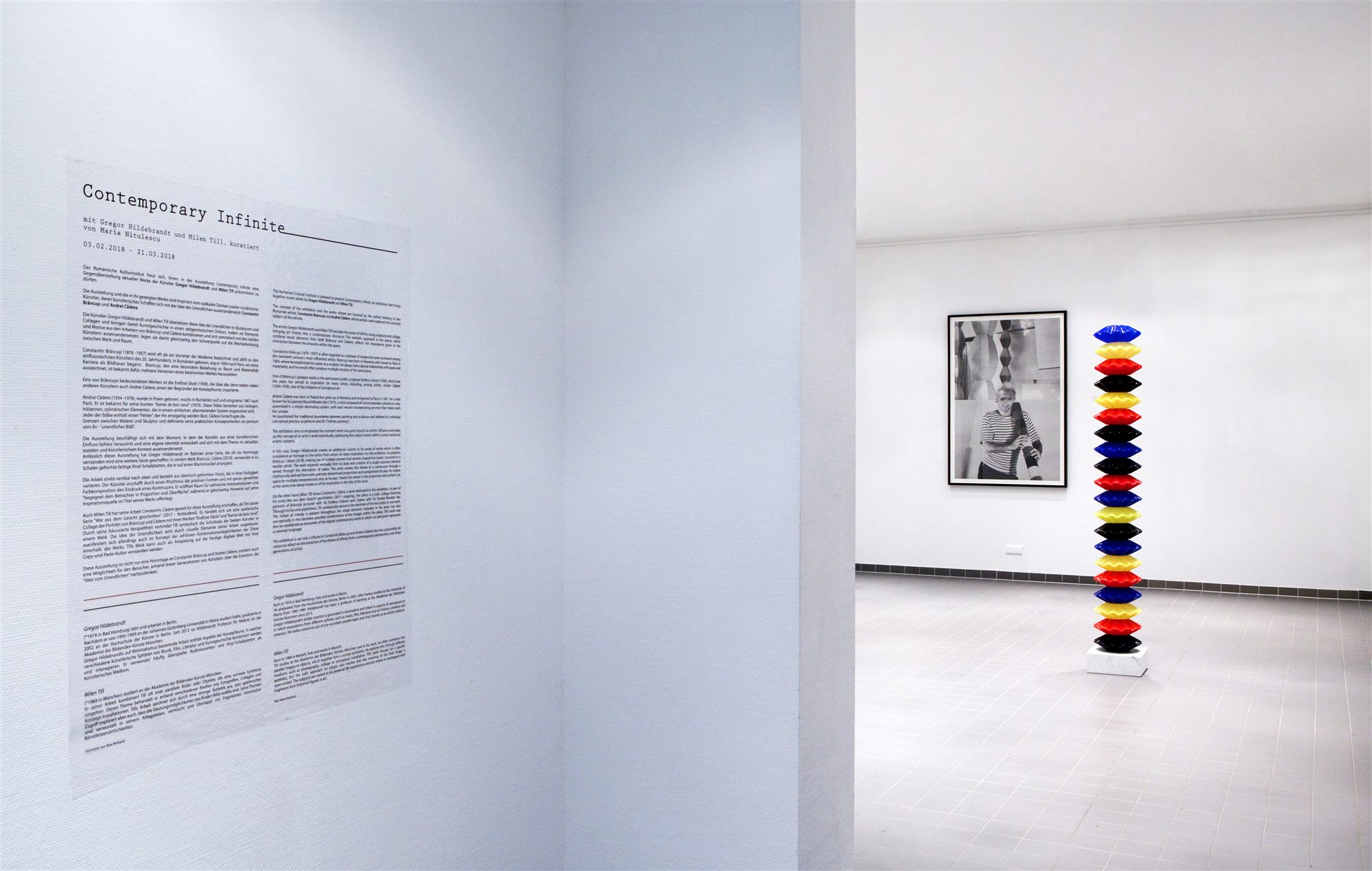
Gregor Hildebrandt, “Brâncuși, Cădere”, 2018, and Milen Till, “Constantin, Cădere”, 2017
Romanian Cultural Institute Berlin
Photo: Petra Fantozzi
Invitation
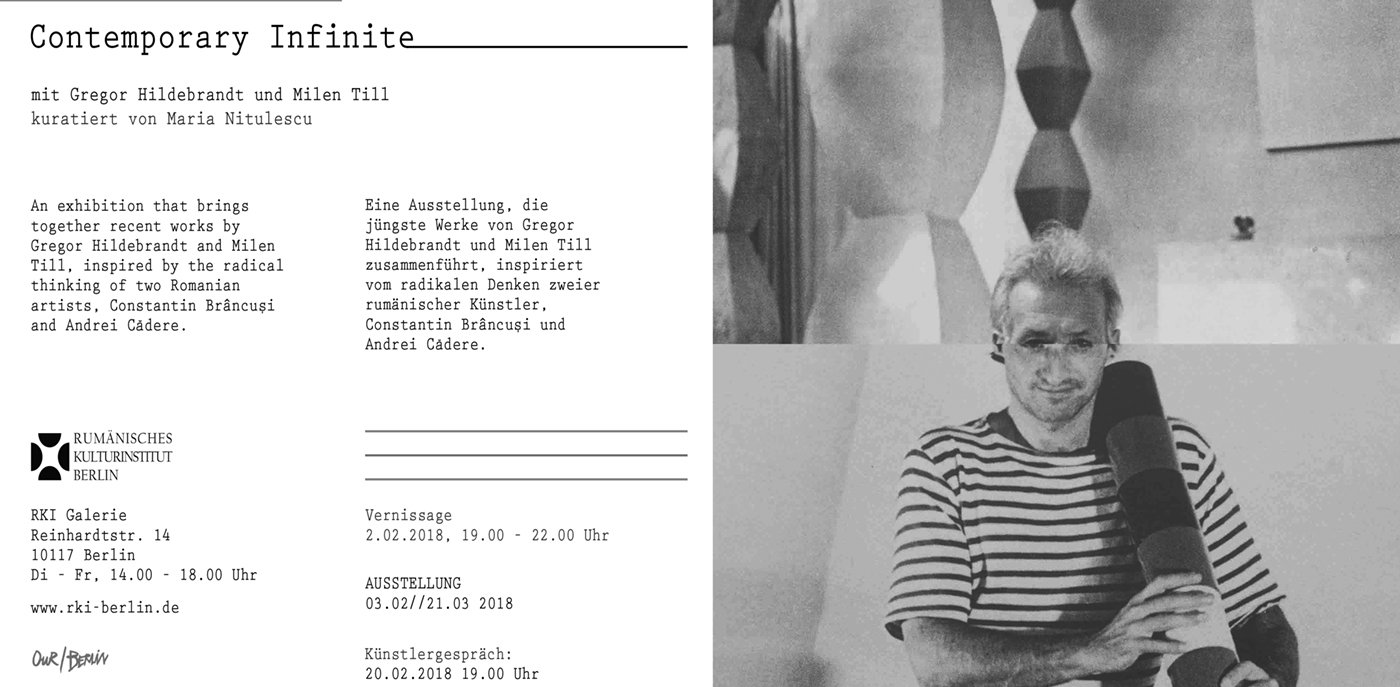
Impressions from the opening
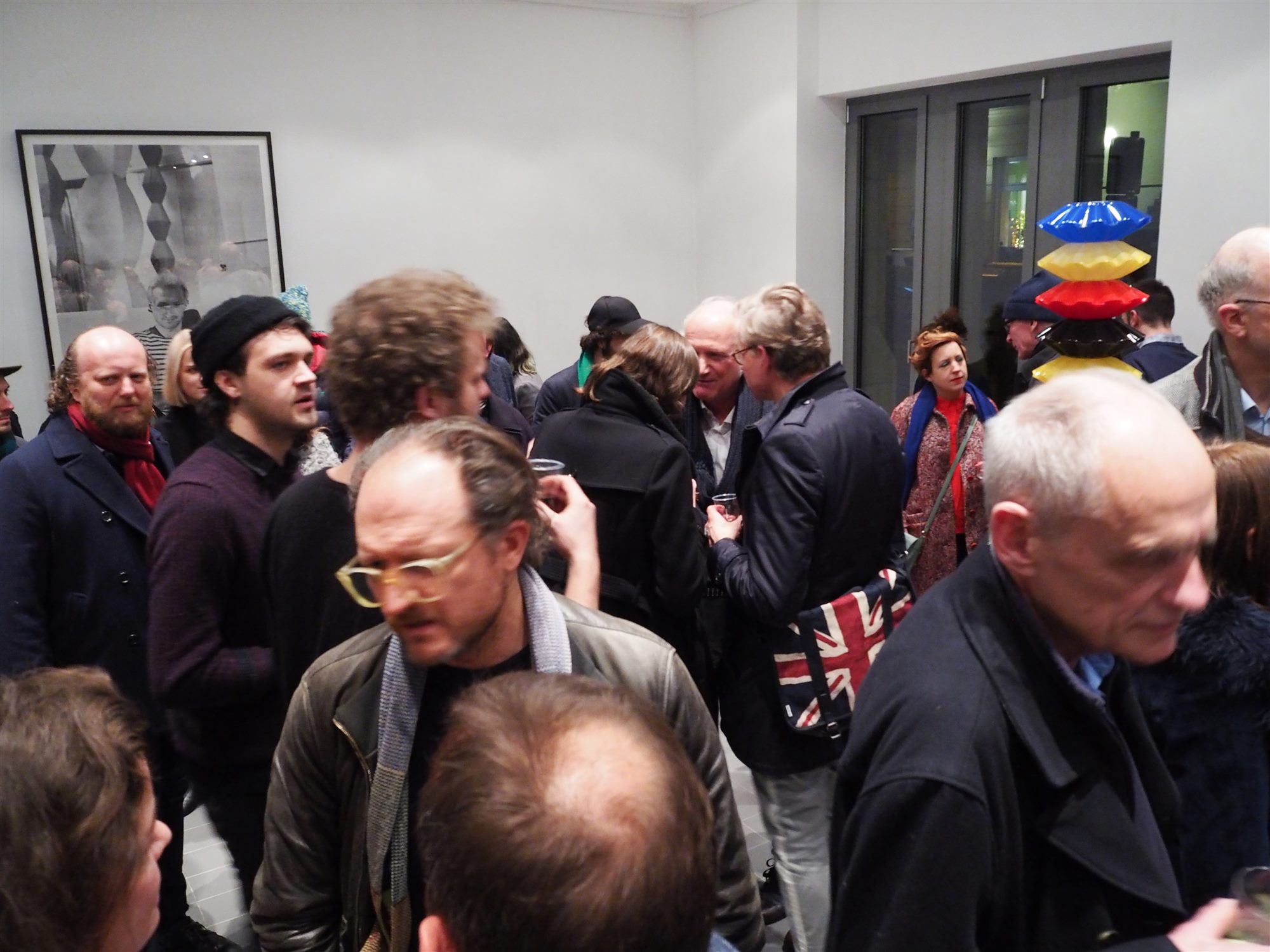
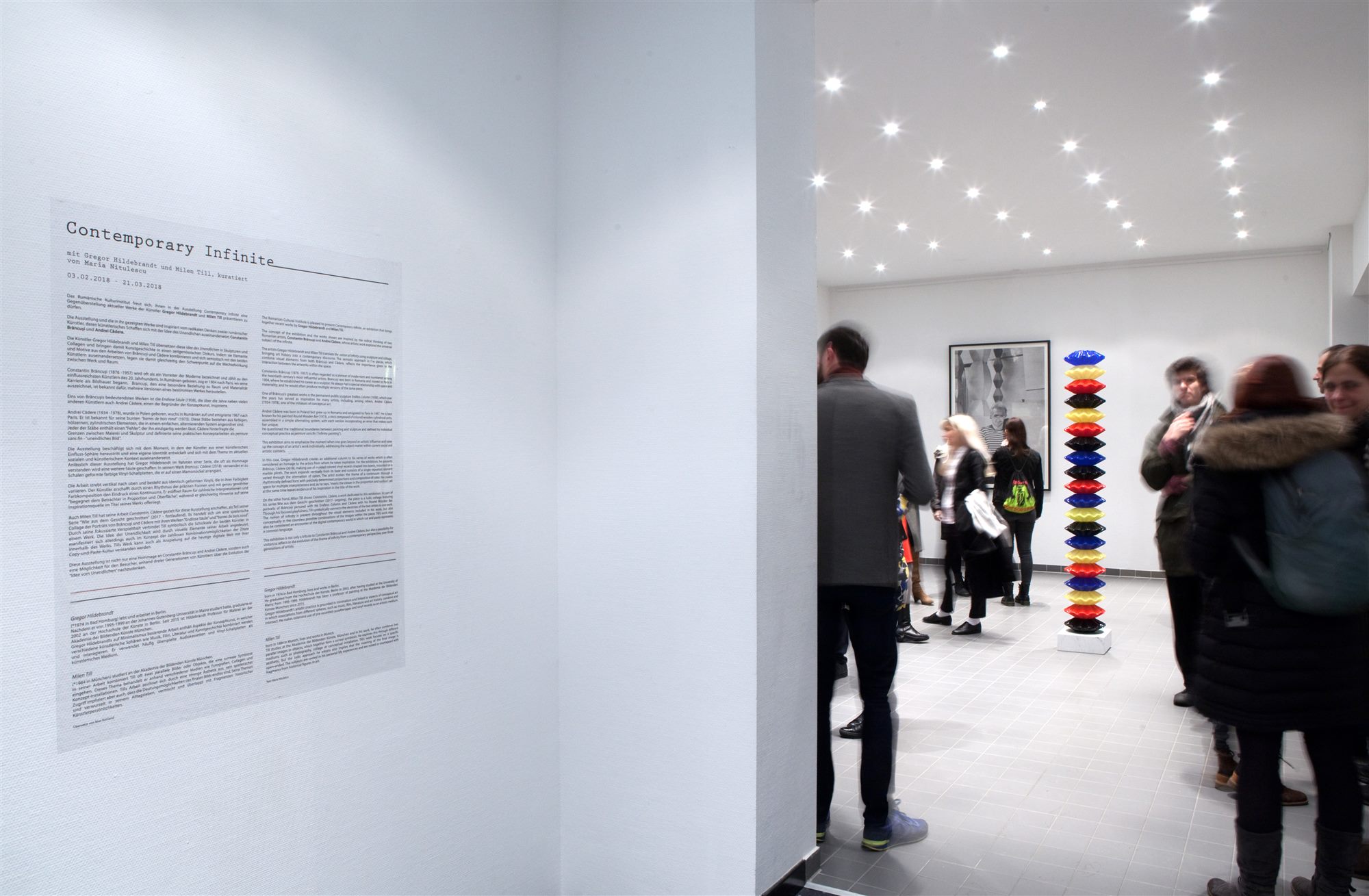
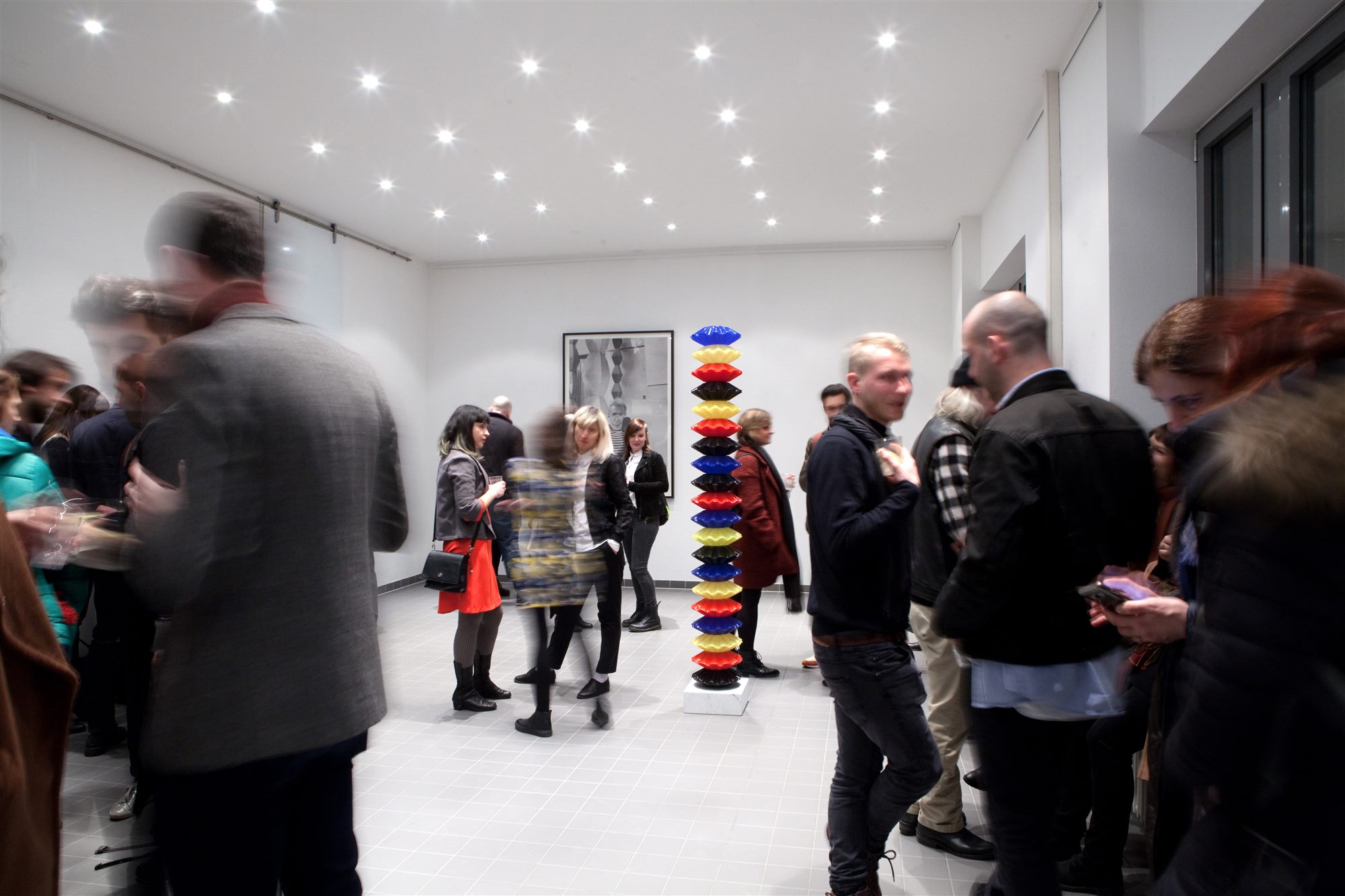
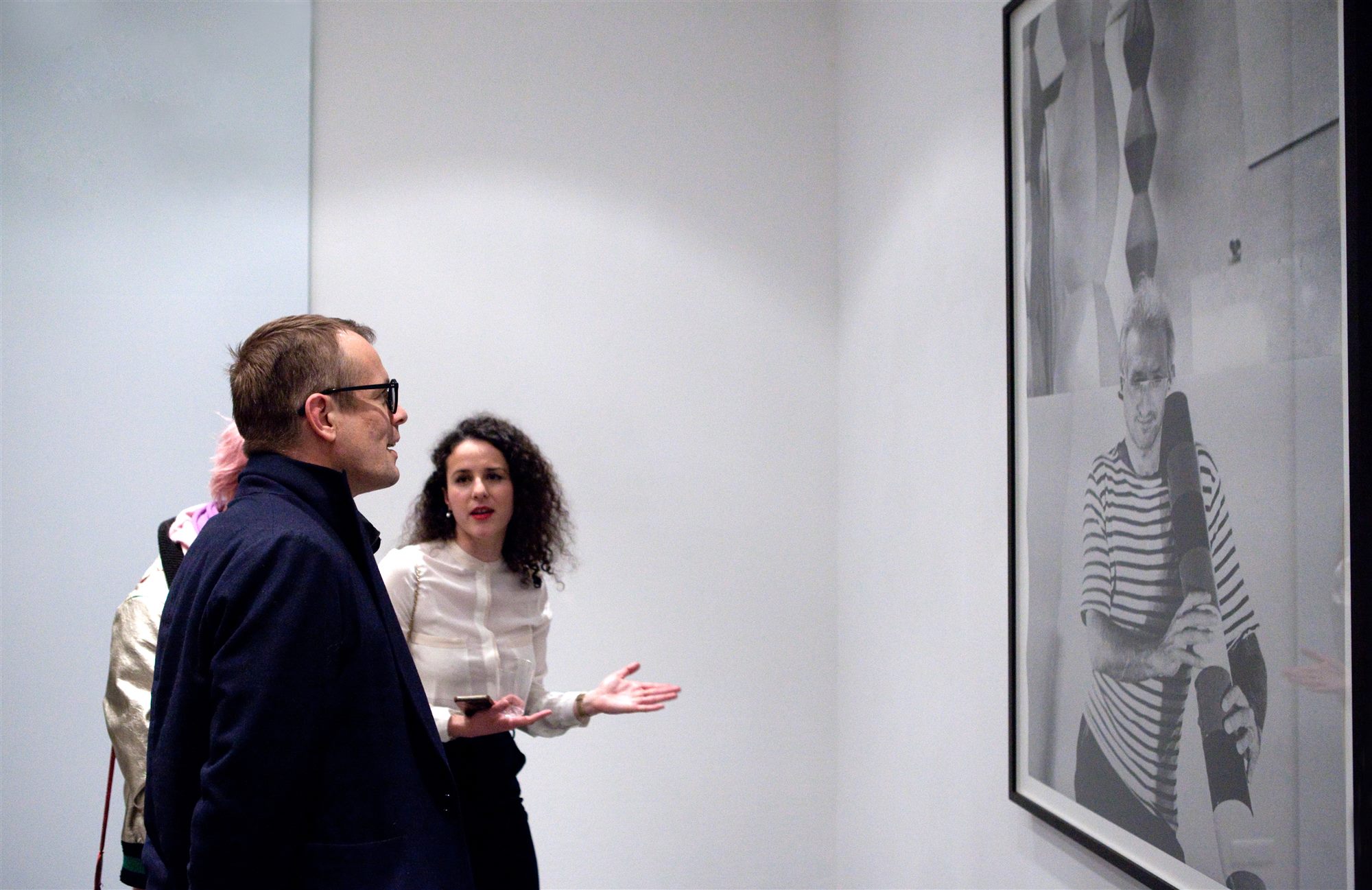
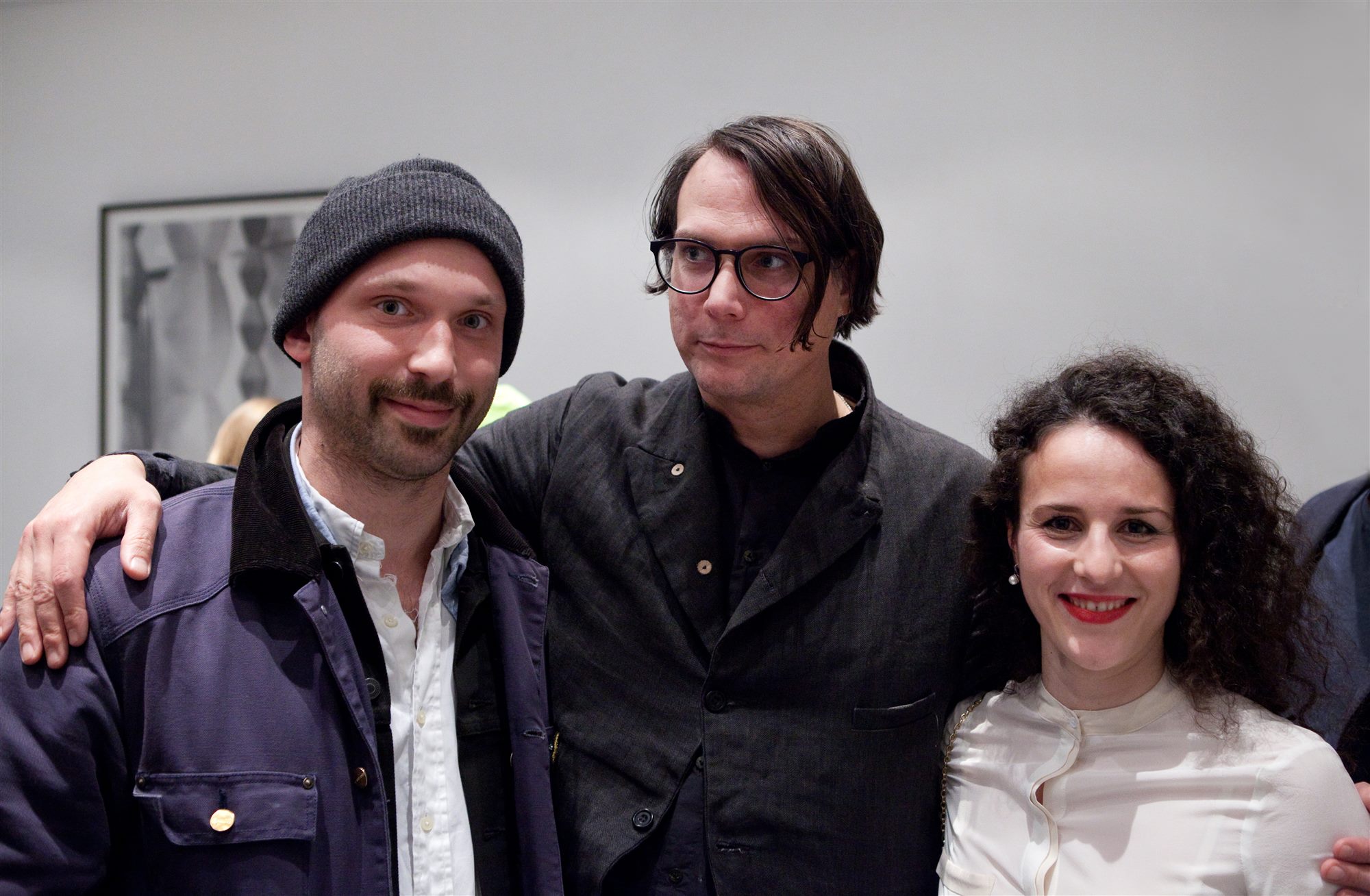
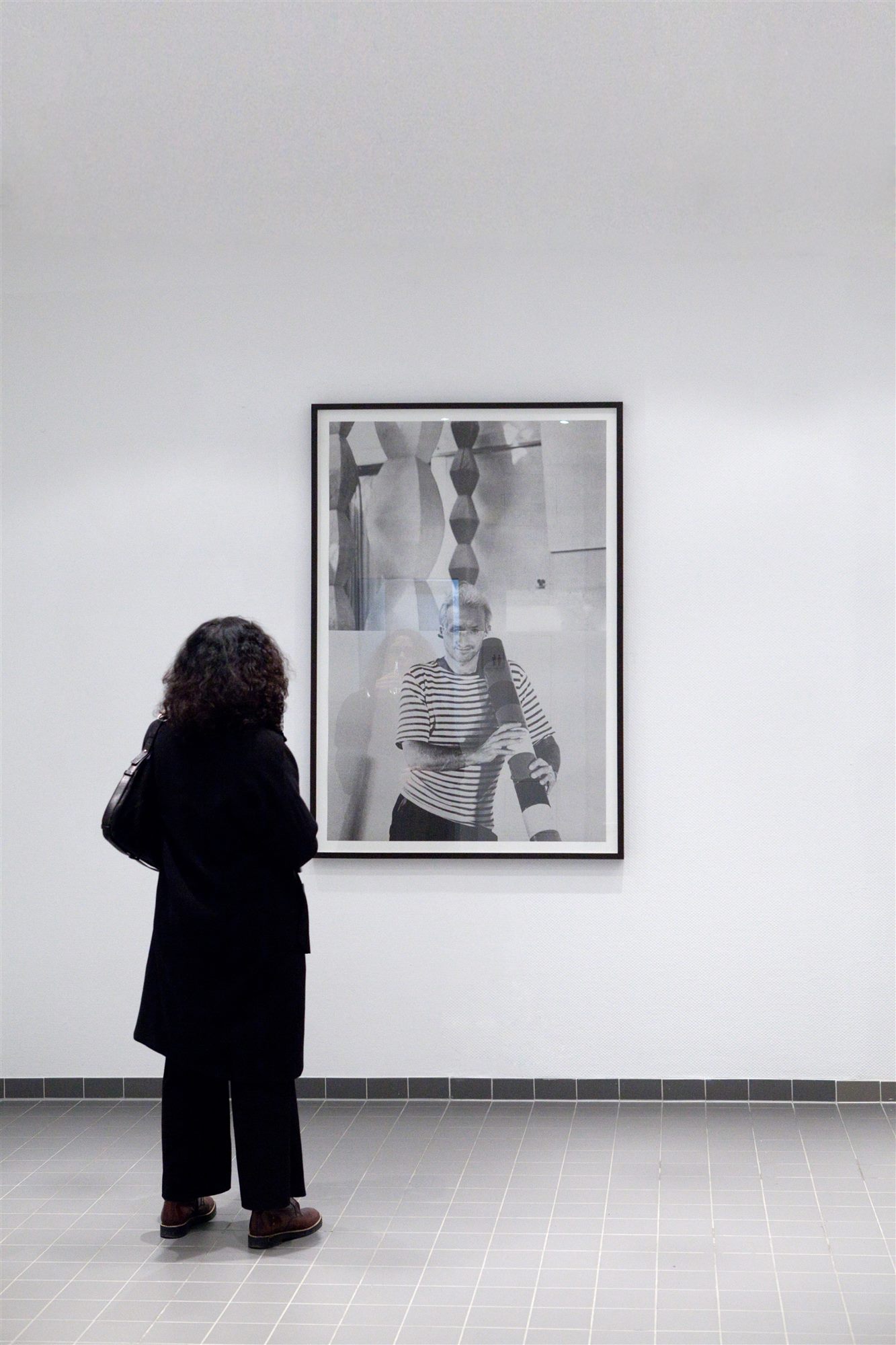
Impressions from the opening, “Contemporary Infinite”, Romanian Cultural Institute Berlin, 02.02.2018. Photo: Petra Fantozzi
Paris — The Dialogue Continues
Galerie Macadam, Romanian Cultural Institute Paris, and public space: Boulevard Winston Churchill, in front of the Grand Palais, as part of FIAC Projects
Exhibition: 20–31 October 2018
FIAC Projects: 18–21 October 2018
Gregor Hildebrandt · Milen Till
Curated by Maria Nitulescu
Later that year, “Contemporary Infinite” continued in Paris, developing the dialogue initiated in Berlin while expanding its physical and conceptual scope. The Paris edition combined the exhibition at Galerie Macadam with a public-space component presented in the context of FIAC Projects, a signature sector of FIAC (Foire Internationale d’Art Contemporain) launched in 2016, featuring around 30 to 40 large-scale outdoor sculptures and in-situ installations across the city. FIAC was then one of Paris’s leading international contemporary art fairs, traditionally held at the Grand Palais; it was later acquired by Art Basel and succeeded by Art Basel Paris.
For Paris, Gregor Hildebrandt created two additional columns. “Cădere – Saâdane – Brâncuși” (2018) extended the project’s chain of references through a new sequence of moulded coloured vinyl records, connecting Cădere’s permutations of colour with Saâdane Afif and Brâncuși.
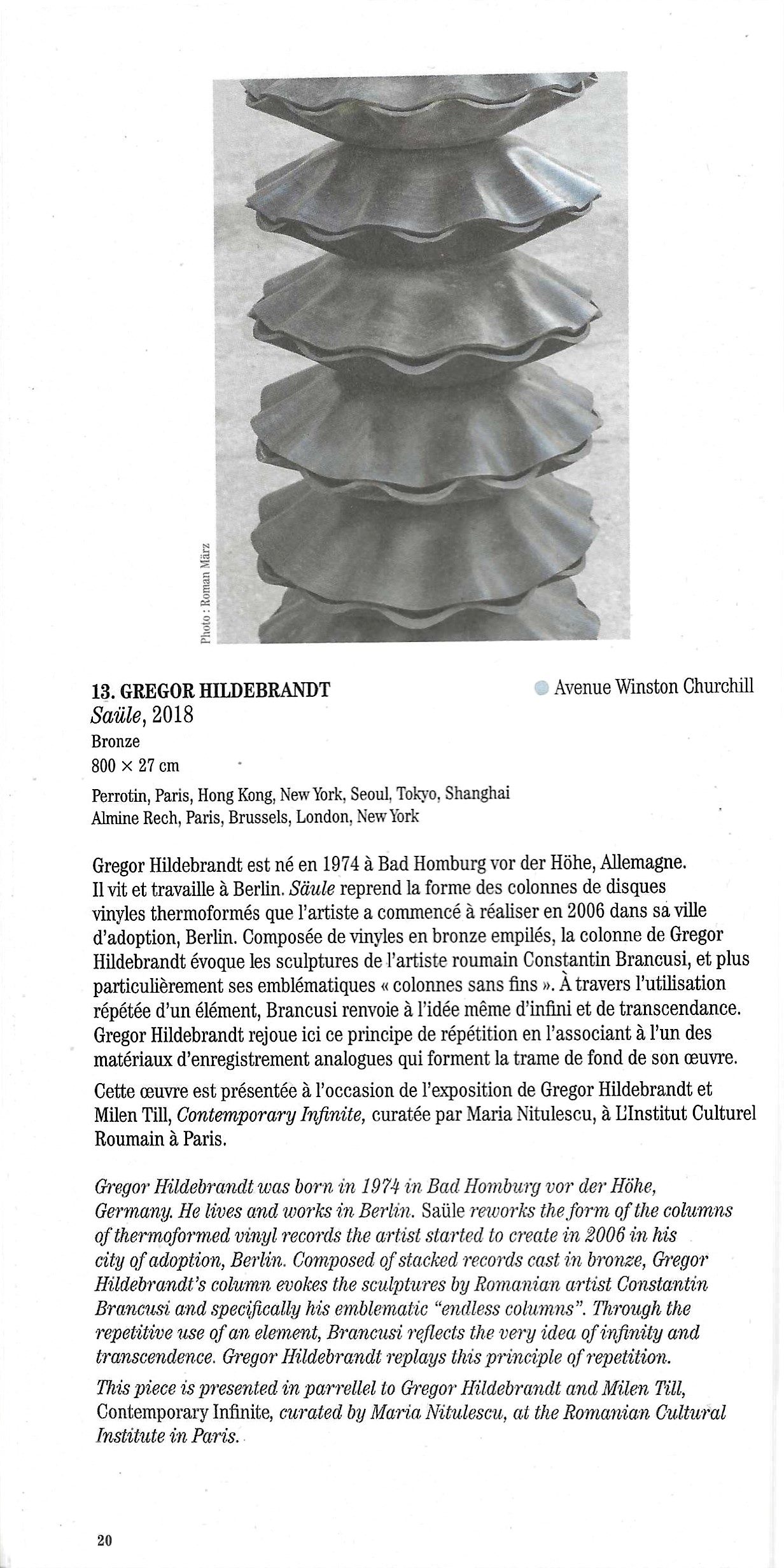
The dialogue then moved beyond the gallery through Hildebrandt’s monumental eight-metre-high “Säule” (2018), with support from Almine Rech Gallery and Galerie Perrotin. Cast in bronze and based on the modular forms of his vinyl-record sculptures, the column was installed in the public space in front of the Grand Palais as part of FIAC Projects.
By moving from the intimate scale of the exhibition space into the urban environment, the Paris edition extended one of the project’s central questions: how an artistic idea changes as it travels, not only between generations and artists, but also between materials, scales, places and contexts.
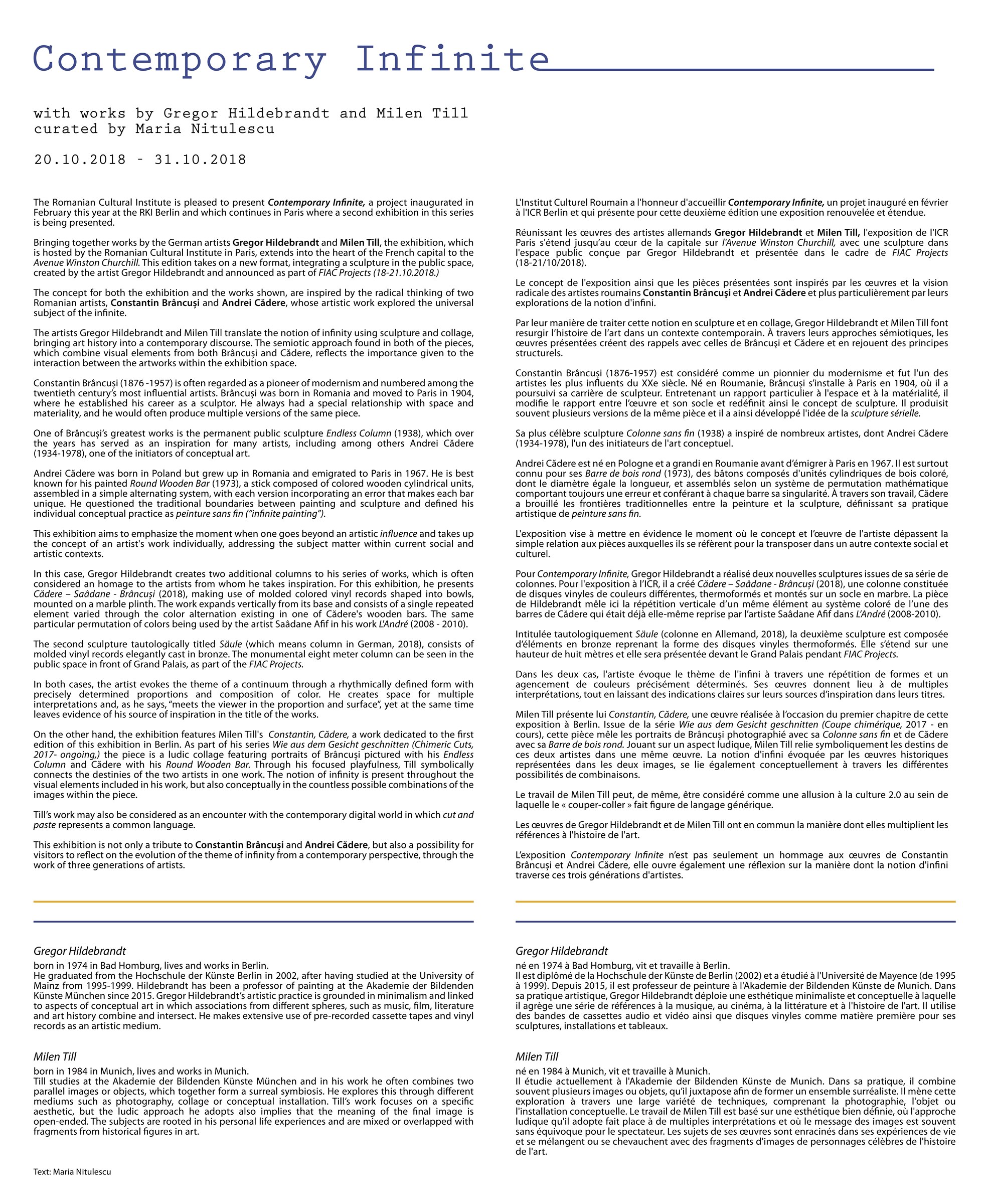
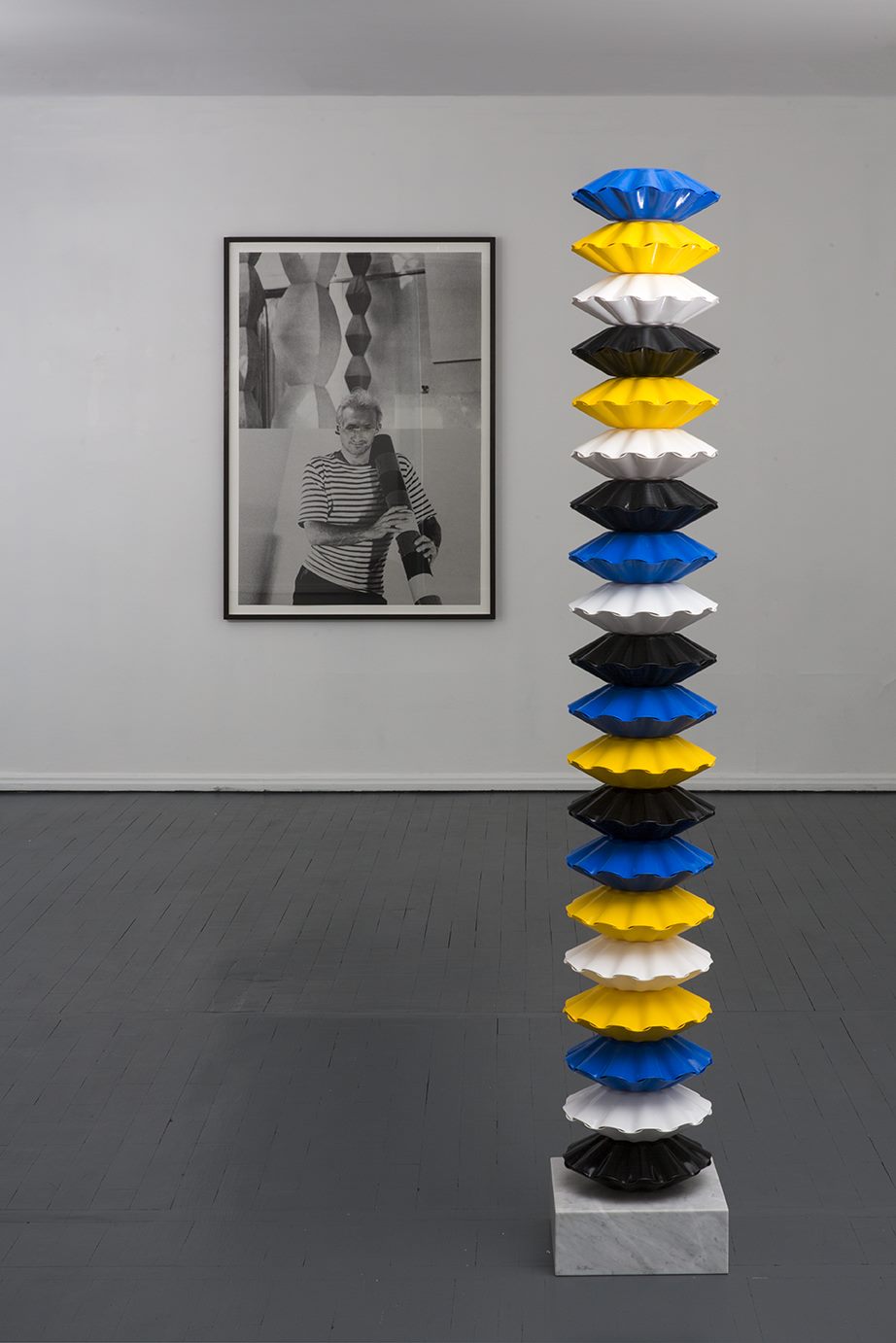
Gregor Hildebrandt, “Cădere – Saâdane – Brâncuși”, 2018; compression-molded records, metal bar, marble plinth, 208.5 × 31 × 31 cm. Milen Till, “Constantin, Cădere”, 2017, from the series “Wie aus dem Gesicht geschnitten” (Chimeric Cuts, 2017–ongoing); collage, 150 × 100 cm.
Image rights: Nabil Boutros, courtesy of the artists and Romanian Cultural Institute Paris
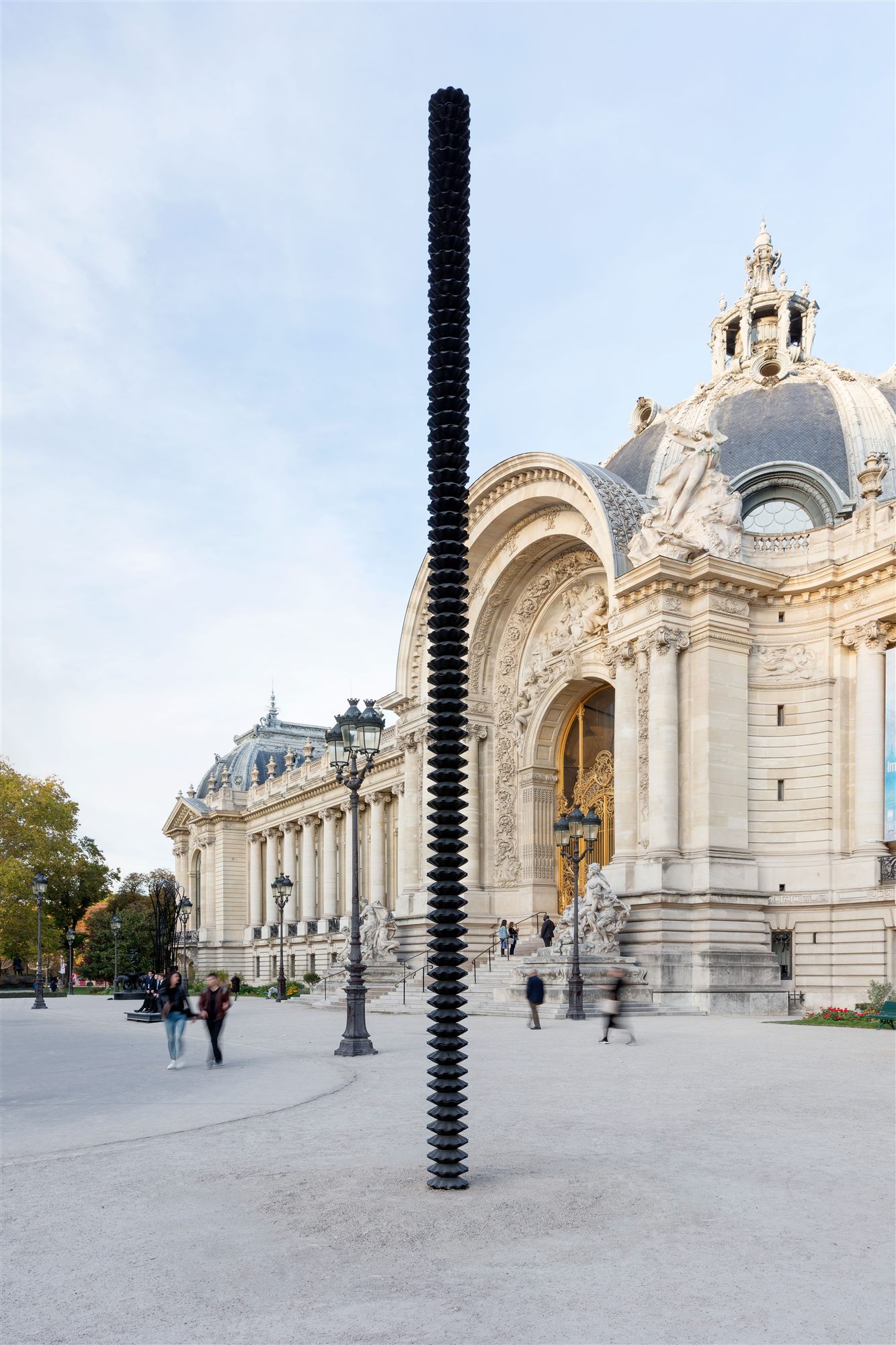
Gregor Hildebrandt, “Säule”, 2018; patinated bronze, 800 × 27.5 cm (314 15/16 × 10 13/16 in); edition 2/3 + 1AP.
Image rights: Claire Dorn, courtesy of Almine Rech Gallery and Galerie Perrotin
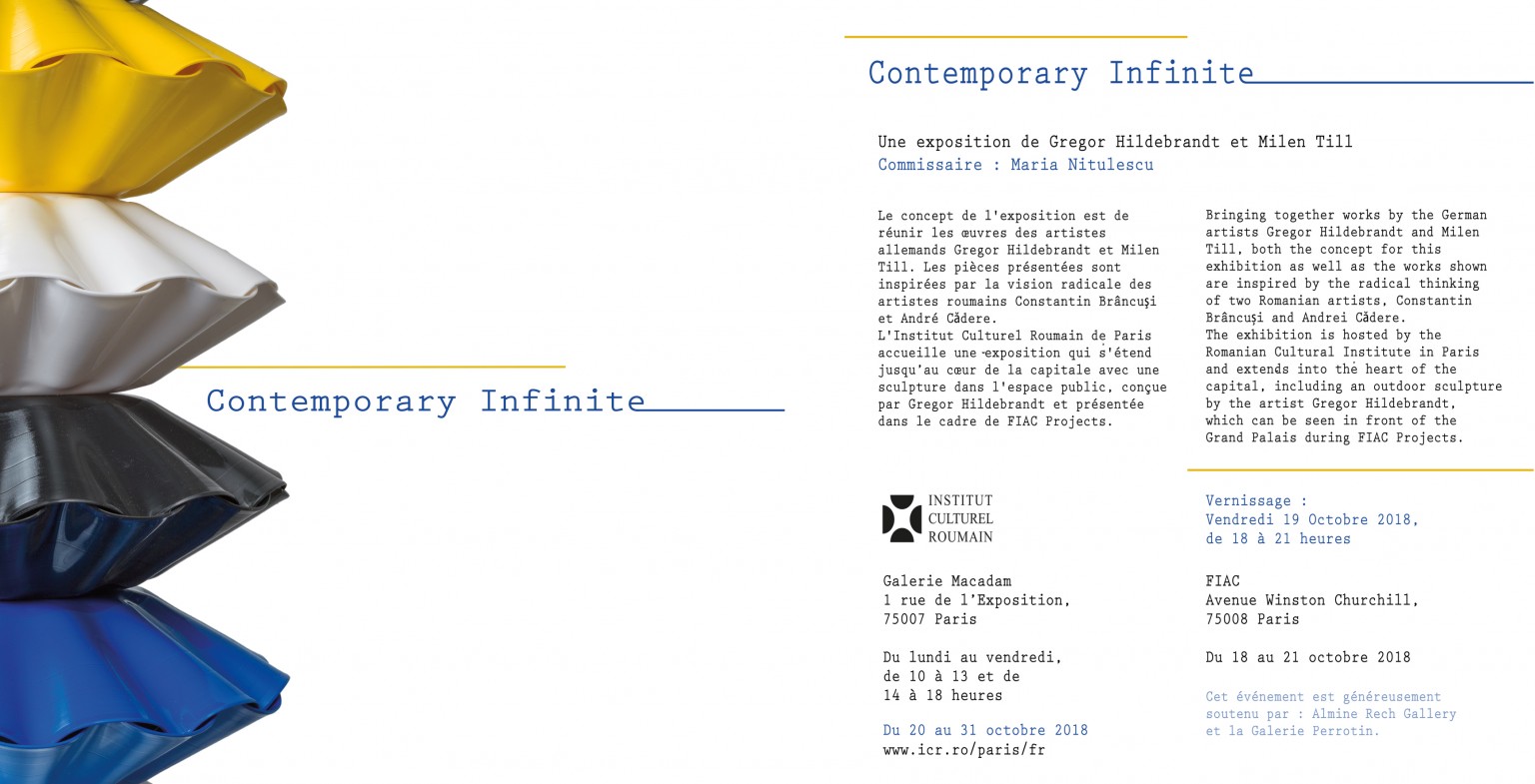
Invitation
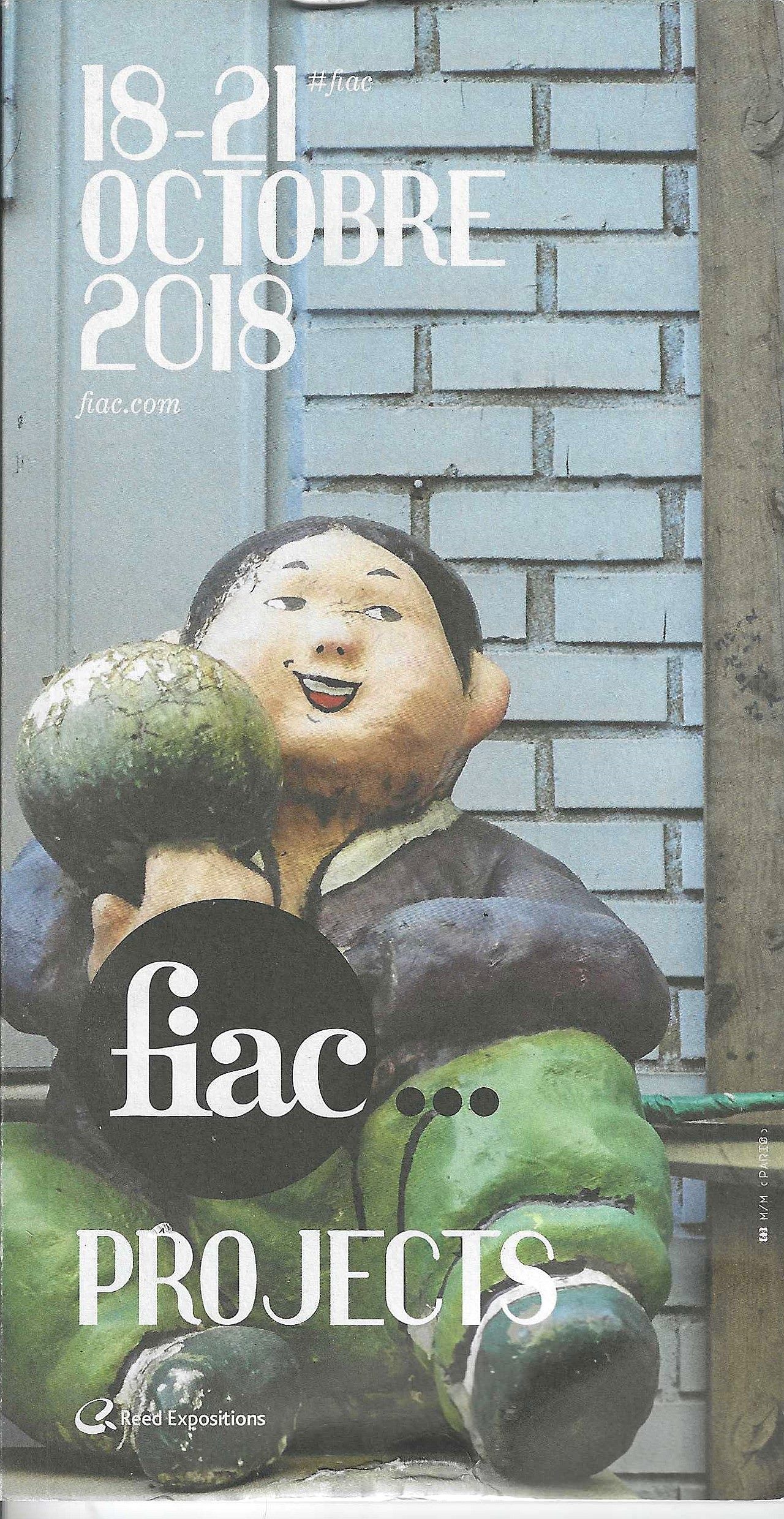
FIAC Projects catalogue
Impressions from the opening
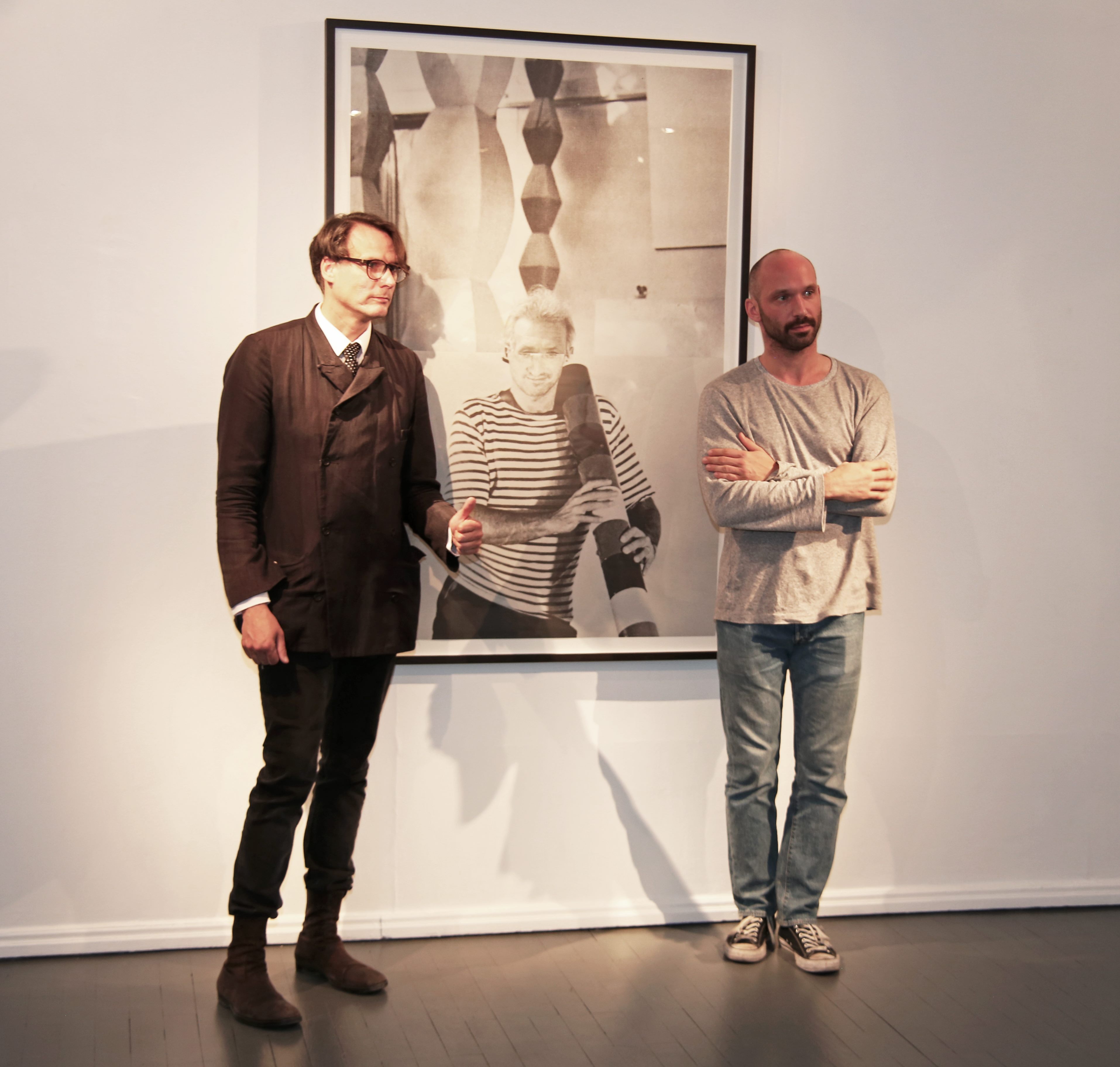
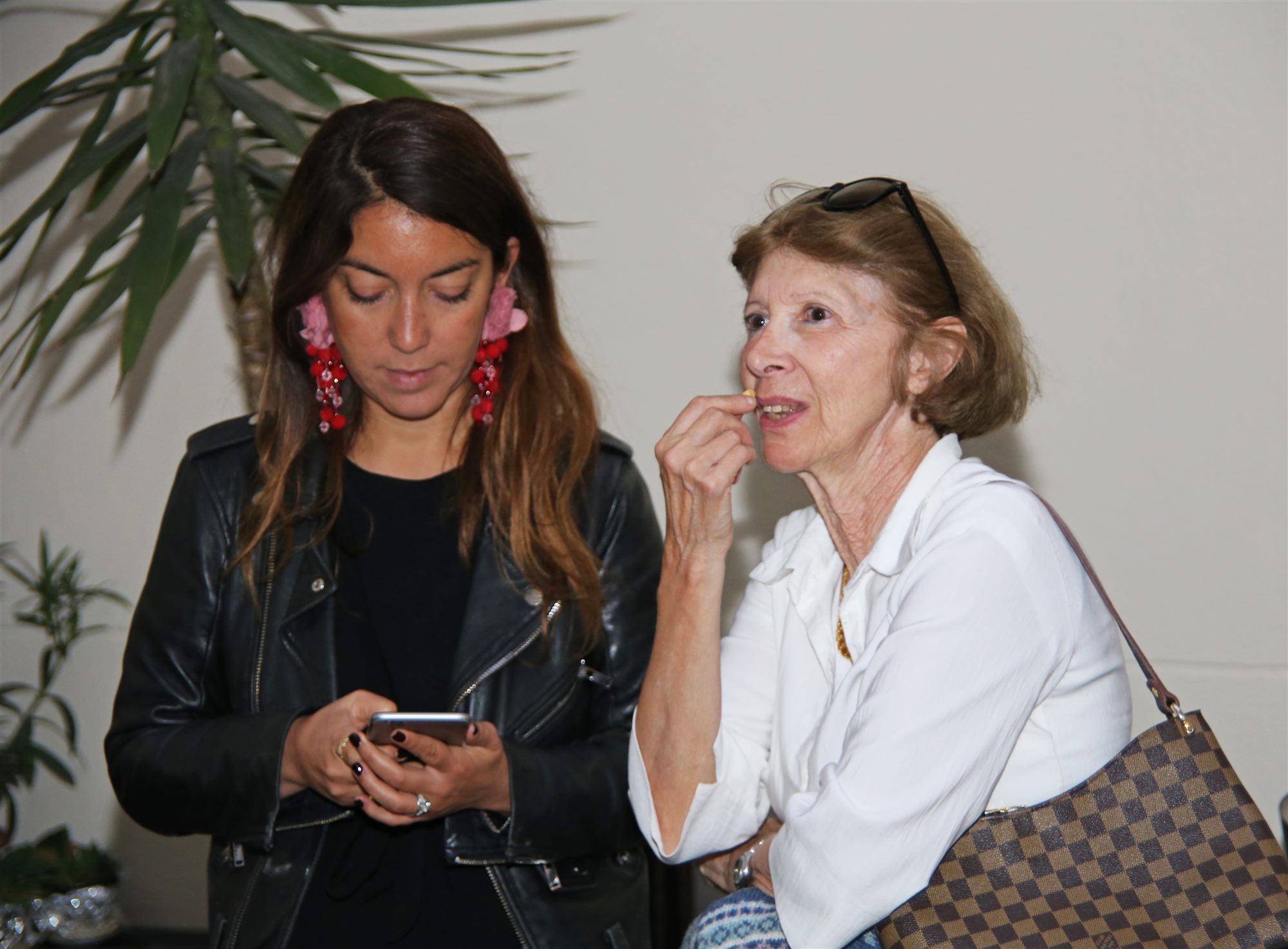
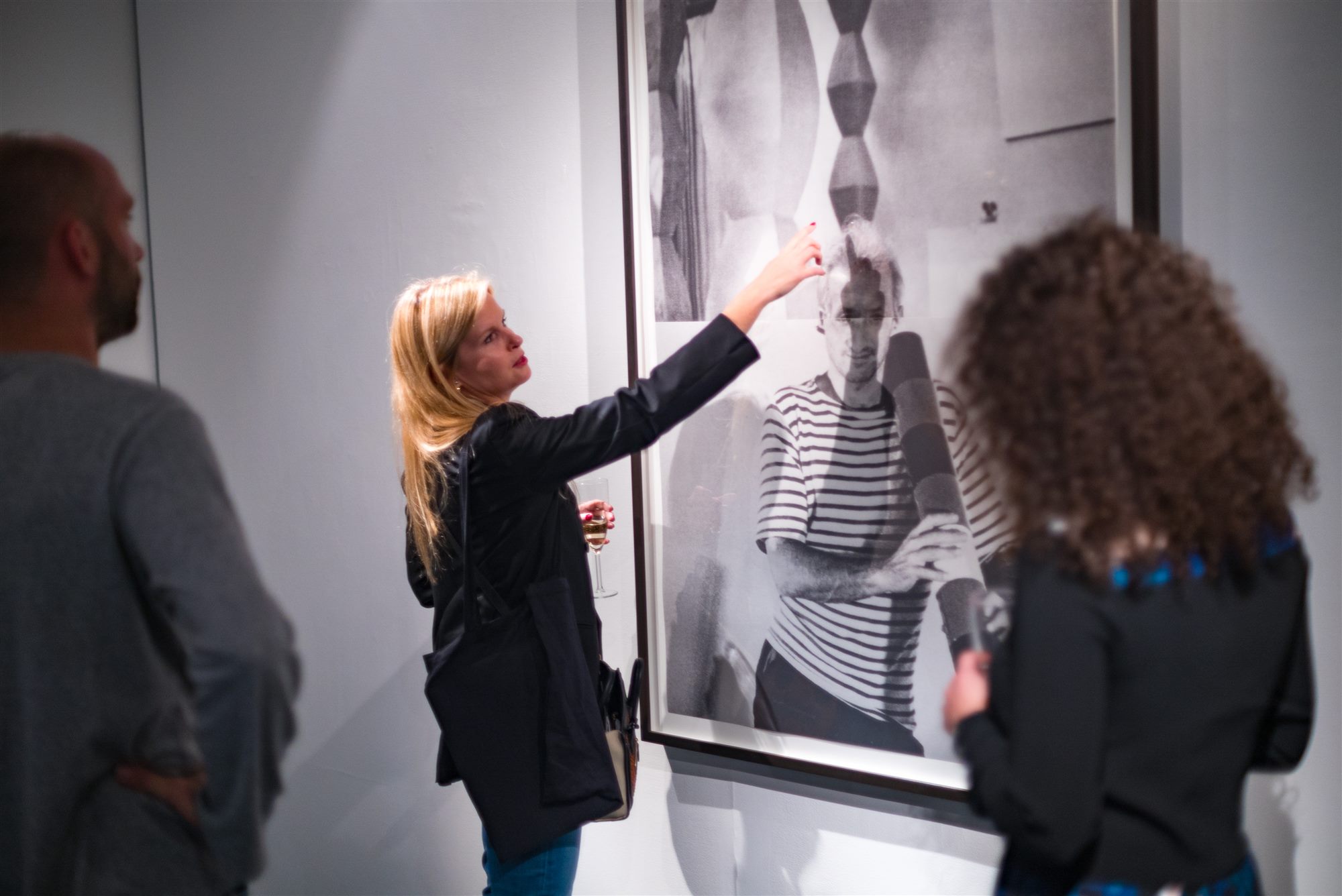
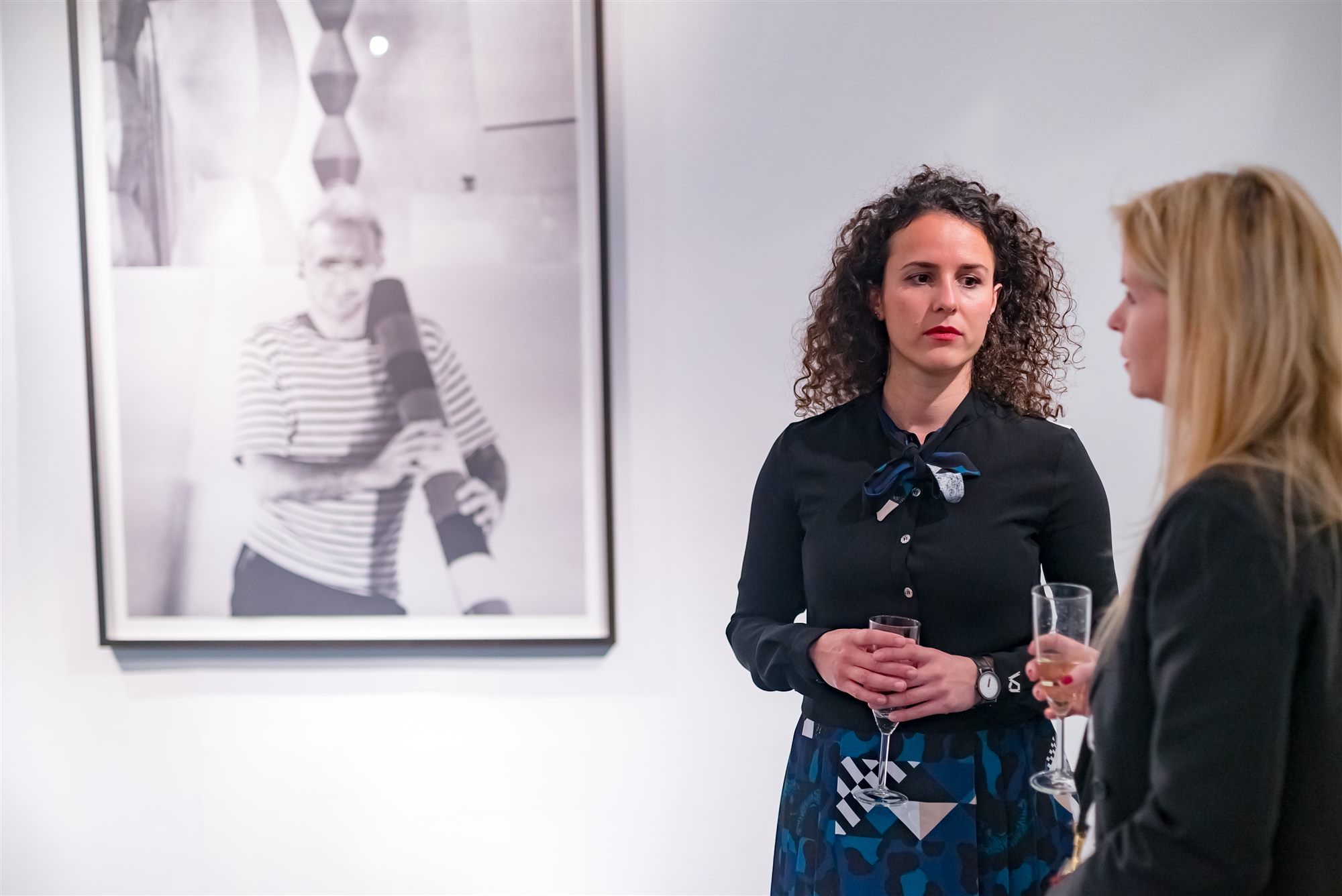
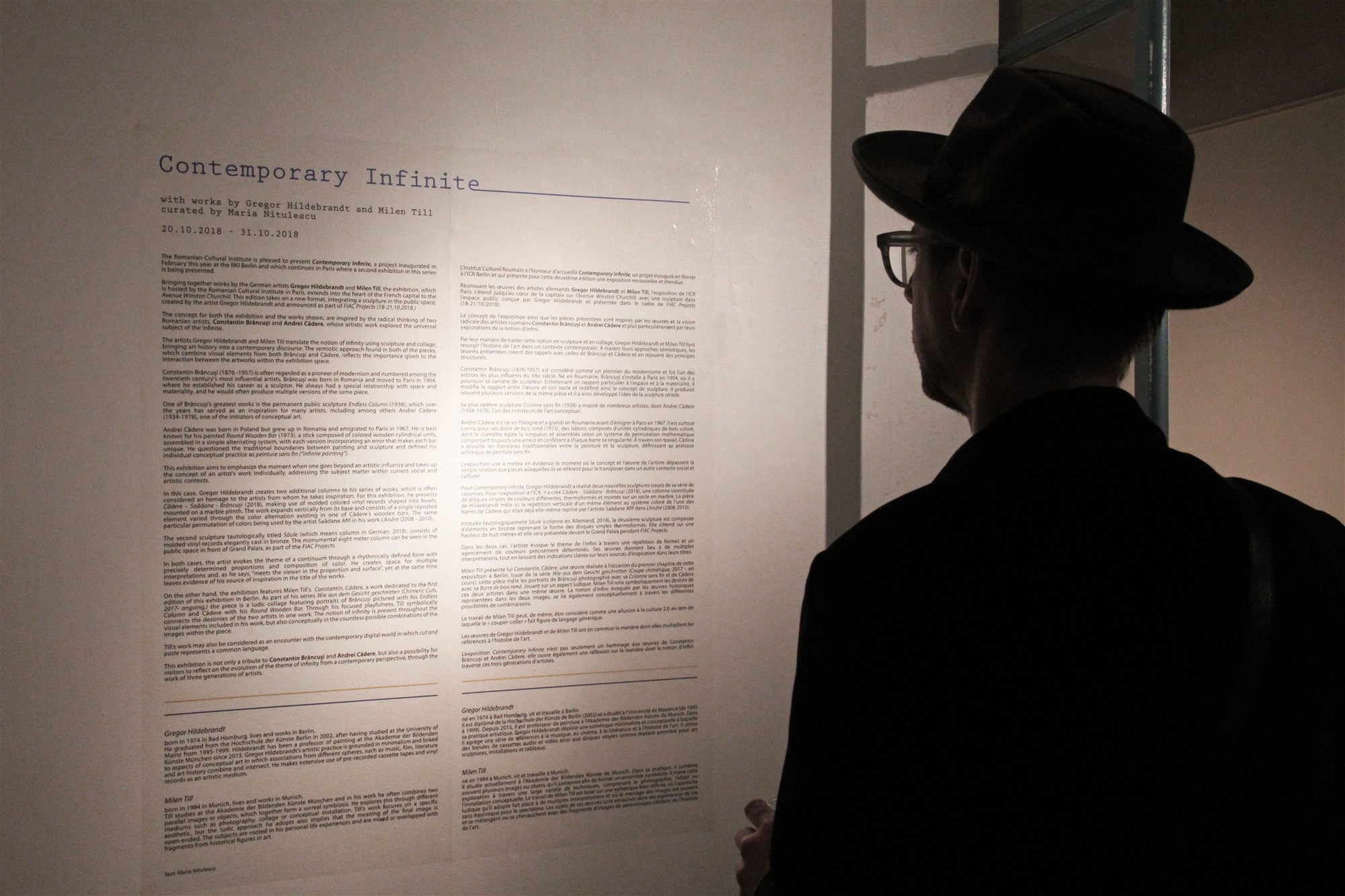
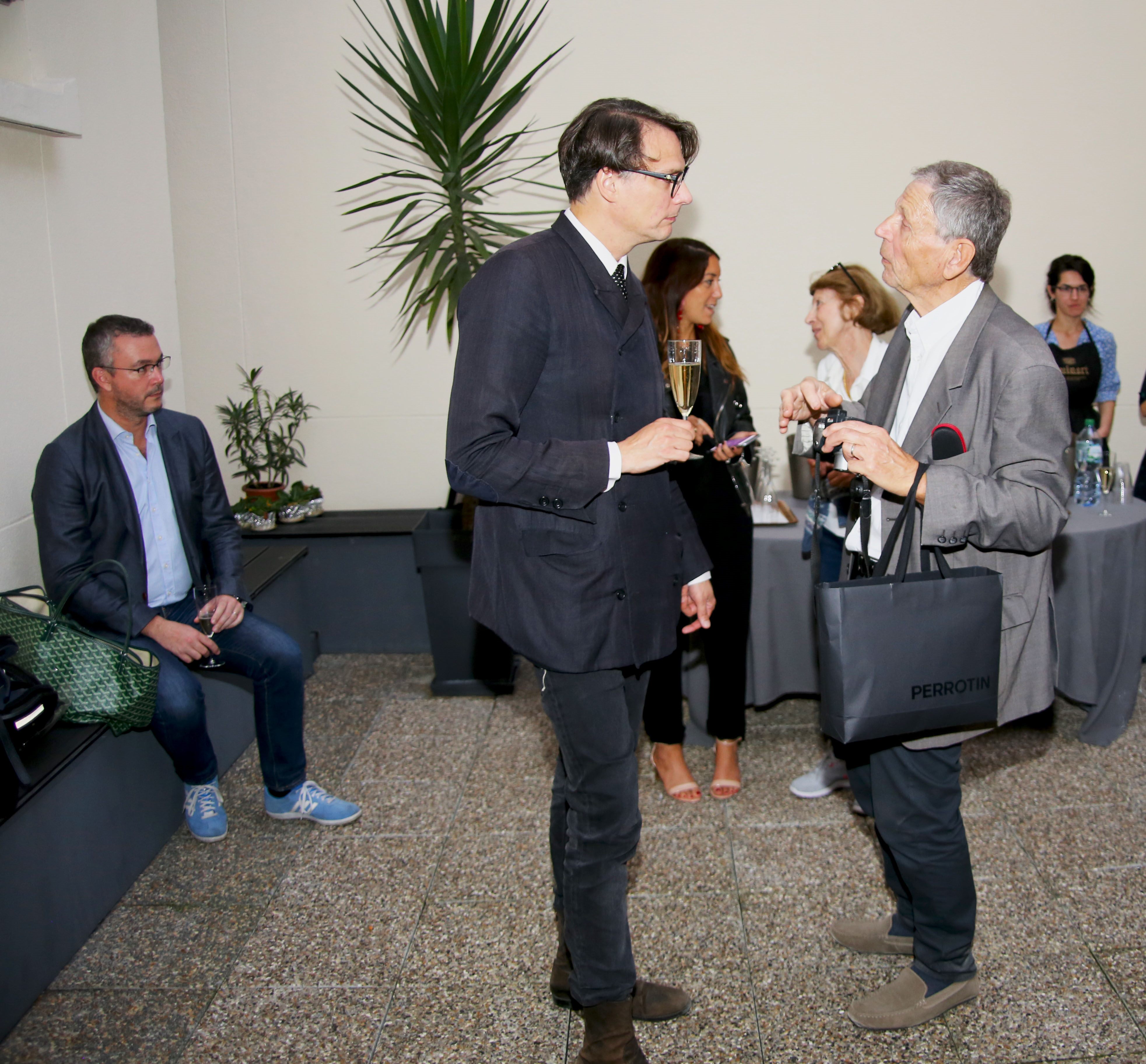
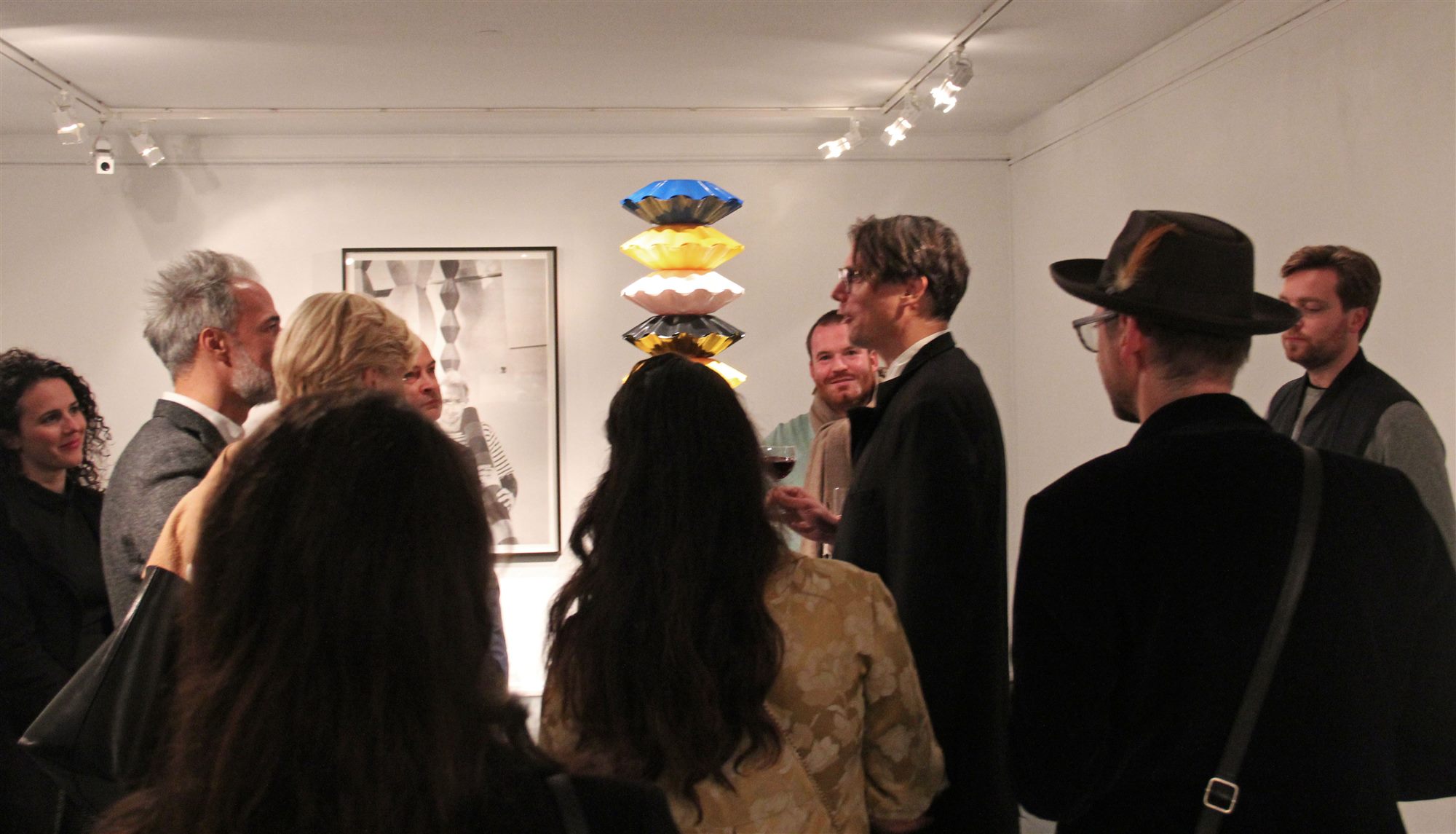
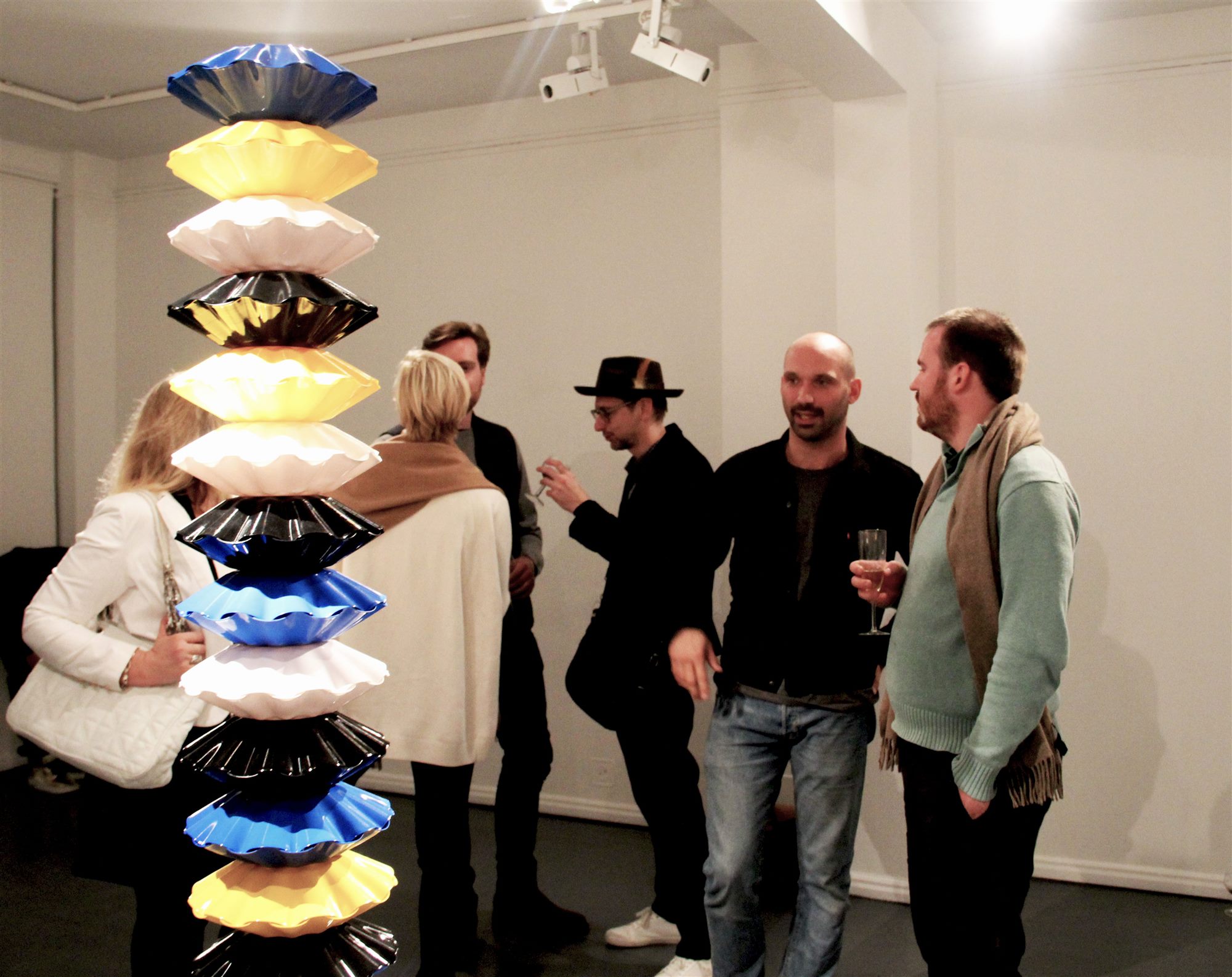
Impressions from the opening, “Contemporary Infinite”, Galerie Macadam, Romanian Cultural Institute Paris. Preview: 16 October 2018 · Opening: 19 October 2018. Photo: Matei Parascan
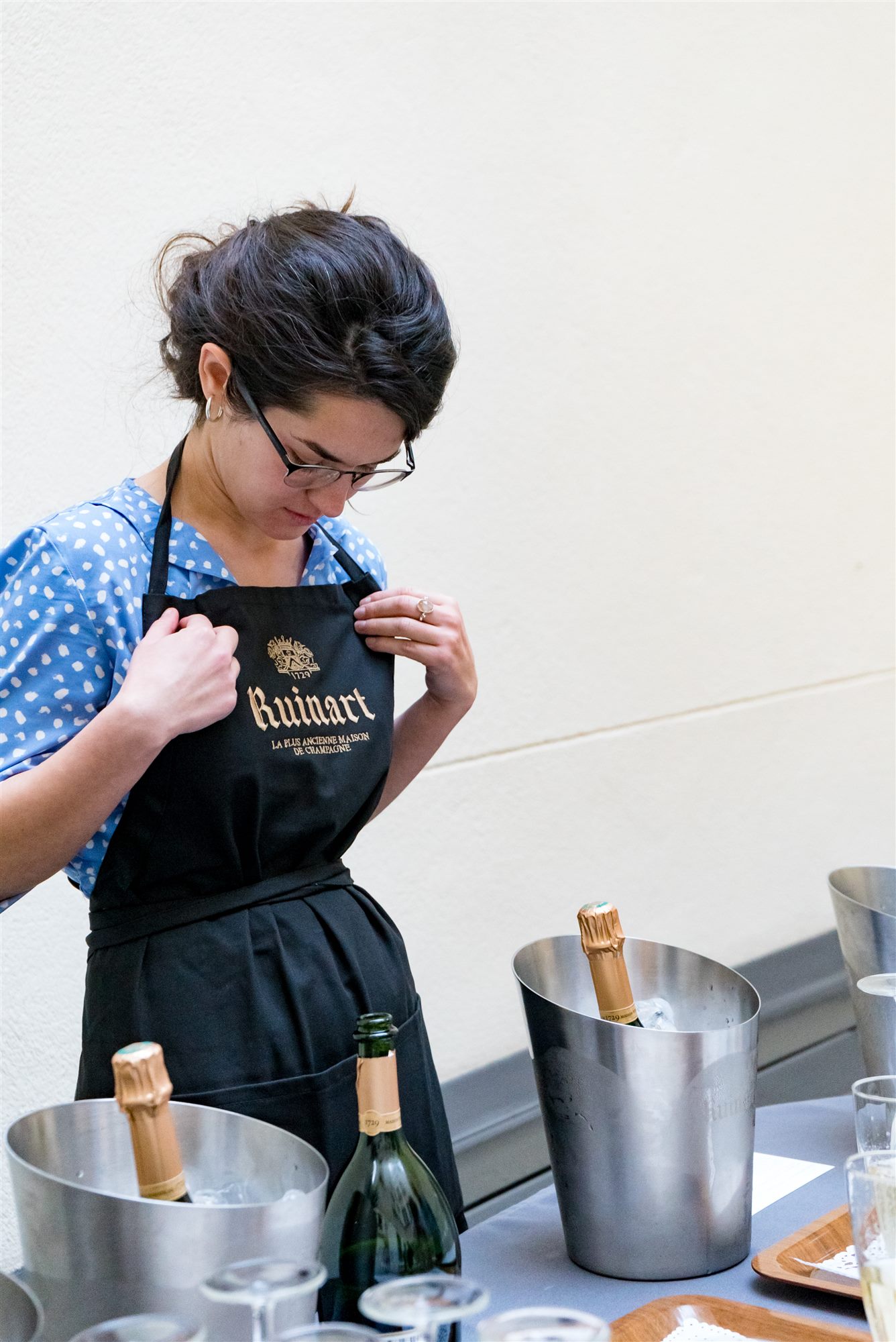
Special thanks to Ruinart, and to Fabien Vallerian, for making the evening all the more sparkling.
Beyond the Forest / Dincolo de Pădure
Gert & Uwe Tobias
Curatorial proposal for the Romanian Pavilion, 58th Venice Biennale, 2019
2nd place, Romanian national competition, 2018
Curator: Maria Nitulescu
Architecture & Exhibition Design: Mika Radescu
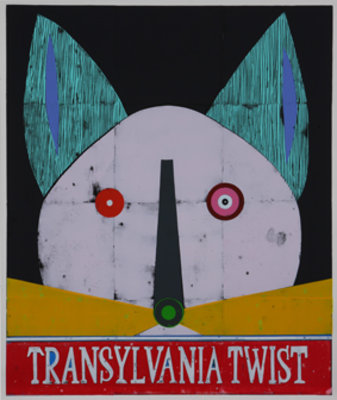
Woodcut in colors on canvas, 202 × 171 cm
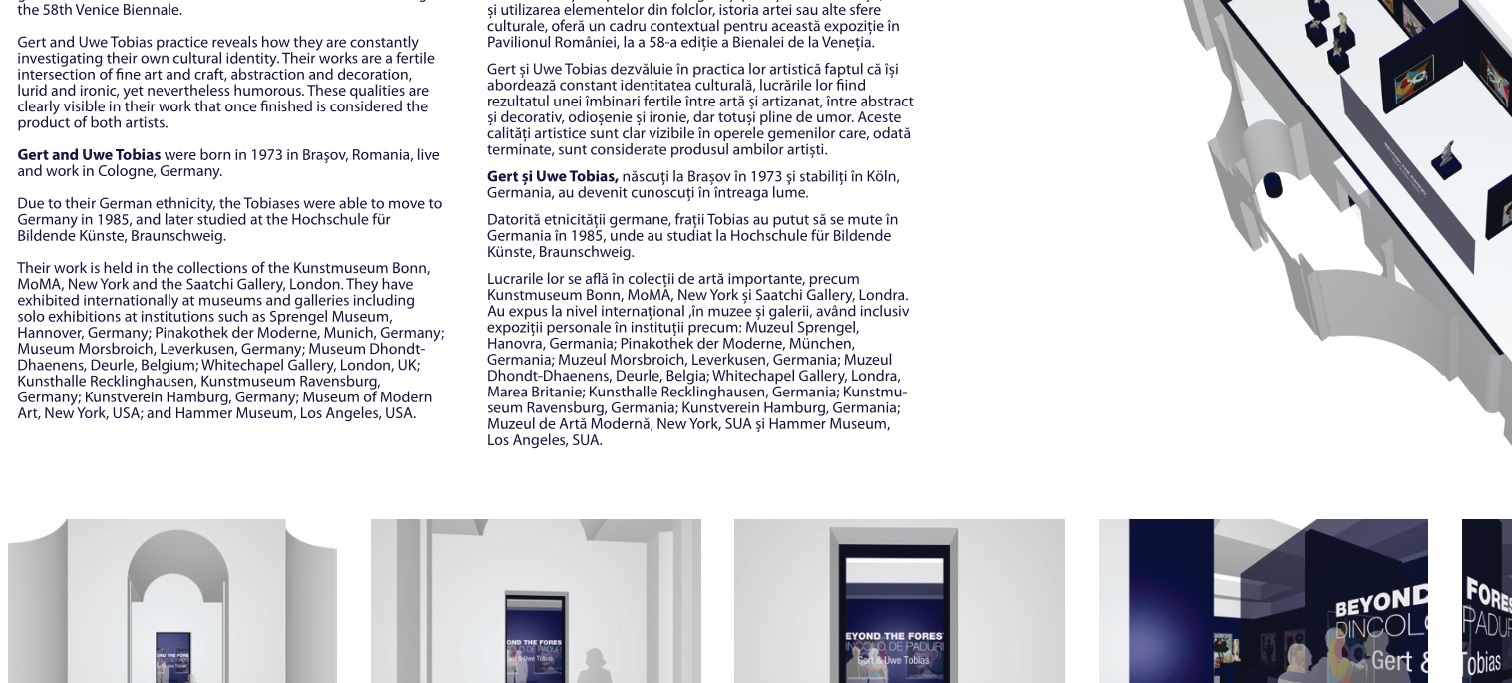
Beyond the Forest was conceived in response to May You Live in Interesting Times, the theme of the 58th Venice Biennale. The project proposed a presentation of Gert & Uwe Tobias, whose practice spans large-scale woodcuts, drawing, painting, collage and sculpture, and frequently engages with cultural identity, folklore and their Romanian and Transylvanian heritage.
The curatorial concept explored questions of cultural identity, history and representation through the work of Gert & Uwe Tobias and their relationship to their Romanian and Transylvanian background.
The project was developed as a complete proposal for the Romanian Pavilion, with extensive planning carried out in advance as part of the national competition. My role extended across the artistic, spatial, organisational and production development of the project. I worked directly with the artists and their gallery, planned the exhibition space in close collaboration with architect Mika Radescu, and assembled and coordinated an international team of 12 people, bringing together project management, architecture and exhibition design, PR and communications, graphic design, web design and programming, photography, video production, editing and translation.
My role included:
- Development of the curatorial concept and research
- Selection of artworks
- Writing of the curatorial text and development of the project presentation for the national competition
- Writing, editing and preparation of all textual documentation required for the competition submission in English and Romanian, including artist and team biographies, project descriptions and supporting materials
- Exhibition and spatial planning in close collaboration with architect Mika Radescu
- Direct communication and coordination with the artists and their gallery
- Assembly and coordination of a 12-person international team, including project management, architecture and exhibition design, PR and communications, graphic design, web design and programming, photography, video production, editing and translation
- Selection and coordination of external production partners and service providers
- Development of the overall project budget, including team fees, production costs, transport, insurance, technical services and other project expenses
- Research, request and comparison of quotations and cost estimates from external service providers
- Artwork transport, shipping, insurance and logistics planning
- Production, technical and installation planning
- Lighting and exhibition display planning in collaboration with the architect and artists
- Development of the communication and international PR strategy
- Research and planning of potential media partnerships
- Research and development of potential sponsors and sponsorship partnerships
- Publication, translation and documentation planning
- Development of the educational and public programme
- Planning of related events, talks and audience-development activities
- Overall coordination of the artistic, architectural, organisational, production and communication components of the proposal
Developed within a concentrated timeframe, Beyond the Forest brought together the curatorial, spatial, organisational and production planning required for a comprehensive Romanian Pavilion proposal.