Olfactory Works Visual Art Exhibitions
Smell has accompanied me since childhood, long before I had the language to describe it. Among my earliest and most vivid olfactory memories, the summers spent with my maternal grandparents in the Transylvanian countryside continue to inform my artistic practice today.
Originally trained as a visual artist, my practice gradually expanded to include scent as both a material and a conceptual medium. Working across sculpture, installation, glass, photography, and olfactory compositions, I explore memory and perception through multisensory experiences that invite audiences to engage beyond vision alone.
Some of the scents presented here are composed by me, while others were developed in collaboration with master perfumer Geza Schön. Rather than illustrating memory, these works seek to activate it, allowing scent to become a catalyst for personal experience. They explore how smell shapes our perception of the world, influences our relationship to the body and our surroundings, and creates intimate connections between space, memory, and sensory experience.
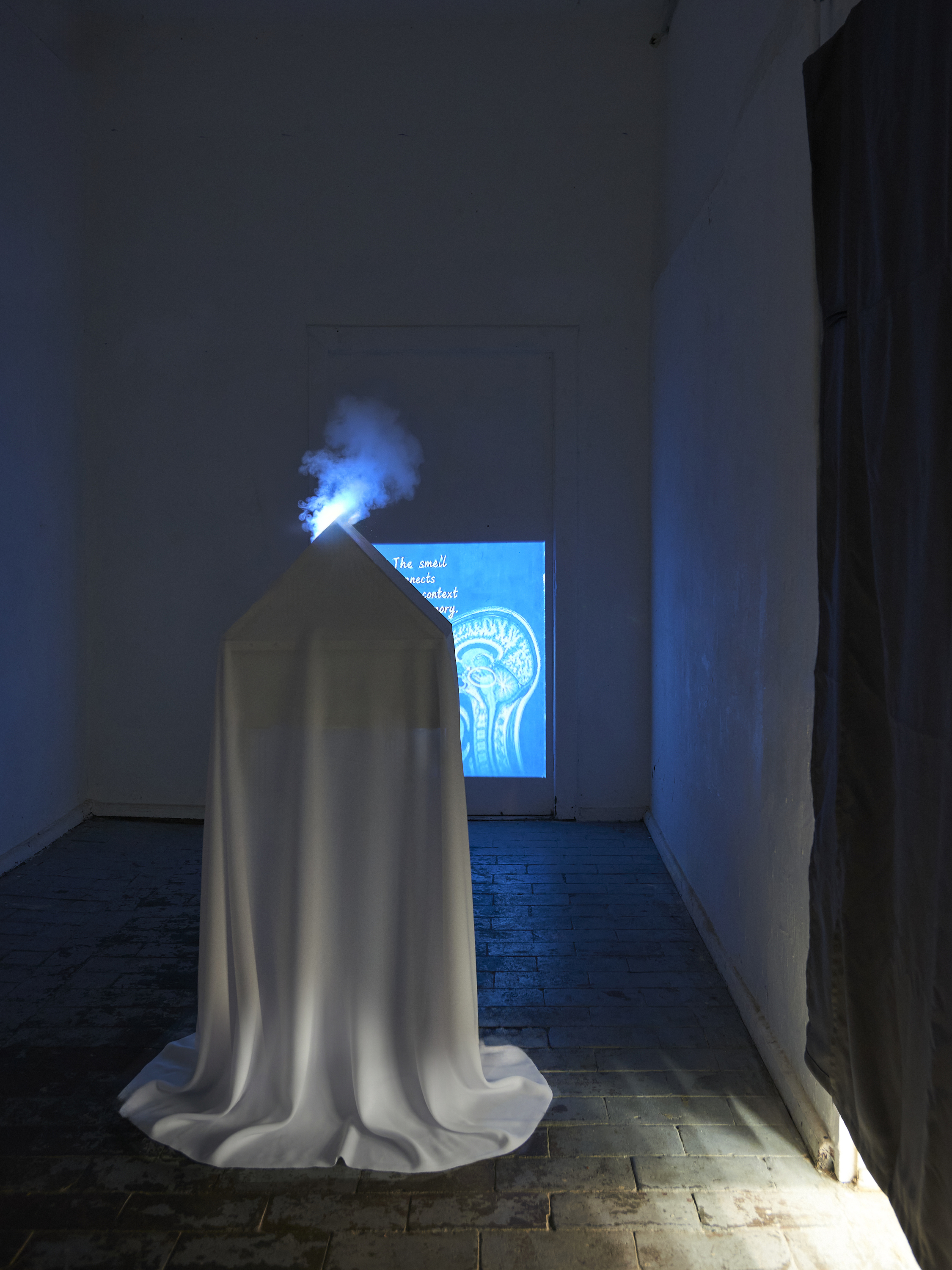
Wood, fabric, acrylic glass, scent, ultrasonic nebulizer, light and video projection, approx. 150 × 65 × 36 cm, dimensions variable Photo: groupshow.eu
What is the smell of home when it has existed in more than one country?
Read more ↓
Heimat emerged at a particular moment in my life. After living between countries and making Berlin my home for many years, I became a German citizen in 2026 and now hold both German and Romanian citizenship. The German word Heimat, difficult to translate without losing some of its meaning, became a way of thinking about belonging not as a fixed place, but as something shaped by memory, familiarity and sensory experience.
Every home has its own smellscape, formed through the way we inhabit it: bodies, materials, food, air, objects and everyday rituals. Over time, these smells become part of our recognition of a place as home, and a familiar scent can return us to it years later.
The house itself has a fragile, almost ghostlike presence. Translucent fabric gives its structure a fluid, ephemeral form, while scent emerges through the roof as visible mist and projected images appear and dissolve across its surface. Heimat becomes a fluid sculpture of belonging, asking what remains of home as places, identities and memories continue to shift.
Heimat was shown as part of From Molecule to Memory, within Traces of Memory, Lange Nacht der Bilder 2026, Kunstfabrik HB55, Berlin.
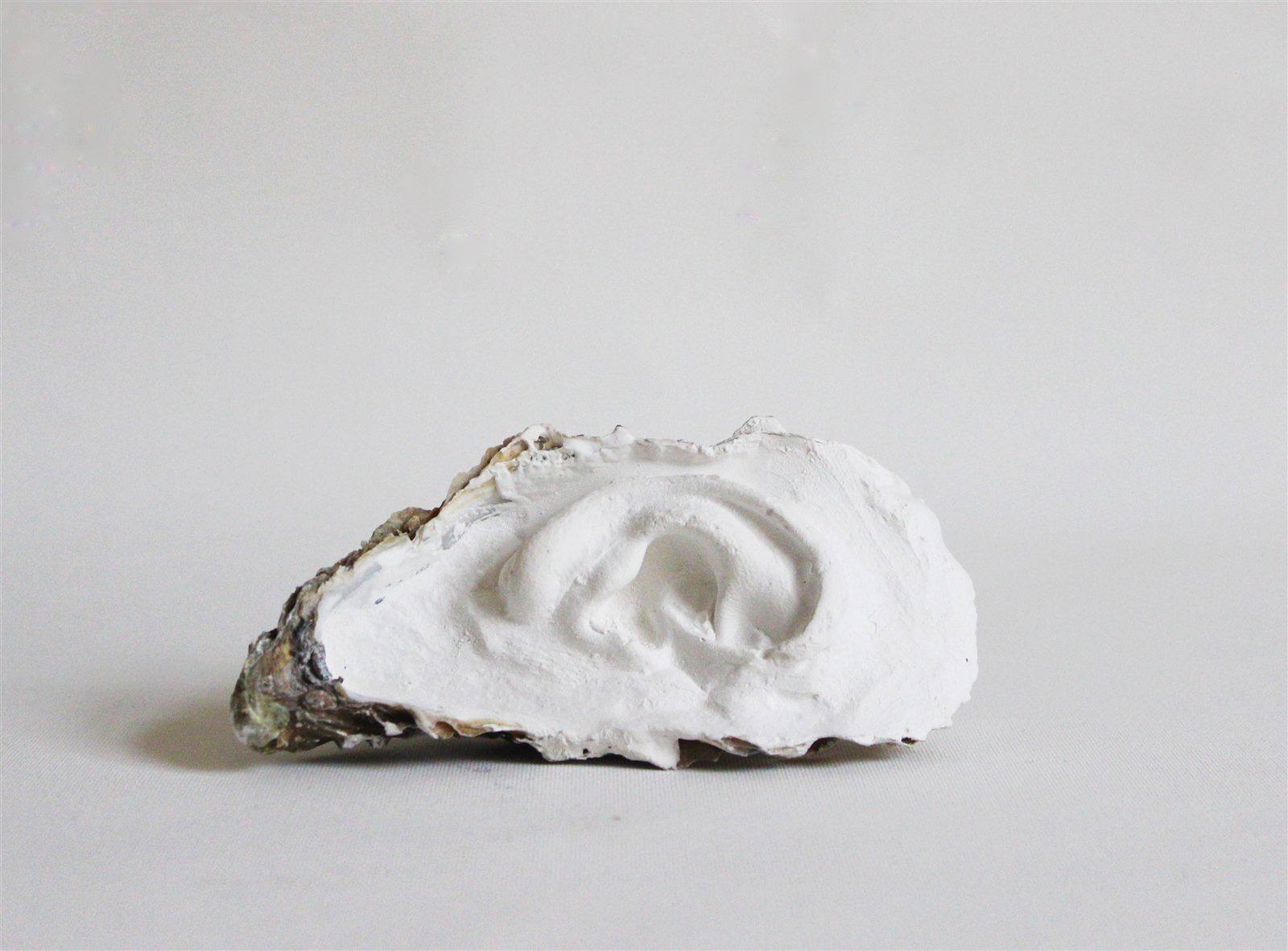
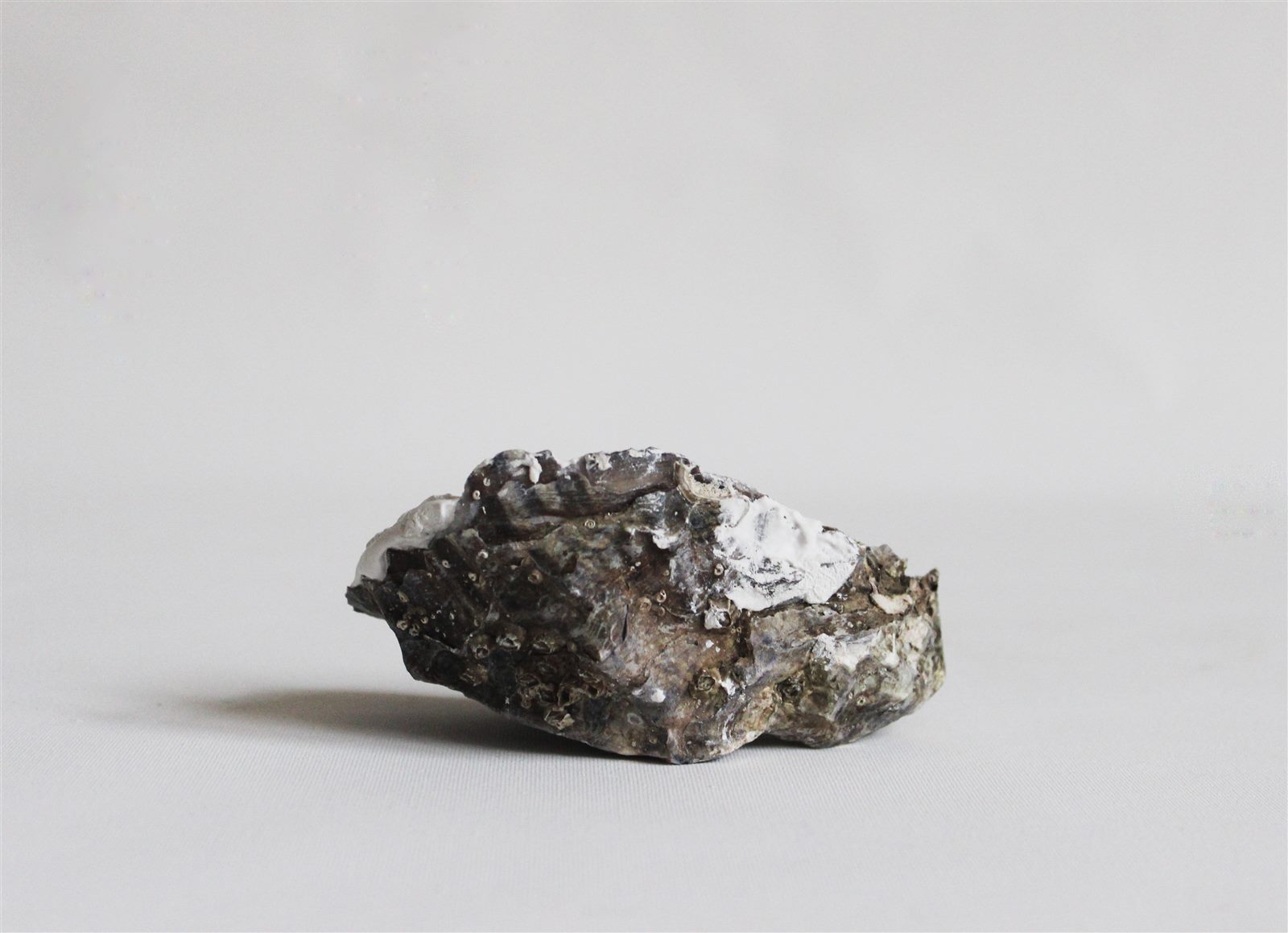
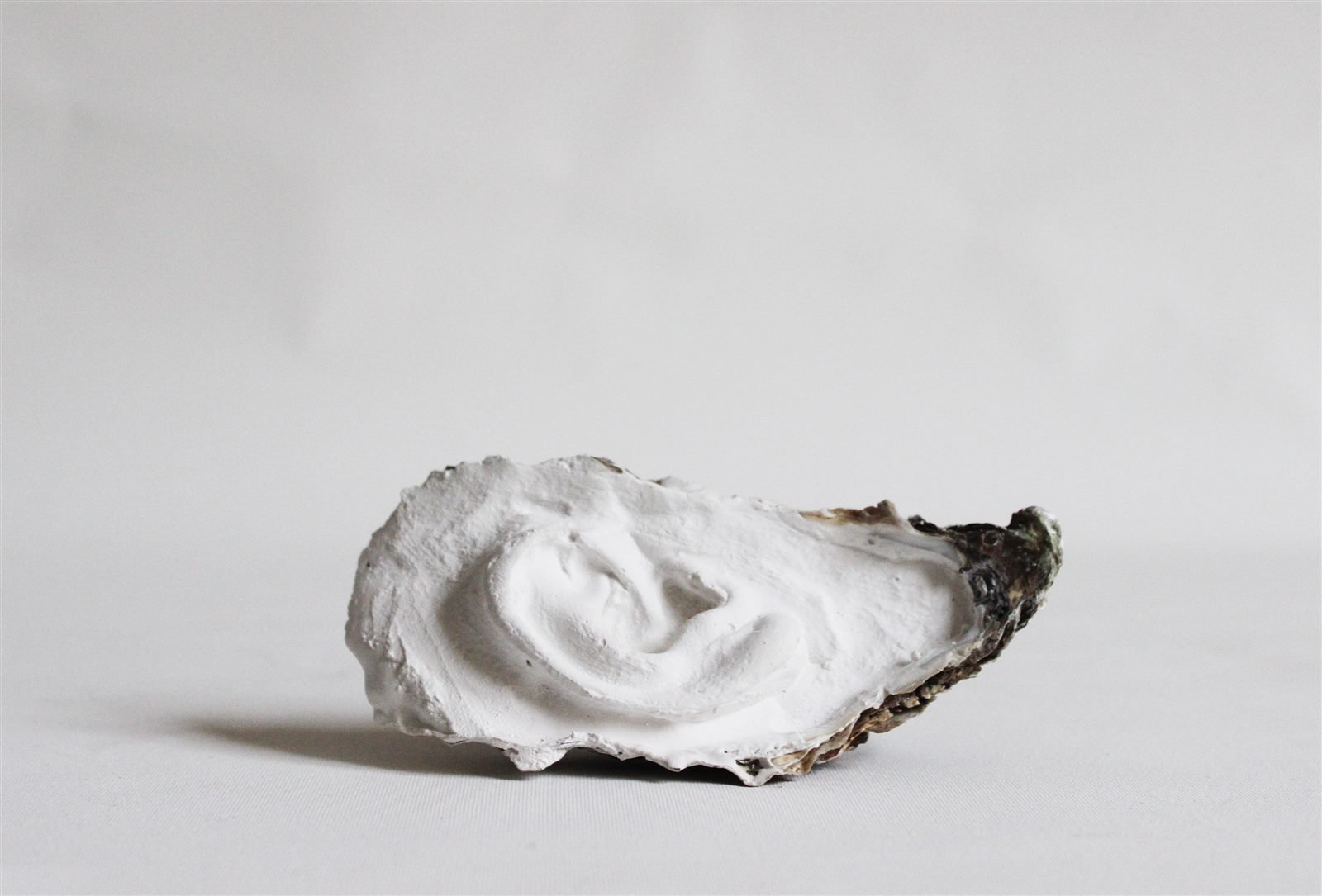
Olfactory work. Plaster, oyster shell, scent composition. 13 × 6 × 4 cm.
As a child, I used to press shells to my ear, convinced I could hear the sea. The rhythm of waves breaking on the shore has always been the most soothing sound I know. The sea is my happy place, where I recharge my batteries and return to myself. During the long, cold winters in Berlin, I often find myself longing for it. I wanted to preserve that feeling through the sense most closely connected to memory, creating my own olfactory interpretation of the sea.
Read more ↓
“Closer Than Sound” combines an oyster shell, a plaster cast of my own ear, and an original olfactory composition inspired by my memories of the sea. Rather than recreating a place, the scent evokes a feeling: salt carried by the wind, mineral freshness, warm skin after a swim, and the quiet sense of freedom I associate with the coast. The sea continues to inspire my artistic practice with its colours, its atmosphere, and its endless horizon. This sculpture is an invitation to experience that landscape through my olfactory interpretation.
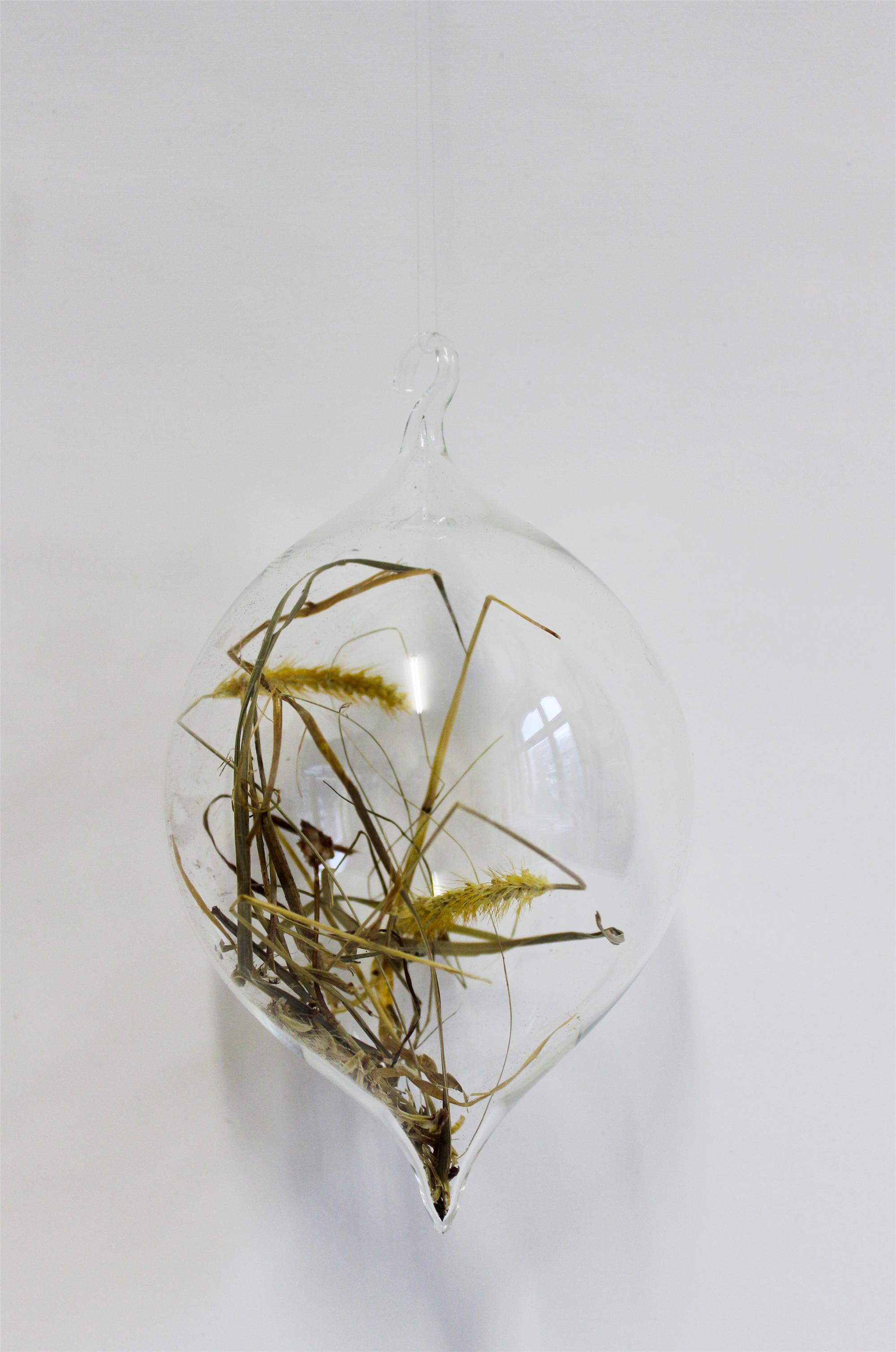
Hand-blown glass with hay and sealed scent, 20 × 15 cm
In 1919, Marcel Duchamp sealed 50cc of Parisian air inside a glass ampoule, titled it Air de Paris, and called it a readymade. The gesture was conceptual and ironic: air as art, the invisible as object, the city as essence.
Read more ↓
Air de Transylvanie is my tribute to that gesture, and my personal answer to it. Instead of the air of a metropolis, my ampoule holds the scent of Transylvanian hay fields, the landscape of my childhood summers at my maternal grandparents’. That air is not chosen for effect; it is the air I carry within me, the one that returns most completely and most involuntarily, the one that taught me what scent could hold before I had any words for it.
The glass is sealed and the scent is present but inaccessible, held behind the fragile wall of blown glass, suspended from the ceiling. Where Duchamp’s ampoule proposed detachment and irony, mine proposes intimacy and longing. The rural replaces the urban, the personal replaces the institutional, memory replaces concept. And yet the form remains: a sealed vessel, an invisible content, a question about what can be held and what always, somehow, escapes.
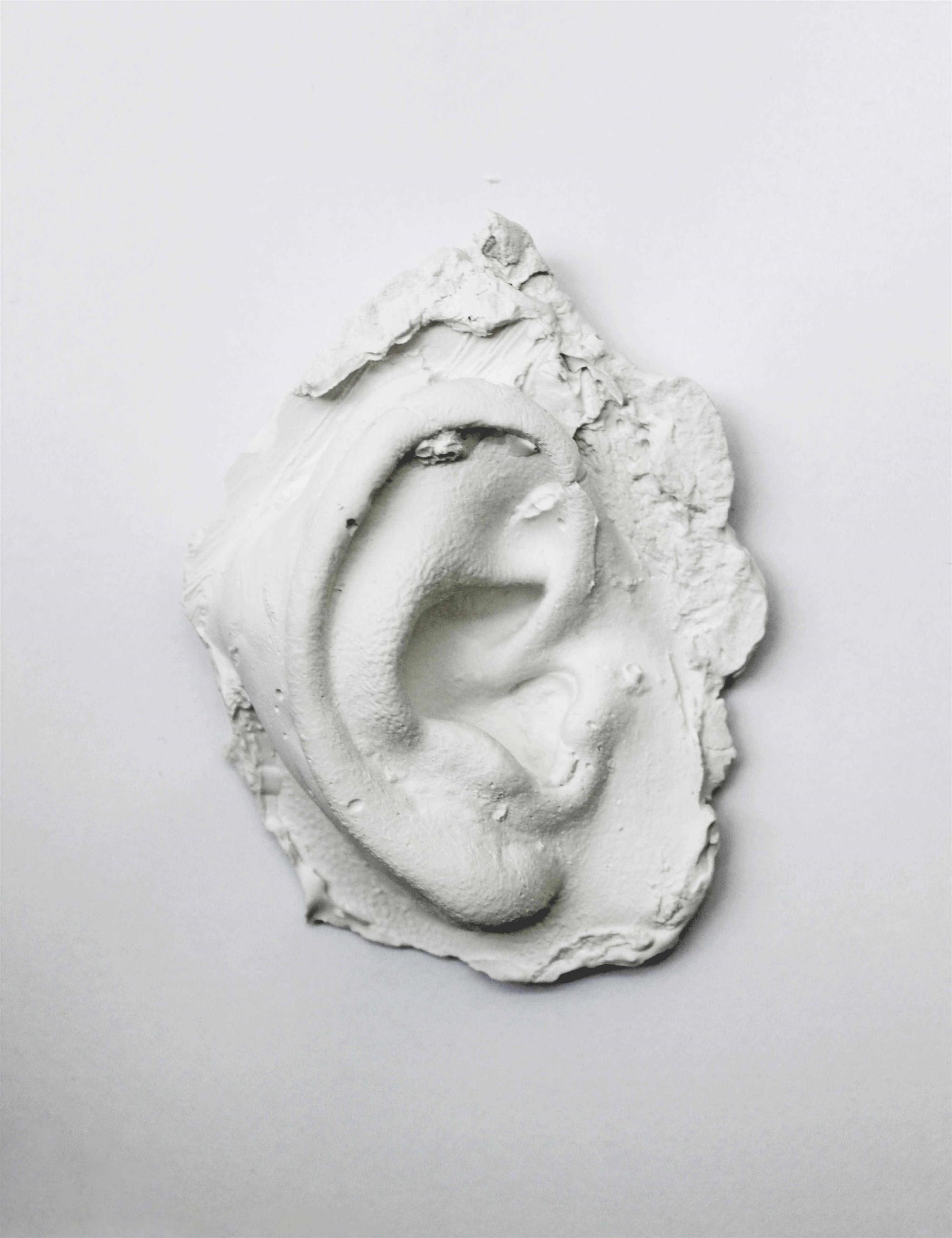
Plaster cast of the artist’s ear, scented with a petrichor-inspired accord developed in collaboration with Geza Schön; part of the 101-ear installation. 6 × 4 × 2 cm
The ear is a recurring element in my work, and when I use it, it is mostly a cast of my own. According to psychoacoustics research, the individual shape of the outer ear plays an important role in how we perceive and localise sound in space. Each person hears the world slightly differently, filtered through the specific anatomy of their own ear. Just as smell is personal, so too is hearing. It is not a generic symbol of listening; it is my listening, my body, my specific way of receiving the world.
Read more ↓
This work is an edition cast from my own ear in plaster, scented with petrichor, the smell of rain on dry earth, created in collaboration with master perfumer Geza Schön. Petrichor is chemically one of the most extraordinary scents in nature: its primary compound, geosmin, is produced by soil bacteria. Humans can detect geosmin at extraordinarily low concentrations, a sensitivity that has prompted theories about its possible evolutionary relationship to our search for water and survival. It is one of the most universally recognised scents we know, cutting across cultures and geographies, reaching something in us that is older than language. Plaster is the ideal material to carry it: porous and slow, it absorbs the essence and releases it gradually over time.
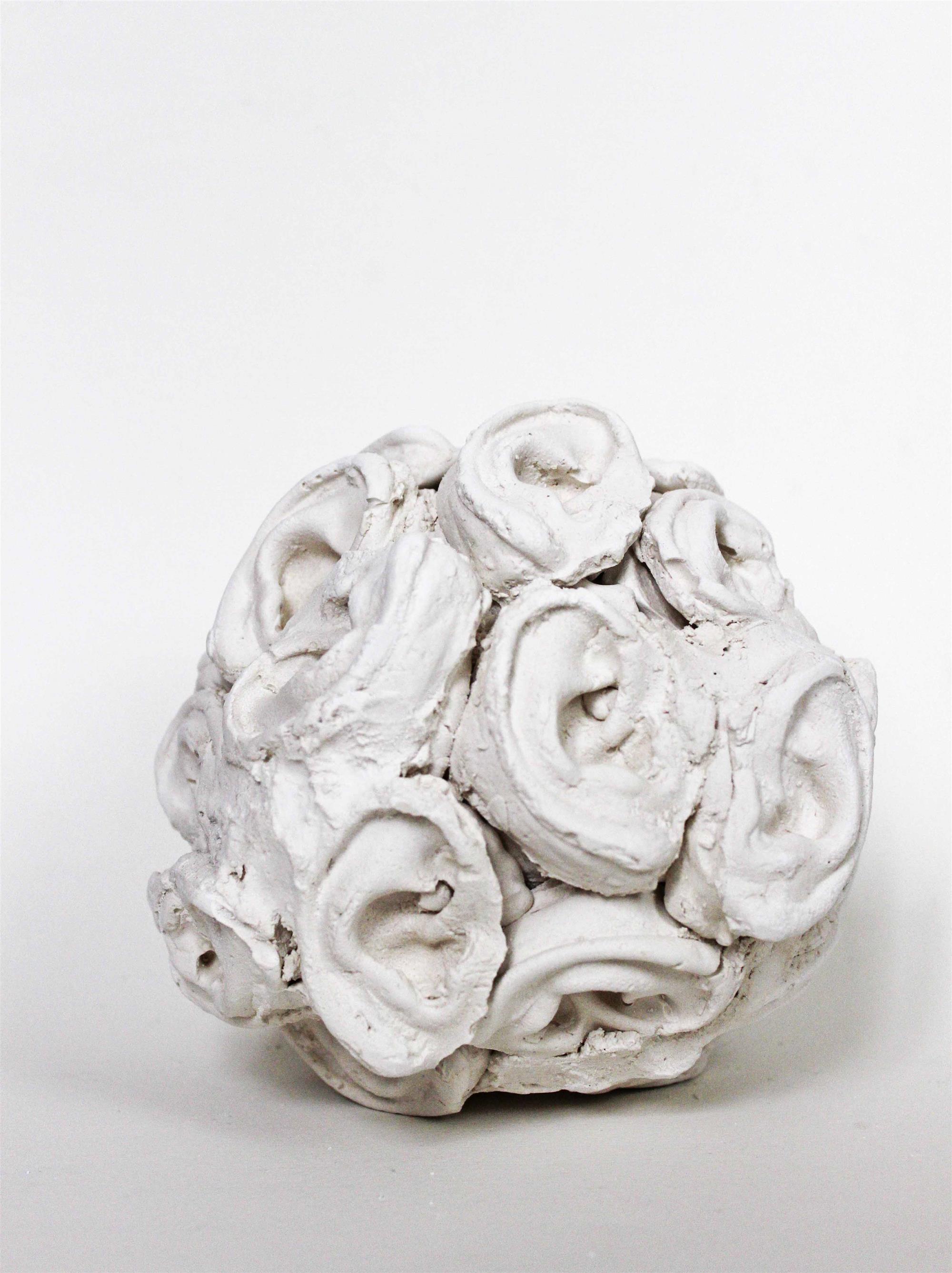
Plaster sculpture scented with a petrichor-inspired accord developed in collaboration with Geza Schön, 16 × 14 cm
The Hum of Earth is a sphere formed from casts of my own ear, reshaped until it recalls the shape of the Earth itself. The title refers to the quiet vibration that is always present in nature, a subtle movement in air, sound and atmosphere that becomes most perceptible after rain.
Read more ↓
I scented it with the same petrichor-inspired accord developed with master perfumer Geza Schön: that moment when moisture touches soil and the world seems to shift and breathe. Plaster absorbs the essence deeply and releases it slowly, letting the work echo this quiet, continuous unfolding.
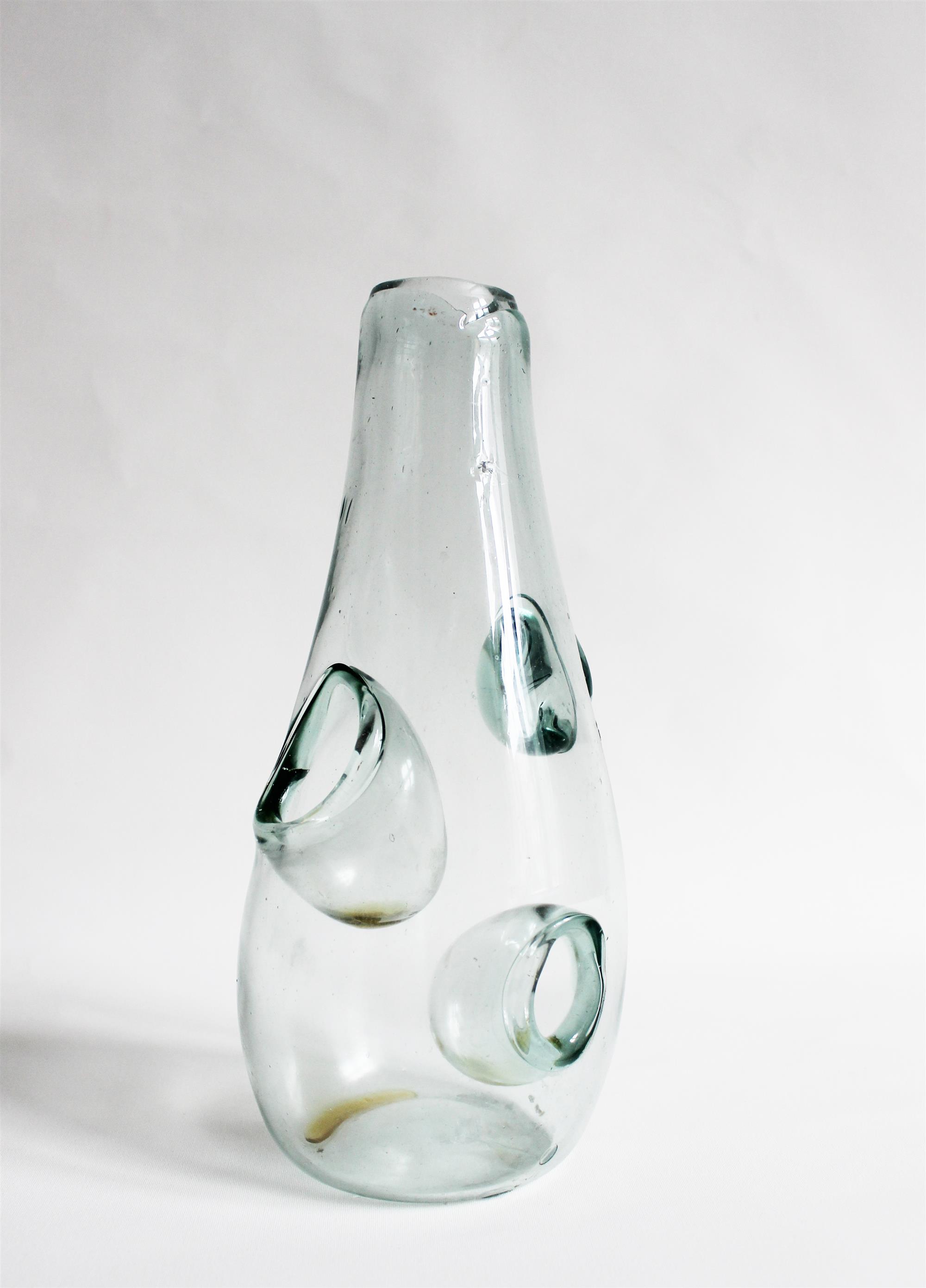
Hand-blown glass with hay absolute, 32 × 13 cm
Resonance of Nature is a vertical hand-blown glass sculpture shaped with soft inward cavities that function like transparent cells. These openings hold small drops of hay absolute and allow the scent to be perceived directly by moving closer to the surface. I created these exterior cavities deliberately to avoid turning the piece into a vase; its role is sculptural, not functional.
Read more ↓
The glass was shaped while molten and keeps a natural organic movement, staying connected to the idea of growth and transformation. Its transparency reflects the volatile nature of scent, its fragility the delicate way memories stay with us. For this sculpture I chose a hay absolute with strong green notes of fresh hay, denser and more vivid than the one used in the other works, creating a direct sensory link between them and continuing the thread of olfactory and childhood memory that runs through the whole body of work.
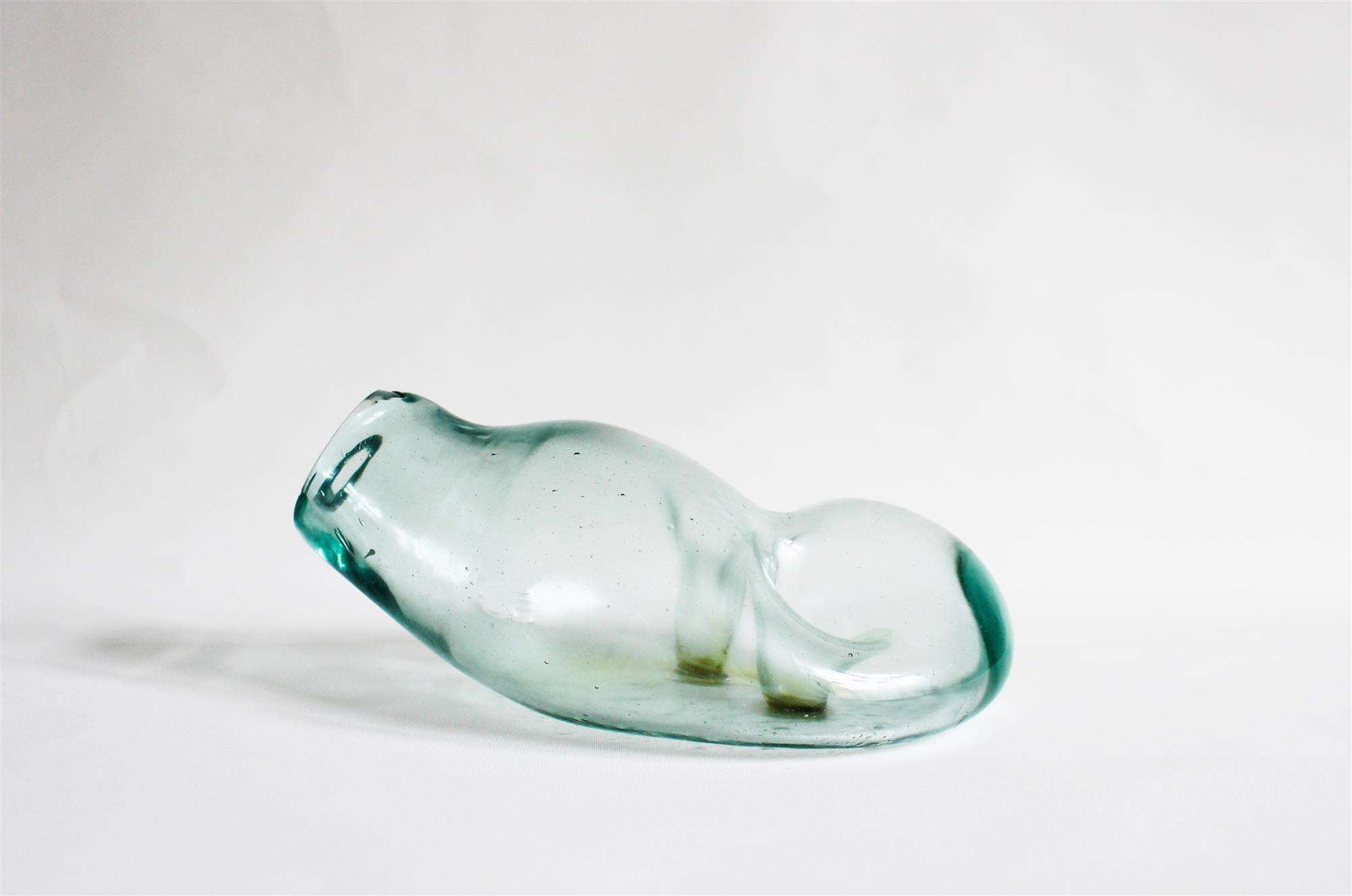
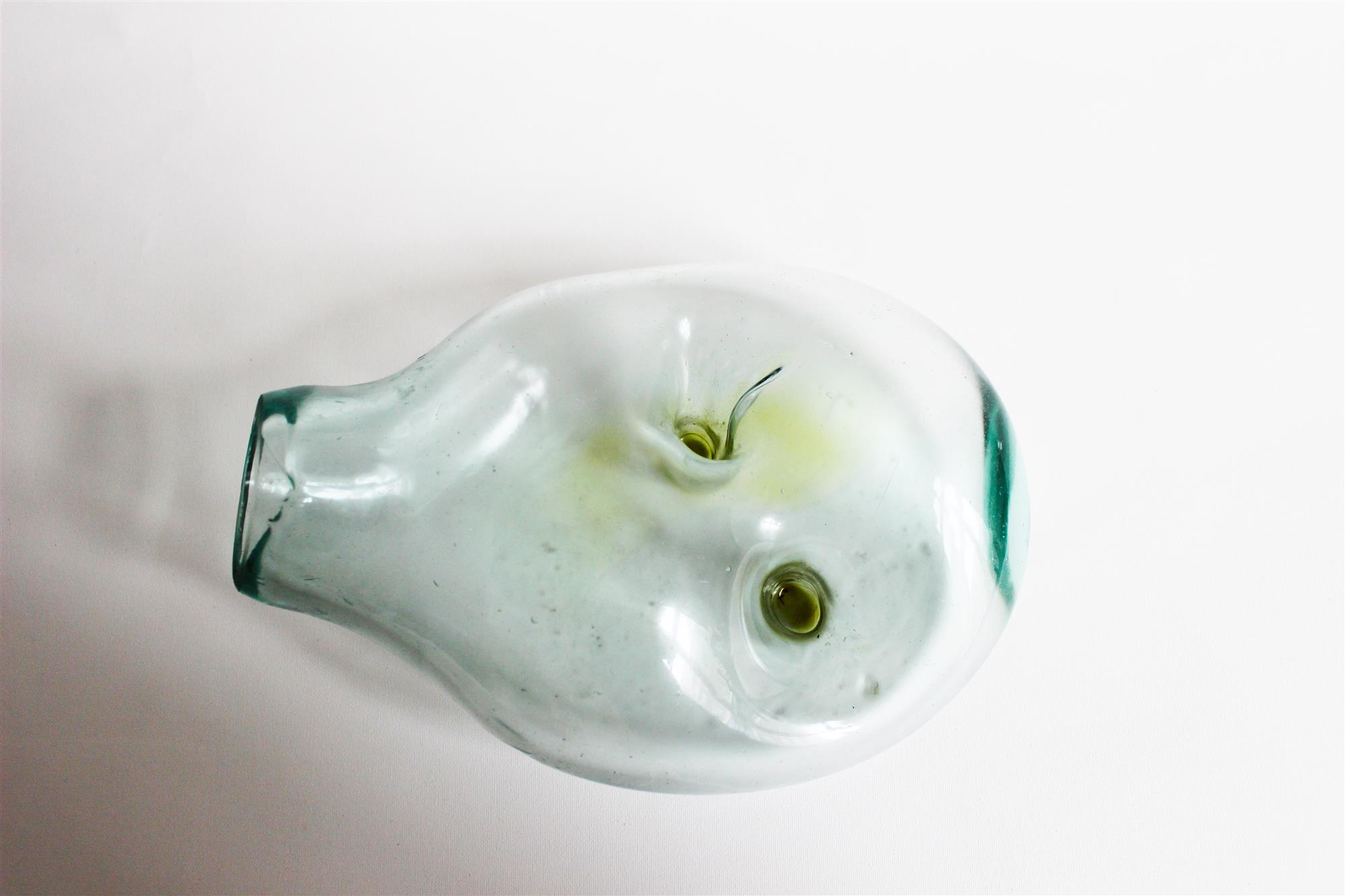
Hand-blown glass with hay absolute, 23 × 10 cm
Echoes of Growth is a hand-blown glass sculpture presented horizontally, shaped as an organic form with small openings along its surface. I applied hay absolute inside these small pockets so the scent gently rises toward the viewer.
Read more ↓
The work invites a slight lean of the body, an intimate gesture of approaching the glass in order to breathe in the scent. Its transparency and fragility mirror the fleeting presence of olfactory memory, allowing material and aroma to meet in a quiet, attentive moment. This piece carries the same green, fresh hay absolute into a new form, keeping the sensory and emotional memory in motion.
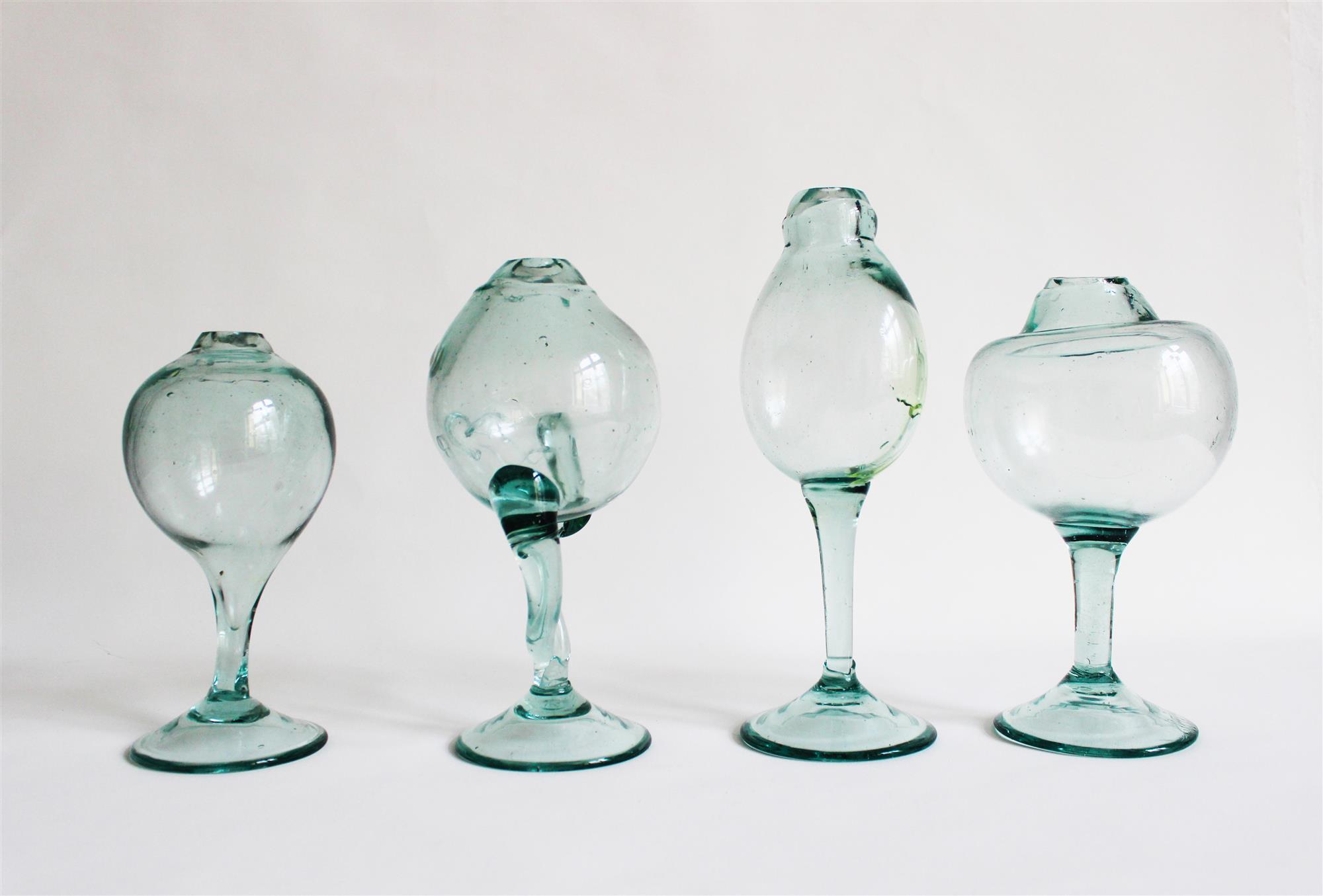
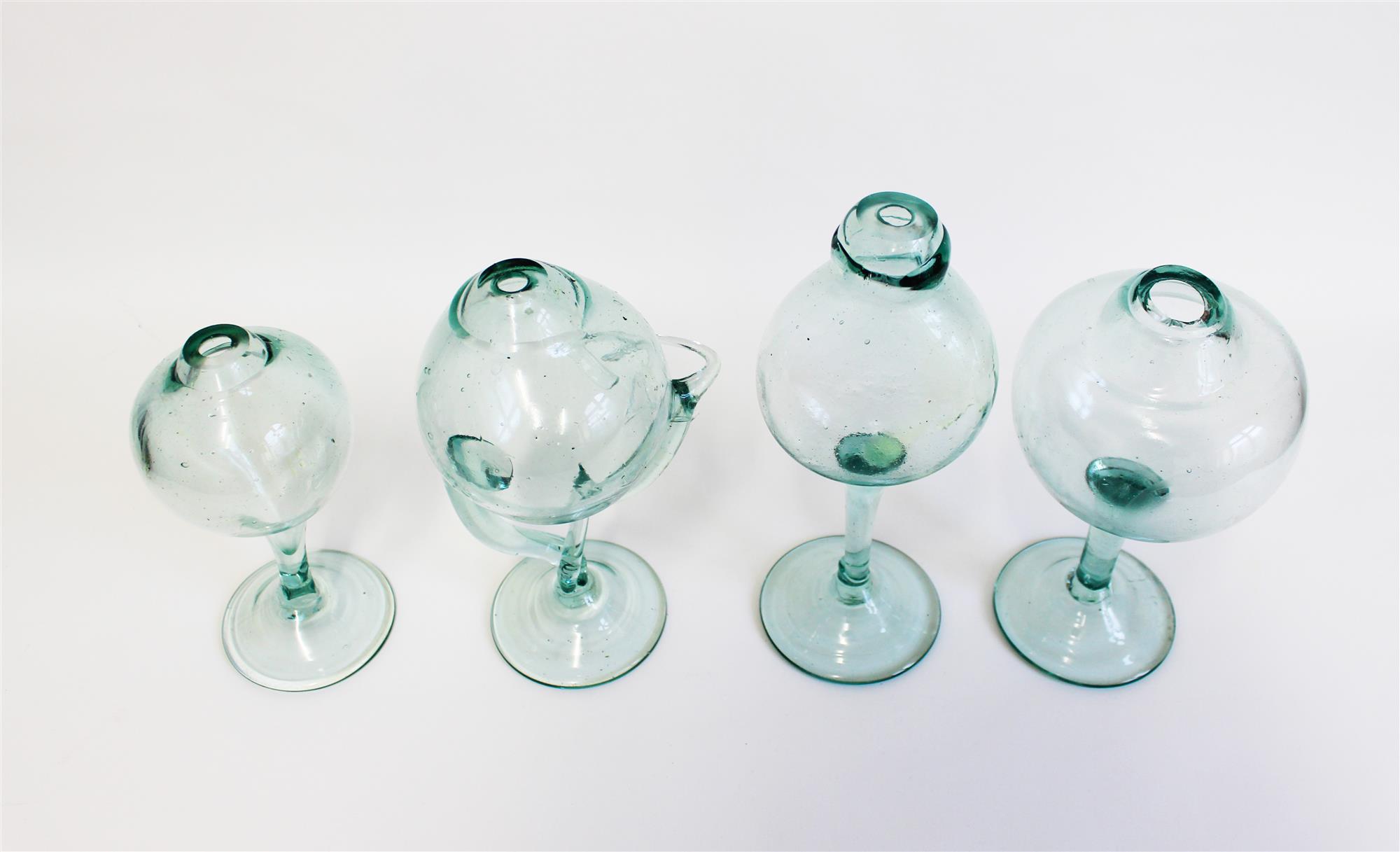
Four hand-blown glass sculptures containing artist-created olfactory compositions, approx. 15 cm high each.
Vessels of Memory is a set of four hand-blown glass pieces shaped like drinking glasses. The form is familiar, domestic, something the hand already knows. The moment one approaches, the object shifts: the small openings invite a lean of the body, a quiet gesture of closeness, to breathe in a natural olfactory composition I created for At the Crossroads of Memory, Till Richter Museum, 2025, made exclusively from essential oils and botanical absolutes.
Read more ↓
Something that looks like a glass on a table reveals itself as a sculptural instrument for scent. The compositions were not preserved beyond the exhibition; their fleeting character is part of what they are. Through fragility, transparency and ephemeral aroma, the work asks how olfactory memory lives in the body and what form it takes when it is gone.
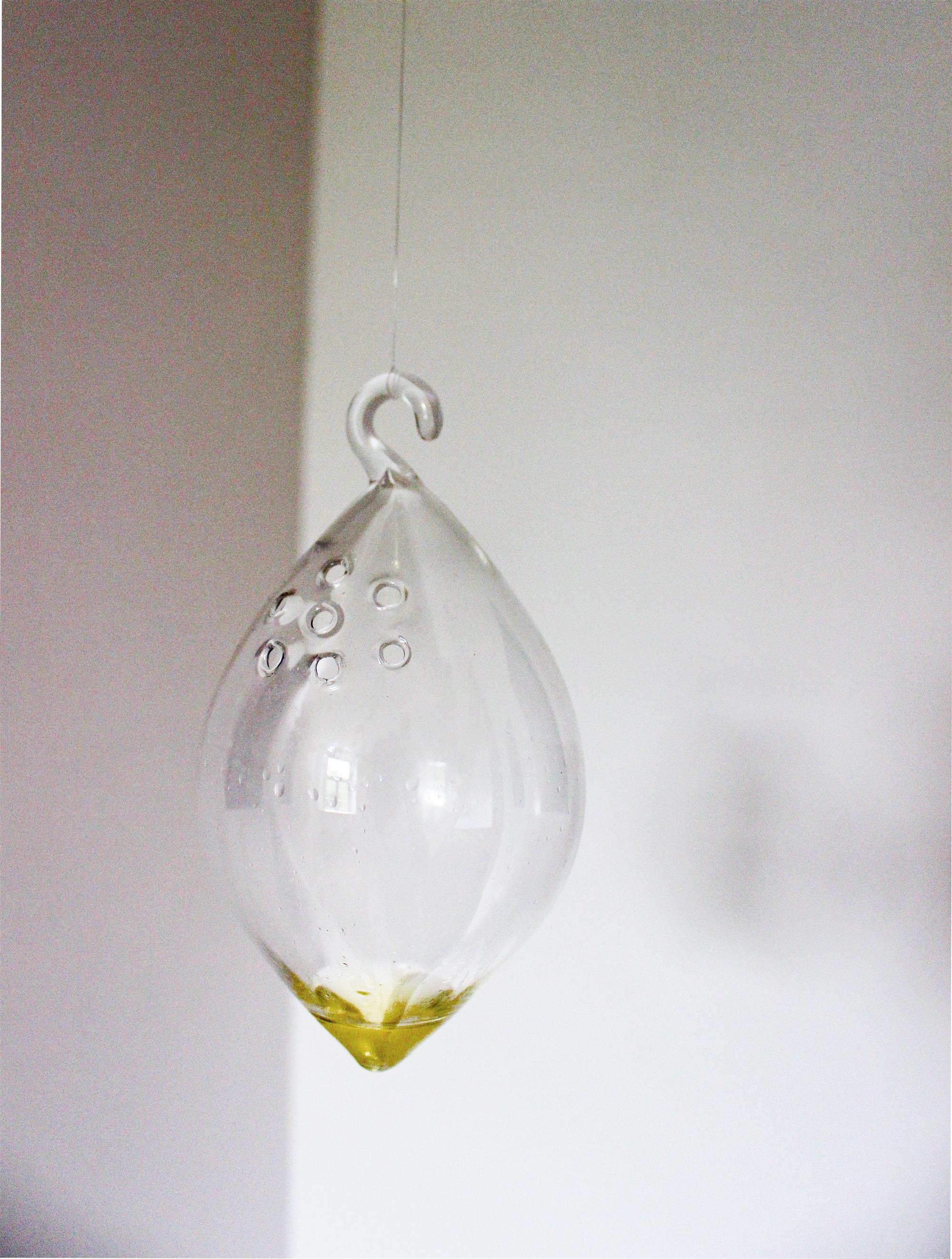
Hand-blown glass sculpture containing hay absolute, suspended in the exhibition space, 15 × 8 cm
This suspended glass sculpture contains hay absolute, the solvent-extracted form of dried grasses. It carries a warm, sweet, herbaceous profile, rich in coumarin, with nuances of tobacco and sun-dried plants. There is a honeyed quality to it too, the sweetness of hay that has sat under the sun for a long time, a different register than the green, fresh-cut note I use elsewhere in my work.
Read more ↓
For this piece I chose to isolate a single raw material and present it in its pure form, the ingredient perfumers normally fold into larger compositions. By isolating it, I invite the visitor to encounter the material directly, to understand its aromatic behaviour and what it stirs emotionally on its own.
The sculpture creates a dialogue with Air de Transylvanie, which contains real hay sealed inside glass. One work preserves the actual plant and its natural scent, the other offers its perfumery counterpart. Together they show how the same material can exist in two sensory forms: the raw hay of my childhood memories and the distilled ingredient used in contemporary perfumery. Small perforations in the glass let the scent escape as the visitor approaches, creating a quiet, intimate encounter.
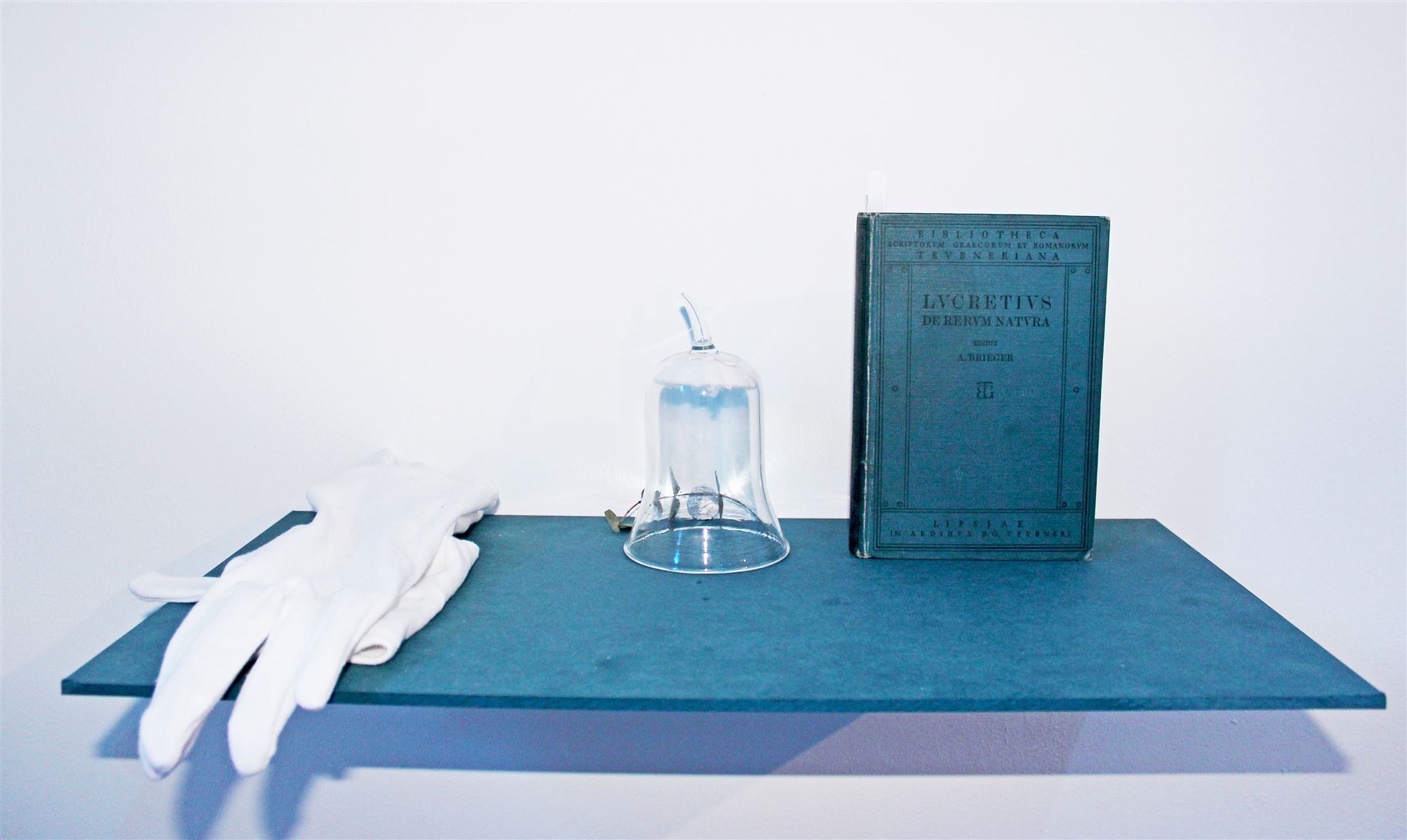
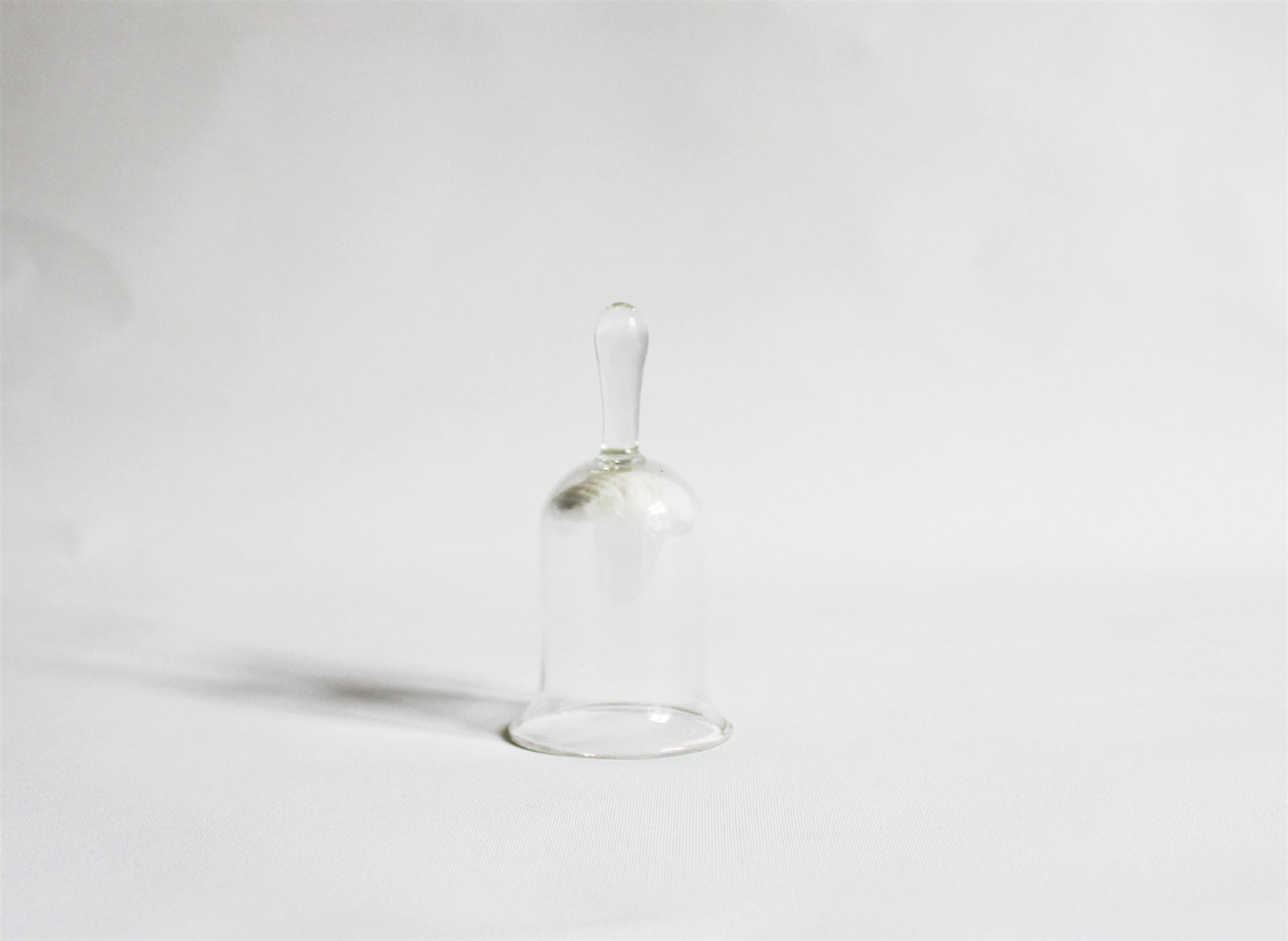
De Rerum Natura / On the Nature of Things, 2024-2025
Wall-mounted shelf with Lucretius’ De Rerum Natura (1st century BCE, Teubner edition edited by A. Brieger, Leipzig) and a hand-blown glass scent bell containing Lerin, a scent composed by the artist in 2025; dimensions variable
De Rerum Natura, written by Lucretius in the 1st century BCE, describes how everything in the world continuously releases fine particles that travel through the air and reach our senses. For Lucretius, smell begins when these particles enter the body and touch the mind. It is one of the earliest known attempts to explain olfaction in material terms.
Read more ↓
Next to the book stands a hand-blown glass bell containing Lerin, a scent I composed in 2025 from a memory of a trip to Lérins Island in 2017. I tried to recall the atmosphere of that place: pine needles under the trees, warm air, sun, salt water, the Mediterranean light, and the feeling that time moves differently on an island. This work continues the autobiographical thread that runs through my whole practice, moving from childhood olfactory memories into those formed later in adult life.
Visitors may open the book and explore its pages, and may lift the bell to breathe in the scent. Ancient thought and the intimate way smell holds memory today, placed on the same shelf.
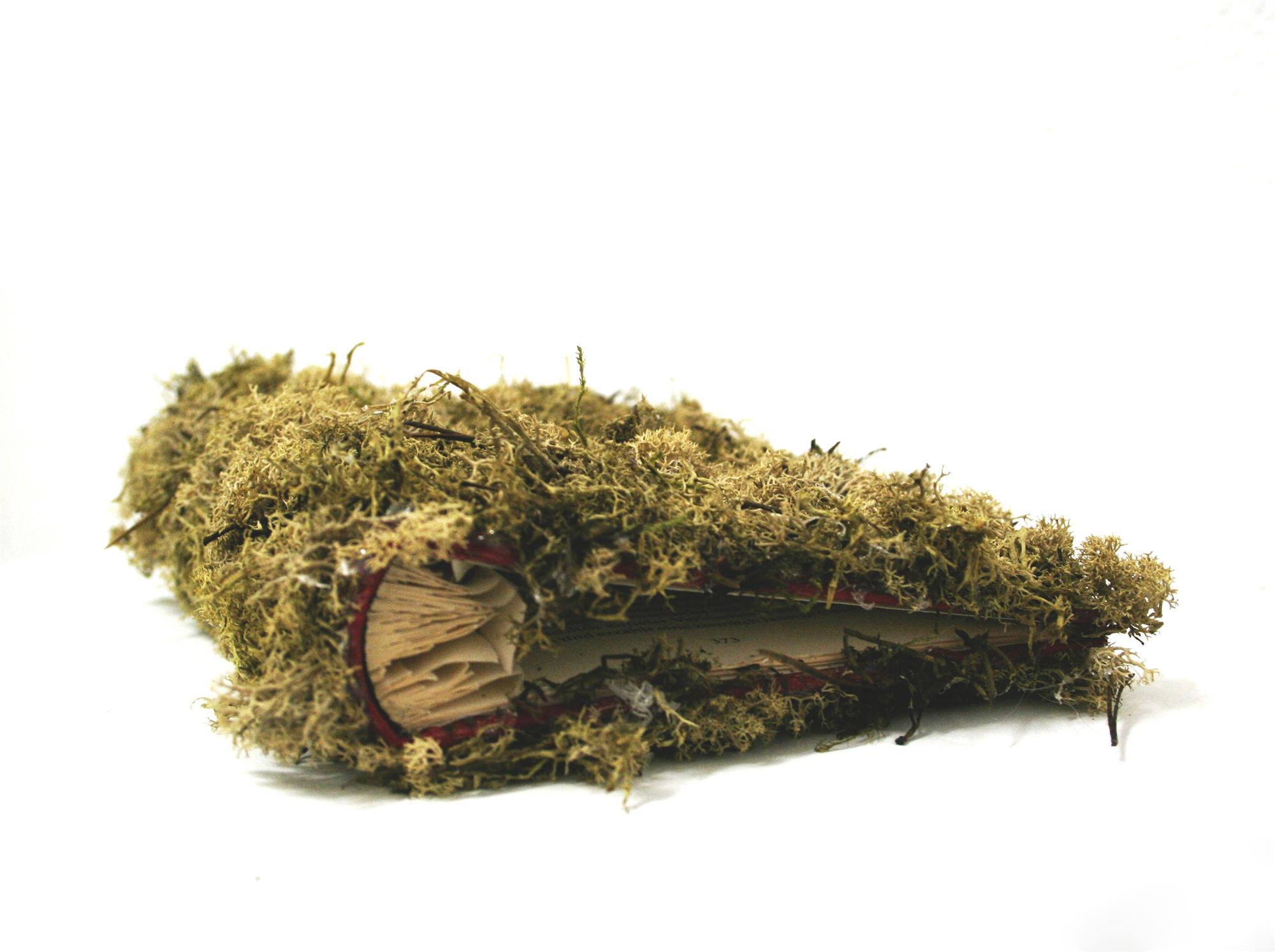
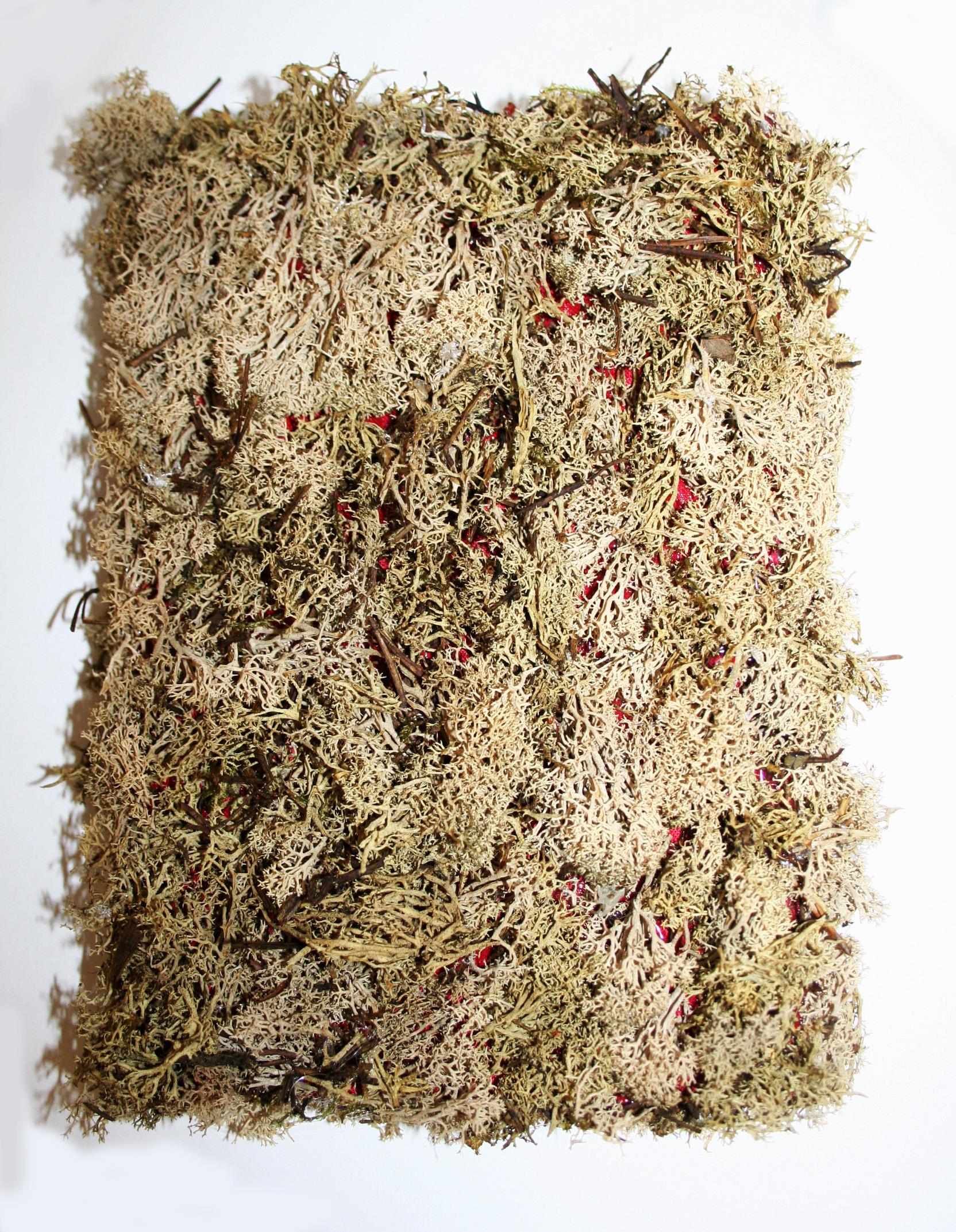
Found book, lichen, scent, 19 × 15 × 3 cm
I found this book abandoned on the streets of Berlin.
Read more ↓
Found objects are something I return to often in my practice, books in particular. There is something romantic about an abandoned book, the idea that it can be given a completely different life. I used its pages for linocut prints, works that belong elsewhere. The cover I gave a different life entirely, layering it with a greenish-brown growth of lichen. The transformation echoes what happens in nature: organic matter slowly reclaiming a cultural object, growing on anything that holds still long enough. It no longer carries a title. It carries an earthy scent, the smell of damp stone and slow growth, matter changing form. The work is inspired by Lucretius, who wrote that nothing is ever lost, only transformed.
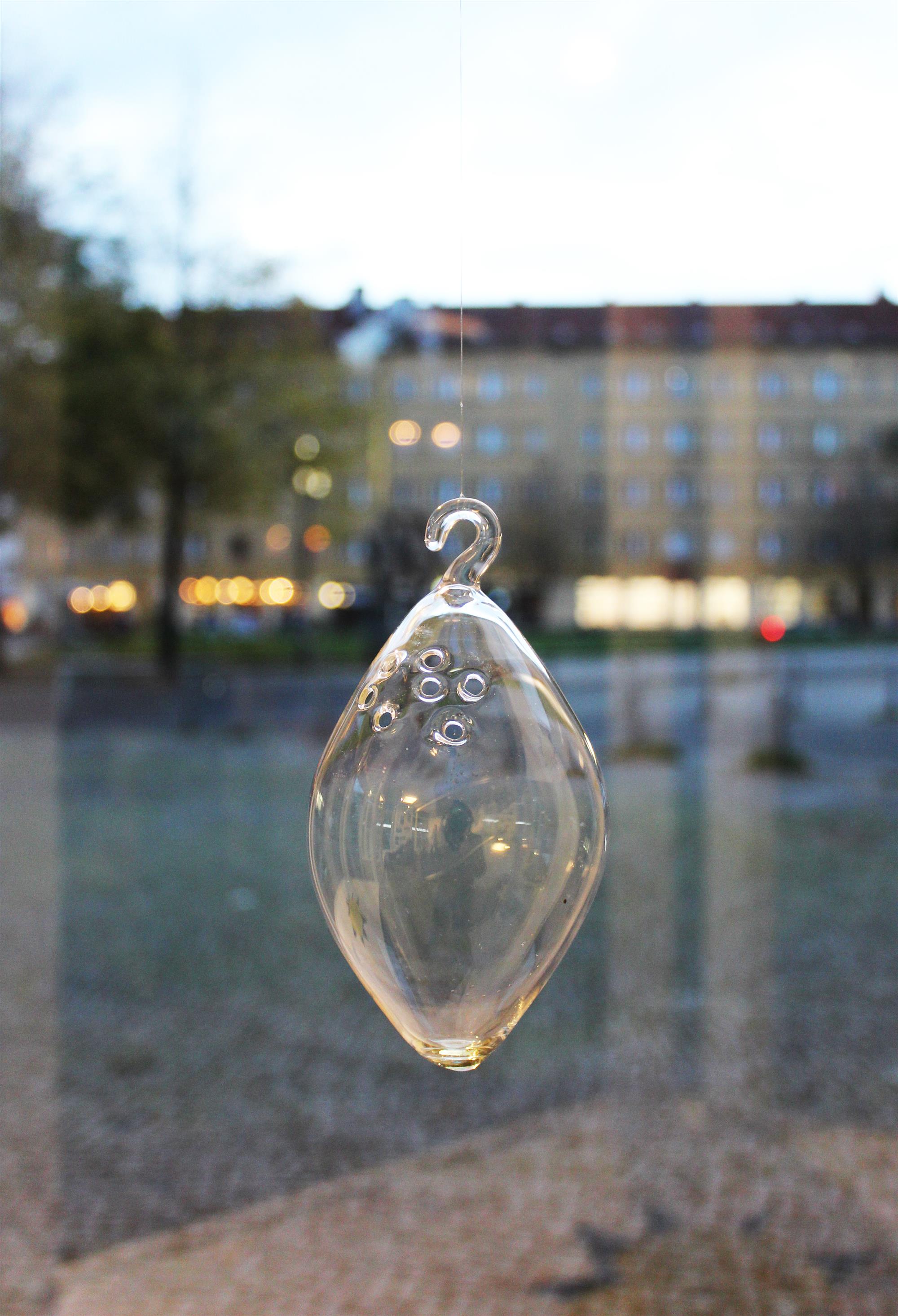
Hand-blown glass enclosing an artist-created scent, 16 × 9 cm
Why do people say love is blind? The expression suggests that love distorts our perception, that desire makes us overlook what reason would catch. But there is another way to read it. What if love is blind precisely because it does not operate through sight alone? Research into body odour, attraction and biological compatibility suggests that smell may influence attraction before conscious evaluation. The body reads what the mind has not yet noticed.
Read more ↓
I composed this scent from a personal memory of falling in love: the warmth of skin, a trace of perfume, the particular quality of summer air, the salt of the sea. These are not things that translate easily into language, but the body holds them with extraordinary precision, intact and immediate, available the moment the right scent returns them. The hand-blown glass contains what I remember, transparently and with a fragility that mirrors the nature of the memory itself.

