Traces of Memory
Kunstfabrik HB55, Berlin
Group exhibition, Lange Nacht der Bilder 2026
Room installation: From Molecule to Memory
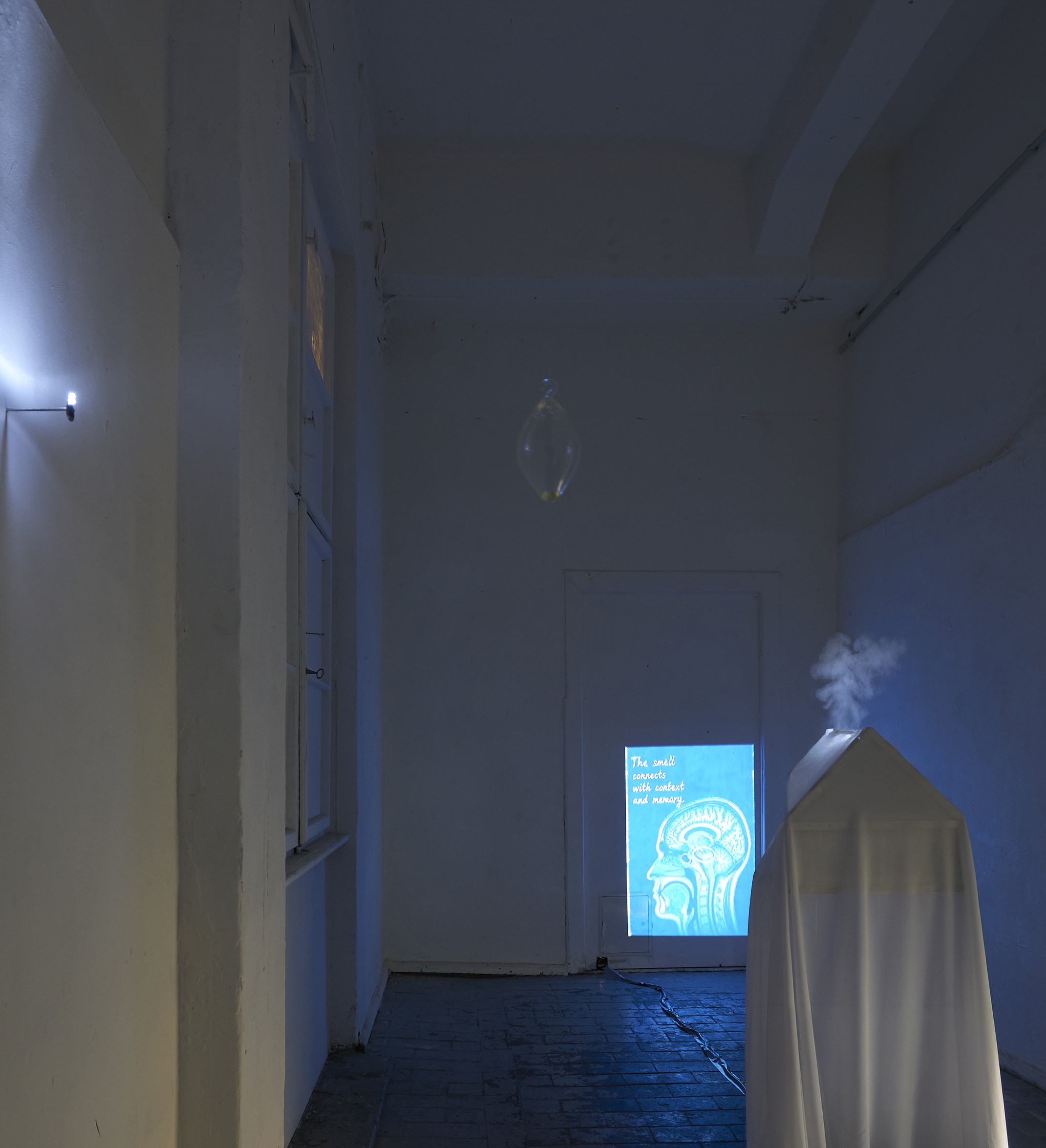
I curated this exhibition for the Kunstfabrik HB55 artist community, and took part in it myself with a room installation of my own work.
4 September 2026
Read more ↓
Exhibition Context
“From Molecule to Memory” was conceived as a room installation within “TRACES OF MEMORY”, a group exhibition curated by Maria Nitulescu for Lange Nacht der Bilder 2026 at Kunstfabrik HB55 in Berlin.
Bringing together 21 artists from the Kunstfabrik HB55 community, the exhibition approached memory not as a fixed record of the past, but as something continually reconstructed through personal and collective experience, shaped as much by what is remembered as by what is forgotten, transformed or imagined.
A smell, a sound, an image, an object or a place can unexpectedly bring back a moment with an intensity that seems to collapse the distance between past and present. The exhibition explored these traces and the different ways in which experiences persist, resurface and acquire new meaning over time.
Within this wider context, “From Molecule to Memory” focused specifically on olfaction, moving from the neurological pathways of smell towards intimate experiences of memory, home, attraction and belonging.
About “From Molecule to Memory”
“From Molecule to Memory” brings together three works exploring smell as a pathway between the body, emotion, memory and belonging. “Olfactory Pathway I–III” begins with the neurological journey of smell, tracing how olfactory information reaches brain regions involved in emotion and memory. From there, “Heimat” and “Love is Blind” move into two intimate forms of recognition: home and love.
Both can exist before they are fully articulated. A familiar smell can make a place feel like home, just as the smell of another person can participate in attraction before we consciously understand why we are drawn to them. In this sense, home is not necessarily a geographical place. It can be a memory, a sensory familiarity, or even another person. Across the room, scent becomes an invisible thread connecting biological perception with some of our most personal experiences of attachment and belonging.
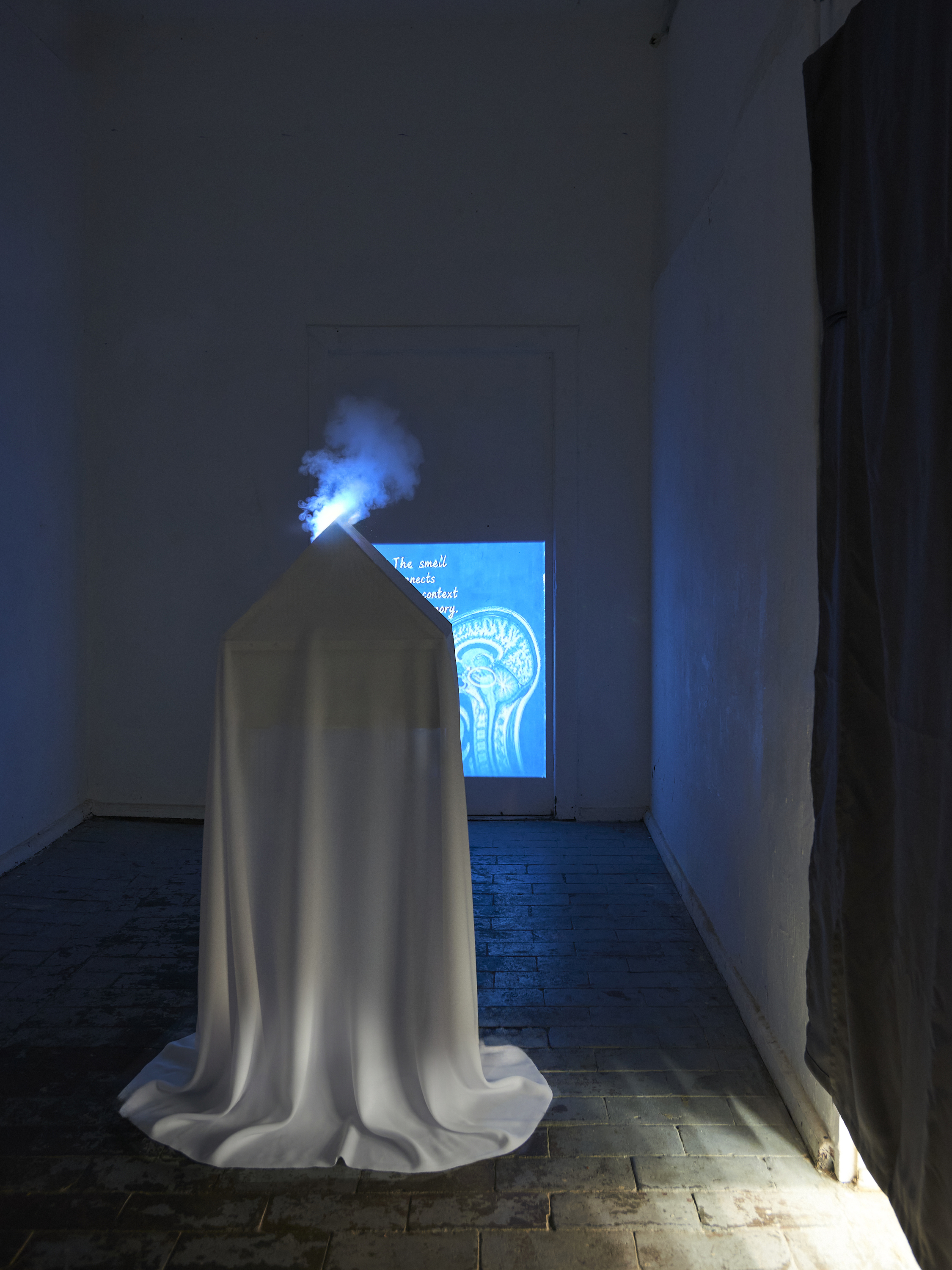
Wood, fabric, acrylic glass, scent, ultrasonic nebulizer, light and video projection
Approx. 150 × 65 × 36 cm, dimensions variable
Installation views: “From Molecule to Memory”, within “TRACES OF MEMORY”, Kunstfabrik HB55, Berlin, 2026. Photo: groupshow.eu
What is the smell of home when it has existed in more than one country?
“Heimat” emerged at a particular moment in my life. After living between countries and making Berlin my home for many years, I became a German citizen in 2026 and now hold both German and Romanian citizenship. The German word Heimat, difficult to translate without losing some of its meaning, became a way of thinking about belonging not as a fixed place, but as something shaped by memory, familiarity and sensory experience.
Every home has its own smellscape, formed through the way we inhabit it: bodies, materials, food, air, objects and everyday rituals. Over time, these smells become part of our recognition of a place as home, and a familiar scent can return us to it years later.
The house itself has a fragile, almost ghostlike presence. Translucent fabric gives its structure a fluid, ephemeral form, while scent emerges through the roof as visible mist and projected images appear and dissolve across its surface. “Heimat” becomes a fluid sculpture of belonging, asking what remains of home as places, identities and memories continue to shift.
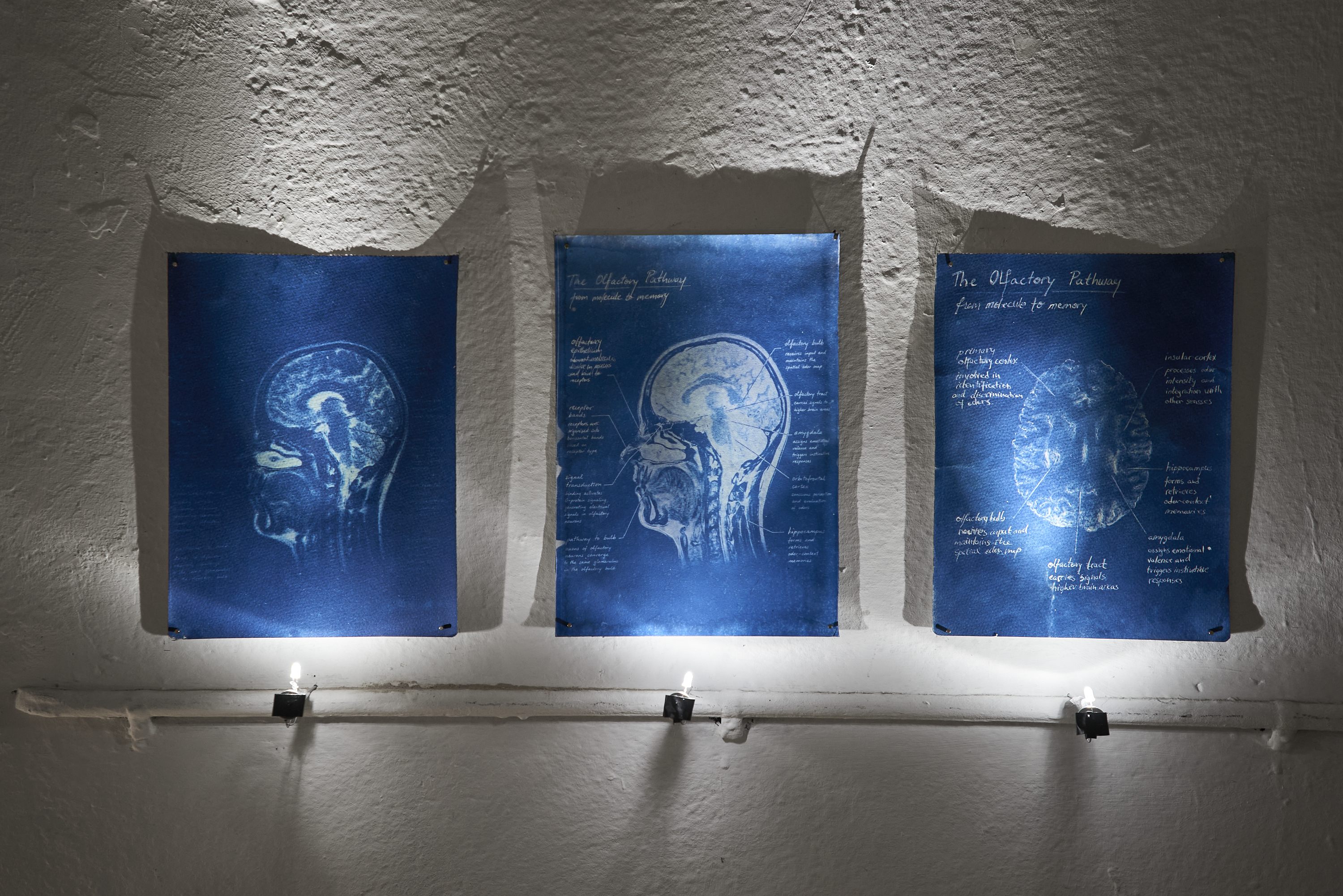
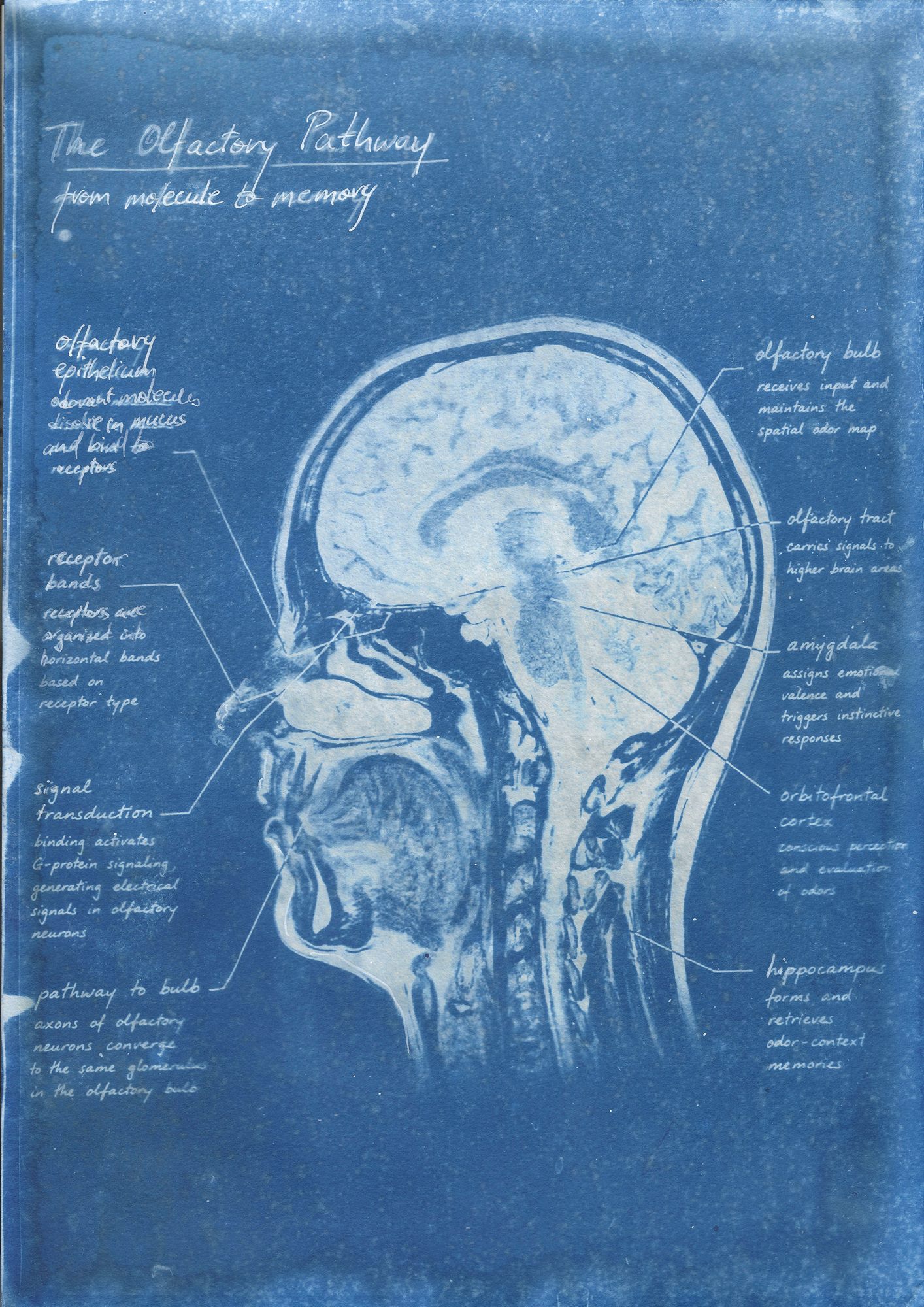
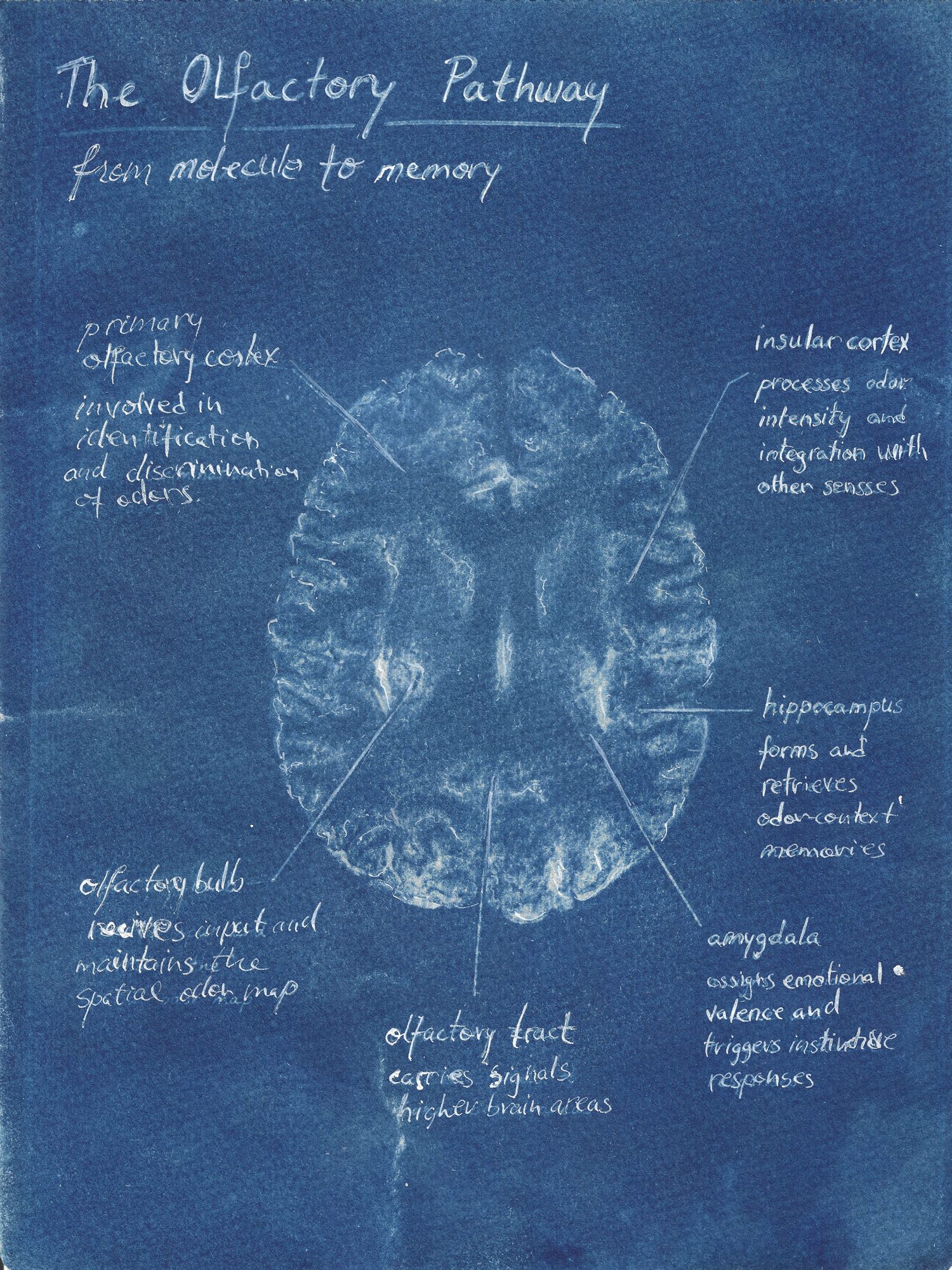
Cyanotype on paper, approx. 29 × 21 cm each
Installation views: “From Molecule to Memory”, within “TRACES OF MEMORY”, Kunstfabrik HB55, Berlin, 2026. Photo: groupshow.eu
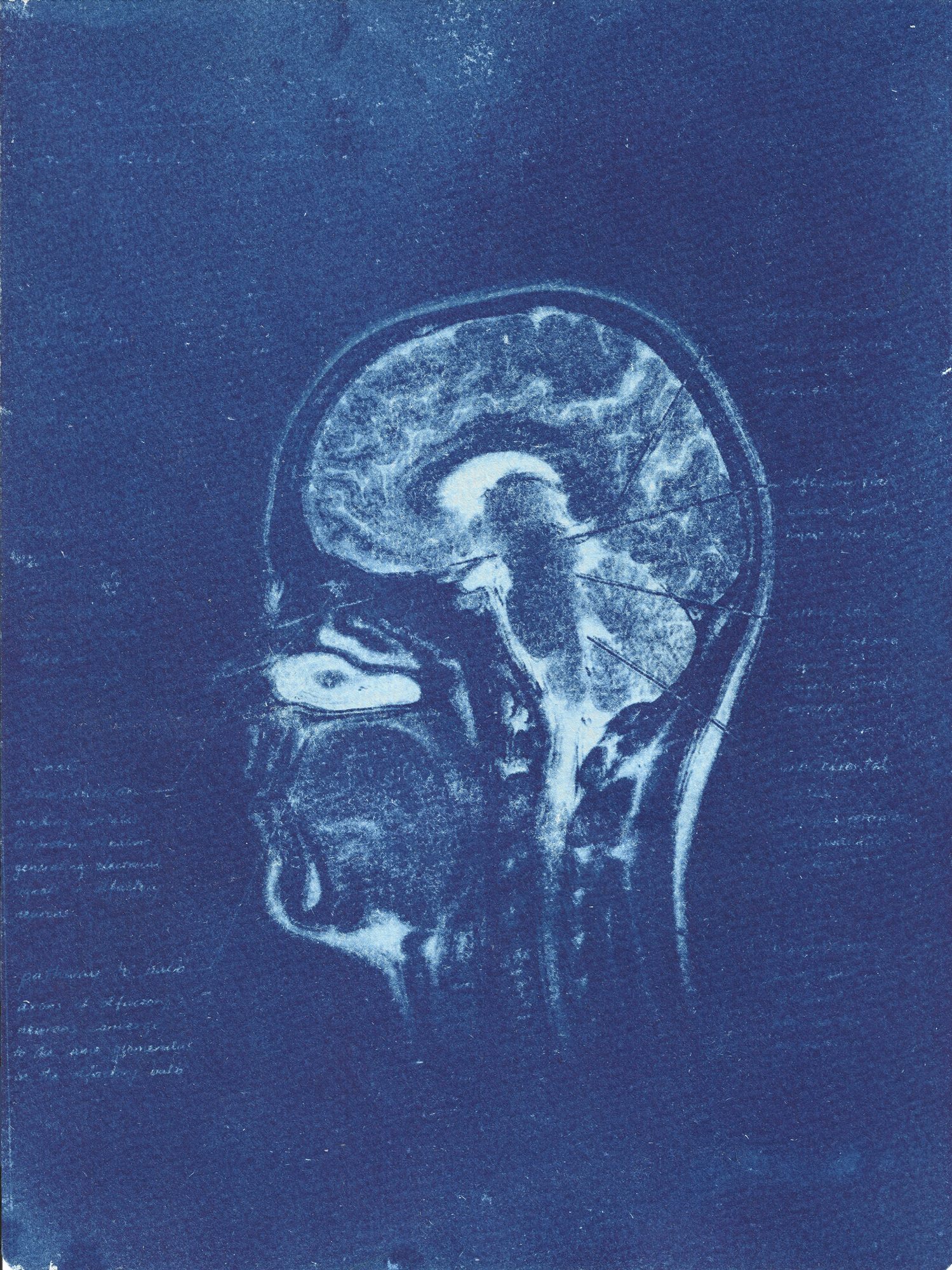
“Olfactory Pathway I–III” uses MRI images of my own brain to trace the neurological journey of smell, informed by current research into the neural pathways of olfaction. The series follows how an odor moves from perception towards interconnected brain regions involved in emotion, memory and conscious evaluation.
The cyanotype process transforms the medical images into light-sensitive blue impressions, shifting them from clinical documentation towards a personal mapping of perception and memory. The works reflect on how smell can evoke emotional and autobiographical memories before we consciously identify their source. Their imagery also forms the basis of the video projection within “Heimat”.
“Love is Blind” takes its title literally: what if falling in love begins, in part, before we consciously “see” the other person?
Smell can influence attraction before conscious evaluation. Research into body odor and biological compatibility provides a scientific point of departure for a scent I composed from my own memory of falling in love: warm skin, a trace of perfume, summer air and the salt of the sea.
The scent is encountered by leaning closer to the sculpture, where it escapes through small openings in the hand-blown glass. This gesture brings the viewer physically close to the work, echoing the intimacy of smelling another person and the way the body can register attraction before the conscious mind has found words for it.
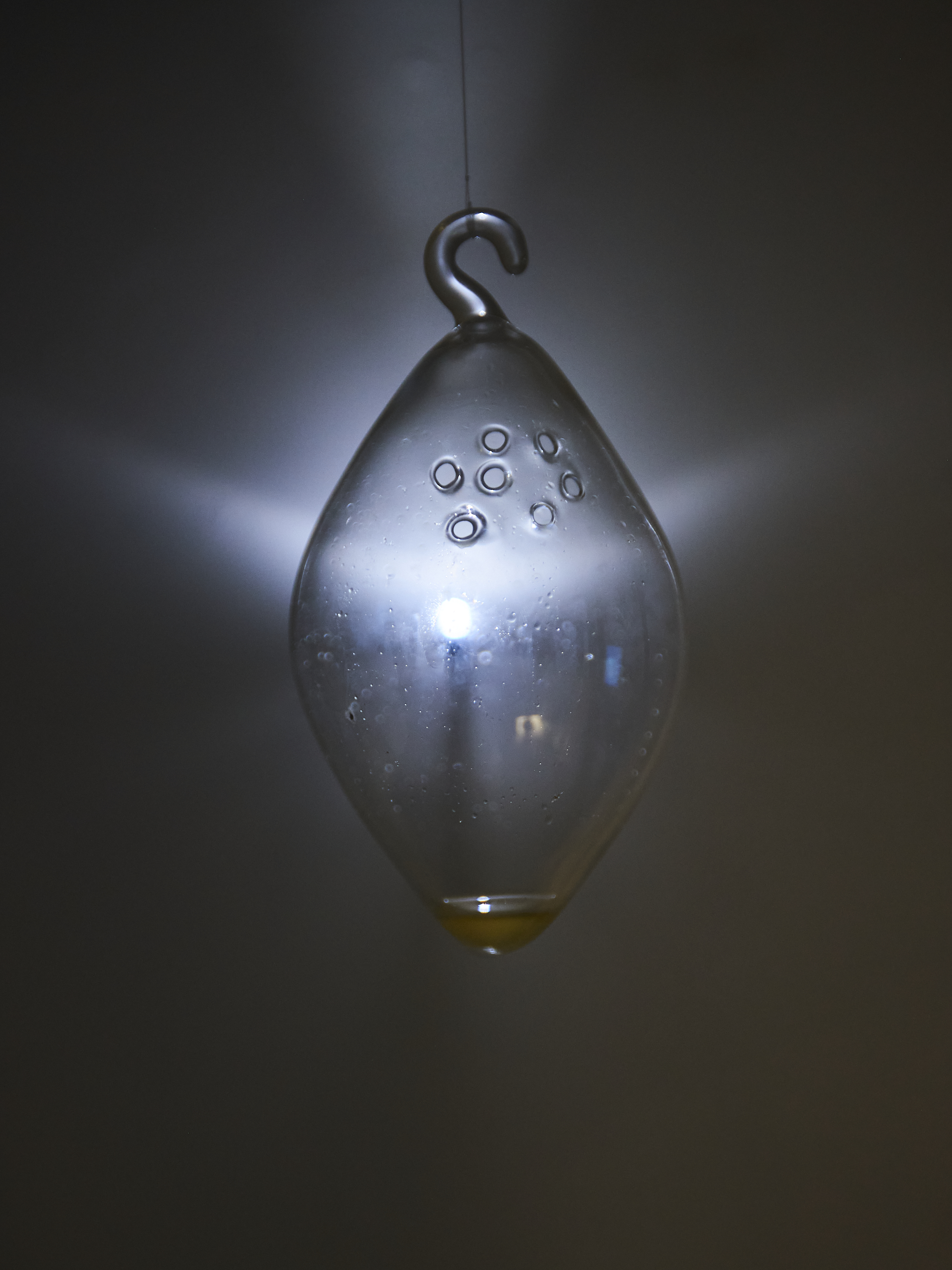
Hand-blown glass enclosing an artist-created scent
16 × 9 cm
Installation views: “From Molecule to Memory”, within “TRACES OF MEMORY”, Kunstfabrik HB55, Berlin, 2026. Photo: groupshow.eu
 Maria Nitulescu